Security News
curl Shuts Down Bug Bounty Program After Flood of AI Slop Reports
A surge of AI-generated vulnerability reports has pushed open source maintainers to rethink bug bounties and tighten security disclosure processes.
@taskr/unflow
Advanced tools
$ npm install --save-dev @taskr/unflow
exports.build = function * (task) {
yield task.source('src/**/*.js').unflow({
all: false,
sourceMap: 'inline'
}).target('lib');
};
Type: Boolean
Default: true
Transforms all files; not just those with a "@flow" comment.
Type: Boolean
Default: true
Remove whitespace where annotations used to be. See here for more info.
Type: String
Options: internal|external
Default: ''
Create an inline or an external sourcemap for each entry file. A sourceMappingURL comment is appended to each destination file.
If using external maps, a
foo.jsentry will also generate afoo.js.mapfile.
Any issues or questions can be sent to the Taskr monorepo.
Please be sure to specify that you are using @taskr/unflow.
MIT © Luke Edwards
FAQs
Removes Flow type annotations with Taskr
The npm package @taskr/unflow receives a total of 2 weekly downloads. As such, @taskr/unflow popularity was classified as not popular.
We found that @taskr/unflow demonstrated a not healthy version release cadence and project activity because the last version was released a year ago. It has 1 open source maintainer collaborating on the project.
Did you know?

Socket for GitHub automatically highlights issues in each pull request and monitors the health of all your open source dependencies. Discover the contents of your packages and block harmful activity before you install or update your dependencies.

Security News
A surge of AI-generated vulnerability reports has pushed open source maintainers to rethink bug bounties and tighten security disclosure processes.

Product
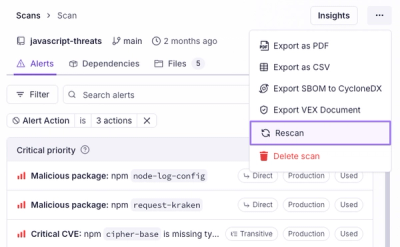
Scan results now load faster and remain consistent over time, with stable URLs and on-demand rescans for fresh security data.

Product
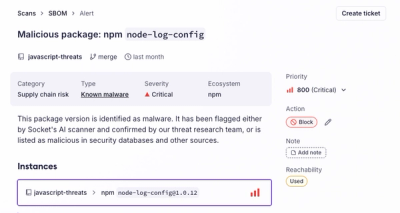
Socket's new Alert Details page is designed to surface more context, with a clearer layout, reachability dependency chains, and structured review.