


Security News
CVE Volume Surges Past 48,000 in 2025 as WordPress Plugin Ecosystem Drives Growth
CVE disclosures hit a record 48,185 in 2025, driven largely by vulnerabilities in third-party WordPress plugins.
By Sarah Gooding - Jan 09, 2026
@voiceflow/runtime-client-js
Advanced tools
The Voiceflow Runtime Client is an SDK for running Voiceflow apps in JavaScript.
First, you build a fully-functioning conversational app on Voiceflow. Then, you integrate that app into a JavaScript project using the SDK. This allows you to quickly add any kind of voice interface, such as a chatbot, to your project, without the hassle of implementing the conversational flow using code.
The Runtime Client can be used with jQuery, React, and any other JavaScript library or framework.

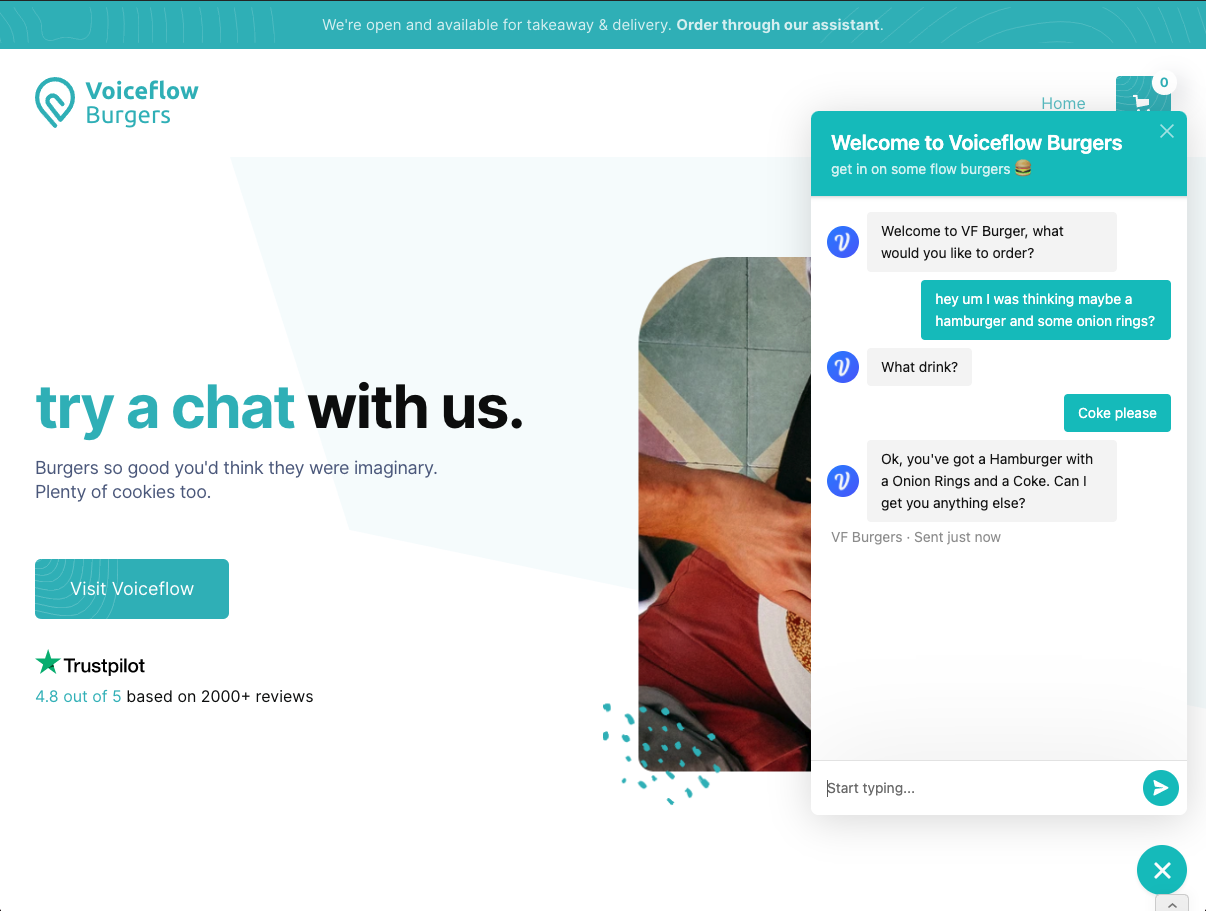
See the parent rcjs-examples repo for instructions on how to setup each Sample.
# with NPM
npm install --save @voiceflow/runtime-client-js
# with yarn
yarn add @voiceflow/runtime-client-js
The minimum code to start using the SDK is shown below:
const { default: RuntimeClientFactory } = require('@voiceflow/runtime-client-js');
// alternatively for ESM/ES6
// import RuntimeClientFactory from '@voiceflow/runtime-client-js'

// Construct a chatbot instance
const factory = new RuntimeClientFactory({
  versionID: 'your-version-id-here', 	// ADD YOUR VERSION ID HERE
  apiKey: 'your-api-key-here', // ADD YOUR API KEY HERE
});
const client = factory.createClient();

// When the chatbot responds with text, output it
client.onSpeak((trace) => console.log(trace.payload.message));

// (Optional) explicitly begin a conversation session
client.start();

// Call this function from any input source
const interact = (input) => client.sendText(input);

// e.g. interact('can I have fries with that');
Pass in user input with the client.sendText(input) function, and any of your client.on... handlers will trigger during the response.
See here for instructions on how to quickly setup a Voiceflow app to try out your project.
See here for step-by-step instructions on using the Runtime Client SDK. Make sure to read "Setting up a Voiceflow App" first.
See the documentation here for the available advanced features of the SDK.
yarn installRun yarn install to install any necessary dependencies to get started with working on the SDK.
yarn buildUse this to build the runtime-client-js locally. The build will be stored in the /build folder
yarn lintUse this command to find any issues that fails our linter. It is important to have proper linting, otherwise your PR will not pass our automation.
Use yarn lint:fix to check and automatically fix linting issues where possible.
yarn testUse this command to run all of the integration and unit tests. Make sure that your PR achieves 100% coverage and tests for potential edge-cases.
Use yarn test:single to execute a single unit or integration test.
Use yarn test:unit to run all of the unit tests
Use yarn test:integration to run all of the integration tests.
We're always open to improving our Runtime Client SDK. Consider opening a PR if there is some improvement that you think should be added. Make sure to achieve 100% coverage for unit tests and provide documentation if applicable.
FAQs
JavaScript runtime SDK for executing Voiceflow projects
We found that @voiceflow/runtime-client-js demonstrated a healthy version release cadence and project activity because the last version was released less than a year ago. It has 27 open source maintainers collaborating on the project.
Did you know?

Socket for GitHub automatically highlights issues in each pull request and monitors the health of all your open source dependencies. Discover the contents of your packages and block harmful activity before you install or update your dependencies.
Security News
CVE disclosures hit a record 48,185 in 2025, driven largely by vulnerabilities in third-party WordPress plugins.

Security News
Socket CEO Feross Aboukhadijeh joins Insecure Agents to discuss CVE remediation and why supply chain attacks require a different security approach.

Security News
Tailwind Labs laid off 75% of its engineering team after revenue dropped 80%, as LLMs redirect traffic away from documentation where developers discover paid products.