

Product
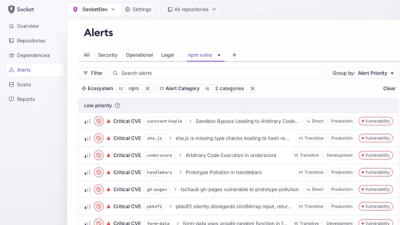
Introducing Custom Tabs for Org Alerts
Create and share saved alert views with custom tabs on the org alerts page, making it easier for teams to return to consistent, named filter sets.
By André Staltz - Jan 20, 2026
@workflow/web-shared
Advanced tools
Workflow Observability tools for NextJS. See Workflow DevKit for more information.
This package contains client and server code to interact with the Workflow API, as well as some pre-styled components.
If you want to deploy a full observability experience with your NextJS app, take a look at @workflow/web instead, which can be self-hosted.
You can use the API to create your own display UI, like so:
import { useWorkflowRuns } from '@workflow/web-shared';

export default function MyRunsList() {
  const {
    data,
    error,
    nextPage,
    previousPage,
    hasNextPage,
    hasPreviousPage,
    reload,
    pageInfo,
  } = useWorkflowRuns(env, {
    sortOrder,
    workflowName: workflowNameFilter === 'all' ? undefined : workflowNameFilter,
    status: status === 'all' ? undefined : status,
  });

  // Shows an interactive trace viewer for the given run
  return <div>{runs.map((run) => (
    <div key={run.runId}>
      {run.workflowName}
      {run.status}
      {run.startedAt}
      {run.completedAt}
    </div>
  ))}</div>;
}
It also comes with a pre-styled interactive trace viewer that you can use to display the trace for a given run:
import { RunTraceView } from '@workflow/web-shared';

export default function MyRunDetailView({ env, runId }: { env: EnvMap, runId: string }) {
  // ... your other code

  // Shows an interactive trace viewer for the given run
  return <RunTraceView env={env} runId={runId} />;
}
For API calls to work, you'll need to pass the same environment variables that are used by the Workflow CLI.
See npx workflow inspect --help for more information.
If you're deploying this as part of your Vercel NextJS app, setting WORKFLOW_TARGET_WORLD to vercel is enough
to infer your other project details from the Vercel environment variables.
Important: When using the UI to inspect different worlds, all relevant environment variables should be passed via the EnvMap parameter to the hooks and components, rather than setting them directly on your Next.js instance via process.env. The server-side World caching is based on the EnvMap configuration, so setting environment variables directly on process.env may cause cached World instances to operate with incorrect environment configuration.
In order for tailwind classes to be picked up correctly, you might need to configure your NextJS app to use the correct CSS processor. E.g. if you're using PostCSS with TailwindCSS, you can do the following:
// postcss.config.mjs in your NextJS app
const config = {
  plugins: ['@tailwindcss/postcss'],
};

export default config;
FAQs
Did you know?

Socket for GitHub automatically highlights issues in each pull request and monitors the health of all your open source dependencies. Discover the contents of your packages and block harmful activity before you install or update your dependencies.
Product
Create and share saved alert views with custom tabs on the org alerts page, making it easier for teams to return to consistent, named filter sets.
Product
Socket’s Rust and Cargo support is now generally available, providing dependency analysis and supply chain visibility for Rust projects.

Security News
Chrome 144 introduces the Temporal API, a modern approach to date and time handling designed to fix long-standing issues with JavaScript’s Date object.