


Security News
Deno 2.6 + Socket: Supply Chain Defense In Your CLI
Deno 2.6 introduces deno audit with a new --socket flag that plugs directly into Socket to bring supply chain security checks into the Deno CLI.
By Sarah Gooding - Dec 12, 2025
@yoobic/jpeg-camera-es6
Advanced tools
This project is based on Adam Wróbel JpegCamera library.
Notes on changes:
The project was rewritten into ES6 JS and modified. The purpose of this library is to be used in larger ES6-based projects, therefore the AJAX upload functionality was removed from the original source. The license stays the same and is located in LICENSE.md file.
JpegCamera is a JavaScript library that allows you to display a camera stream on a web page and then capture JPEG snapshots. It uses HTML5 in Chrome, Firefox, Safari and Opera and falls back to Flash in less capable browsers. The video stream is placed without any UI in a container of your choice and you control it through JavaScript API and your own UI elements.
The idea is based on a similar JpegCam library which was Flash only. Beside working without Flash and offering a cleaner, more modern API, JpegCamera has some nice, new features.
canvas element - even when using Flash fallback.canvas.toBlob method.These scripts are not packaged with jpeg_camera.js module.
Import the dependencies and then the main module.
Example using webpack's script-loader:
import JpegCameraSwf from 'jpeg-camera-es6/lib/jpeg_camera.swf';
import 'script-loader!jpeg-camera-es6/lib/swfobject.min.js';
import 'script-loader!jpeg-camera-es6/lib/canvas-to-blob.min.js';

import JpegCamera from 'jpeg-camera-es6';
Of course your webpack needs to know how to handle the .swf file and you need script-loader package installed.
The example usage:
import JpegCameraSwf from 'jpeg-camera-es6/lib/jpeg_camera.swf';
import 'script-loader!jpeg-camera-es6/lib/swfobject.min.js';
import 'script-loader!jpeg-camera-es6/lib/canvas-to-blob.min.js';

import JpegCamera from 'jpeg-camera-es6';

const theWebcam = null;
const theContainer = document.getElementById('the-webcam-container-id')

JpegCamera(
  theContainer,
  {
    swfUrl: JpegCameraSwf,
    onInit: (webcam) => {
      // here you can do some initialisation if required.
      // save the module reference so we can call it
      theWebcam = webcam;
    },
    onReady: (specs) => { /* do something when camera is ready */ },
    onError: (err) => { /* do something when there's an error */ },
    onDebug: (debug) => { console.log(debug); },
    shutter: false,
    mirror: false,
    previewMirror: false,
  }
);
Then use the theWebcam.capture() to grab the picture blob.
Take a look into https://github.com/CurrencyFair/jpeg_camera/blob/master/src/jpeg_camera.js to see all the available config options and methods. There's plenty of docblocks in there to read.
To use Flash fallback your camera container must be at least 215 pixels wide and 138 pixels tall. This is the minimum to display privacy settings dialog.
The Flash will display a security dialog in older browsers (e.g. IE 11), so remember not to cover the middle of the container with any other element (e.g. transparent div with some message or something).
The source code is available on Github. The code (and a large part of this readme) is forked from https://github.com/CurrencyFair/jpeg_camera but that projects seems not to be updated anymore.
Get Webpack and run it in the project folder to generate dist version of the library.
Thanks to Adam Wróbel for developing the original version of this library. Thanks to Joseph Huckaby for creating and Matt Clements for maintaining Flash-based JpegCam library which I have been using until HTML5 became a viable solution. If you're interested here's Matt's repo. Thanks to everyone else contributing to that project.
FAQs
This project is based on [Adam Wróbel](http://adamwrobel.com) [JpegCamera](https://github.com/amw/jpeg_camera) library.
We found that @yoobic/jpeg-camera-es6 demonstrated a not healthy version release cadence and project activity because the last version was released a year ago. It has 1 open source maintainer collaborating on the project.
Did you know?

Socket for GitHub automatically highlights issues in each pull request and monitors the health of all your open source dependencies. Discover the contents of your packages and block harmful activity before you install or update your dependencies.
Security News
Deno 2.6 introduces deno audit with a new --socket flag that plugs directly into Socket to bring supply chain security checks into the Deno CLI.
Security News
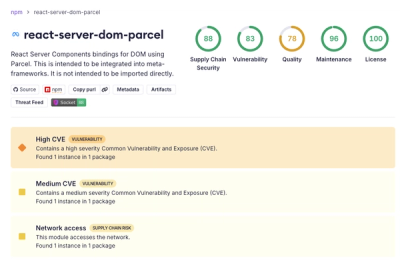
New DoS and source code exposure bugs in React Server Components and Next.js: what’s affected and how to update safely.

Security News
Socket CEO Feross Aboukhadijeh joins Software Engineering Daily to discuss modern software supply chain attacks and rising AI-driven security risks.