



Company News
Socket Has Acquired Secure Annex
Socket has acquired Secure Annex to expand extension security across browsers, IDEs, and AI tools.
By Feross Aboukhadijeh - Apr 28, 2026
alpinejs-component
Advanced tools
Reusable HTML components powered by Alpine JS reactivity 🛸
<script
defer
src="https://unpkg.com/alpinejs-component@latest/dist/component.min.js"
></script>
<script defer src="https://unpkg.com/alpinejs@3.x.x/dist/cdn.min.js"></script>
npm install -D alpinejs-component

yarn add -D alpinejs-component
import Alpine from 'alpinejs'
import component from 'alpinejs-component'

Alpine.plugin(component)

Alpine.start()
You can render on page components by using a <template> with an id that
matches the template attribute on the component.
Here we are rendering the component HTML found in <template id="person">
element.
<div
  x-data="{
    people: [
      { name: 'John', age: '25', skills: ['JavaScript', 'CSS'] },
      { name: 'Jane', age: '30', skills: ['Laravel', 'MySQL', 'jQuery'] }
    ]
  }"
>
  <ul>
    <template x-for="person in people">
      <x-component template="person" x-data="{ item: person }"></x-component>
    </template>
  </ul>
</div>

<template id="person">
  <li>
    <h2 x-text="item.name"></h2>

    <p x-text="item.age"></p>

    <ul>
      <template x-for="skill in item.skills">
        <li x-text="skill"></li>
      </template>
    </ul>
  </li>
</template>
If you don't want on page components you can use the url attribute which
accepts a path to the HTML component.
Here we are telling Alpine JS to fetch the HTML from /public/person.html
within the codebase.
<div
  x-data="{
    people: [
      { name: 'John', age: '25', skills: ['JavaScript', 'CSS'] },
      { name: 'Jane', age: '30', skills: ['Laravel', 'MySQL', 'jQuery'] }
    ]
  }"
>
  <ul>
    <template x-for="person in people">
      <x-component
        url="/public/person.html"
        x-data="{ item: person }"
      ></x-component>
    </template>
  </ul>
</div>
Then we'd have a file /public/person.html which could look like this.
<li>
  <h2 x-text="item.name"></h2>

  <p x-text="item.age"></p>

  <ul>
    <template x-for="skill in item.skills">
      <li x-text="skill"></li>
    </template>
  </ul>
</li>
You can pass template or url as a dynamic value, here's an example.
<div
  x-data="{
    components: [
      {
        template: '/public/person.html',
        data: { name: 'John', age: '25', skills: ['JavaScript', 'CSS'] }
      },
      {
        template: '/public/person.html',
        data: { name: 'Jane', age: '30', skills: ['Laravel', 'MySQL', 'jQuery'] }
      },
    ]
  }"
>
  <ul>
    <template x-for="component in components">
      <x-component
        :template="component.template"
        x-data="{ item: component.data }"
      ></x-component>

      // Or

      <x-component
        :url="component.template"
        x-data="{ item: component.data }"
      ></x-component>
    </template>
  </ul>
</div>
You can use styles attribute to specify which stylesheets to include.
<style title="person">
  /* ... */
</style>

<x-component
  template="person"
  styles="person"
  x-data="{ item: person }"
></x-component>
You can also include multiple stylesheets by separating them with a comma.
<style title="person">
  /* ... */
</style>

<style title="general">
  /* ... */
</style>

<x-component
  template="person"
  styles="person,general"
  x-data="{ item: person }"
></x-component>
Or, if you want to include all stylesheets you can use styles="global"
You can add a <style> element with the components CSS to the component itself.
<div>
  <style>
    .example {
      background: #00f;
    }
  </style>

  <p class="example" x-text="message"> </p>
</div>
If you need to change the name x-component, you can do so by setting the
global xComponent object. This is necessary because blade components start
with x-, which can cause conflicts.
window.xComponent = {
  name: 'a-component',
}
You will then call components like this:
<div
  x-data="{
    people: [
      { name: 'John', age: '25', skills: ['JavaScript', 'CSS'] },
      { name: 'Jane', age: '30', skills: ['Laravel', 'MySQL', 'jQuery'] }
    ]
  }"
>
  <ul>
    <template x-for="person in people">
      <a-component
        url="/public/person.html"
        x-data="{ item: person }"
      ></a-component>
    </template>
  </ul>
</div>



FAQs
Directive-based Alpine.js components with Shadow DOM encapsulation, slots, and cached template rendering
The npm package alpinejs-component receives a total of 730 weekly downloads. As such, alpinejs-component popularity was classified as not popular.
We found that alpinejs-component demonstrated a healthy version release cadence and project activity because the last version was released less than a year ago. It has 1 open source maintainer collaborating on the project.
Did you know?

Socket for GitHub automatically highlights issues in each pull request and monitors the health of all your open source dependencies. Discover the contents of your packages and block harmful activity before you install or update your dependencies.
Company News
Socket has acquired Secure Annex to expand extension security across browsers, IDEs, and AI tools.

Research
/Security News
Socket is tracking cloned Open VSX extensions tied to GlassWorm, with several updated from benign-looking sleepers into malware delivery vehicles.
Product
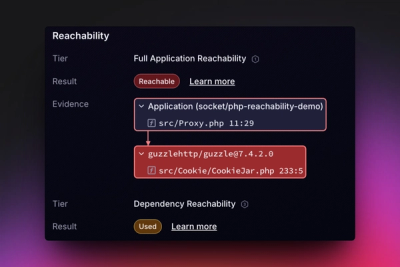
Reachability analysis for PHP is now available in experimental, helping teams identify which vulnerabilities are actually exploitable.