

Product
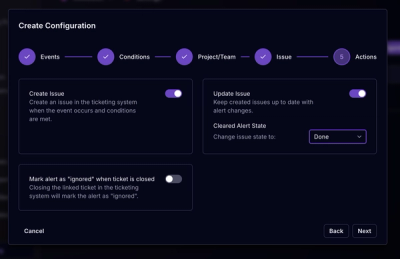
Socket for Jira Is Now Available
Socket for Jira lets teams turn alerts into Jira tickets with manual creation, automated ticketing rules, and two-way sync.
By Jeppe Hasseriis - Apr 20, 2026
Validate access to environment variables and parse them to the right type. Makes sure you don't accidentally deploy apps with missing or invalid environment variables.
envsafe 🔒Validate access to environment variables and parse them to the right type. Makes sure you don't accidentally deploy apps with missing or invalid environment variables.
========================================
❌ Invalid environment variables:
    API_URL: Invalid url input: "http//example.com/graphql"
💨 Missing environment variables:
    MY_VAR: Missing value or empty string
    PORT: Missing value or empty string
========================================
Heavily inspired by the great project envalid, but with some key differences:
Works the same in the browser and in node. See the ./examples-folder for more examples.
yarn add envsafe
npm i envsafe --save
import { str, envsafe, port, url } from 'envsafe';

export const env = envsafe({
  NODE_ENV: str({
    devDefault: 'development',
    choices: ['development', 'test', 'production'],
  }),
  PORT: port({
    devDefault: 3000,
    desc: 'The port the app is running on',
    example: 80,
  }),
  API_URL: url({
    devDefault: 'https://example.com/graphql',
  }),
  AUTH0_CLIENT_ID: str({
    devDefault: 'xxxxx',
  }),
  AUTH0_DOMAIN: str({
    devDefault: 'xxxxx.auth0.com',
  }),
});
It defaults to using process.env as a base for plucking the vars, but it can be overridden like this:
export const env = envsafe(
  {
    ENV_VAR: str({
      devDefault: 'myvar',
    }),
  },
  {
    env: window.__ENVIRONMENT__,
  },
);
| Function | return value | Description |
|---|---|---|
str() | string | Passes string values through, will ensure an value is present unless a default value is given. |
bool() | boolean | Parses env var strings "0", "1", "true", "false", "t", "f" into booleans |
num() | number | Parses an env var (eg. "42", "0.23", "1e5") into a Number |
port() | number | Ensures an env var is a TCP port (1-65535) |
url() | string | Ensures an env var is a url with a protocol and hostname |
email() | string | Ensures an env var is an email address |
json() | unknown | Parses an env var with JSON.parse |
All optional.
| Name | Type | Description |
|---|---|---|
choices | TValue[] | Allow-list for values |
default | TValue / string | A fallback value, which will be used if the env var wasn't specified. Providing a default effectively makes the env var optional. |
devDefault | TValue / string | A fallback value to use only when NODE_ENV is not production. This is handy for env vars that are required for production environments, but optional for development and testing. |
input | string | As some environments don't allow you to dynamically read env vars, we can manually put it in as well. Example |
allowEmpty | boolean | Default behavior is false which treats empty strings as the value is missing; if explicit empty strings are OK, pass in true. |
These values below are not used by the library and only for description of the variables.
| Name | Type | Description |
|---|---|---|
desc | string | A string that describes the env var. |
example | string / TValue | An example value for the env var. |
docs | string | A url that leads to more detailed documentation about the env var. |
import { makeValidator, envsafe } from 'envsafe';

const barParser = makeValidator<'bar'>(input => {
  if (input !== 'bar') {
    throw new InvalidEnvError(`Expected '${input}' to be 'bar'`);
  }
  return 'bar';
});

const env = envsafe({
  FOO: barParser(),
});
By default the reporter will
console.error-log an errorwindow.alert() with information about the missing envrionment variable if you're in the browser1 in node)Can be overridden by the reporter-property
const env = envsafe(
  {
    MY_VAR: str(),
  },
  {
    reporter({ errors, output, env }) {
      // do stuff
    },
  },
);
By default envsafe returns a Readonly<T> which in TypeScript ensures the env can't be modified and undefined properties from being accessed, but if you're using JavaScript you are still able to access env vars that don't exist. Therefore there's a strict mode option, which is recommended if your project is using vanilla JS, but not recommended if you use TypeScript.
It wraps the function in Object.freeze and a Proxy that disallows access to any props that aren't defined.
import { envsafe, str } from 'envsafe';

export const browserEnv = envsafe(
  {
    MY_ENV: str(),
  },
  {
    strict: true,
  },
);
FAQs
Validate access to environment variables and parse them to the right type. Makes sure you don't accidentally deploy apps with missing or invalid environment variables.
The npm package envsafe receives a total of 18,772 weekly downloads. As such, envsafe popularity was classified as popular.
We found that envsafe demonstrated a not healthy version release cadence and project activity because the last version was released a year ago. It has 1 open source maintainer collaborating on the project.
Did you know?

Socket for GitHub automatically highlights issues in each pull request and monitors the health of all your open source dependencies. Discover the contents of your packages and block harmful activity before you install or update your dependencies.
Product
Socket for Jira lets teams turn alerts into Jira tickets with manual creation, automated ticketing rules, and two-way sync.
Company News
Socket won two 2026 Reppy Awards from RepVue, ranking in the top 5% of all sales orgs. AE Alexandra Lister shares what it's like to grow a sales career here.

Security News
NIST will stop enriching most CVEs under a new risk-based model, narrowing the NVD's scope as vulnerability submissions continue to surge.