

Security News
npm Introduces minimumReleaseAge and Bulk OIDC Configuration
npm rolls out a package release cooldown and scalable trusted publishing updates as ecosystem adoption of install safeguards grows.
By Sarah Gooding - Feb 26, 2026
generate-editorconfig
Advanced tools
The generator creates a `.editorconfig` file in the current working directory. Run from the command line or register as a sub-generator or plugin in your own generator.

The generator creates a .editorconfig file in the current working directory. Run from the command line or register as a sub-generator or plugin in your own generator.



Generate is a command line tool and developer framework for scaffolding out new GitHub projects using generators and tasks.
Answers to prompts and the user's environment can be used to determine the templates, directories, files and contents to build. Support for gulp, base and assemble plugins, and much more.
For more information:
Installing the CLI
To run the editorconfig generator from the command line, you'll need to install Generate globally first. You can do that now with the following command:
$ npm install --global generate
This adds the gen command to your system path, allowing it to be run from any directory.
Install generate-editorconfig
Install this module with the following command:
$ npm install --global generate-editorconfig
Run this generator's default task with the following command:
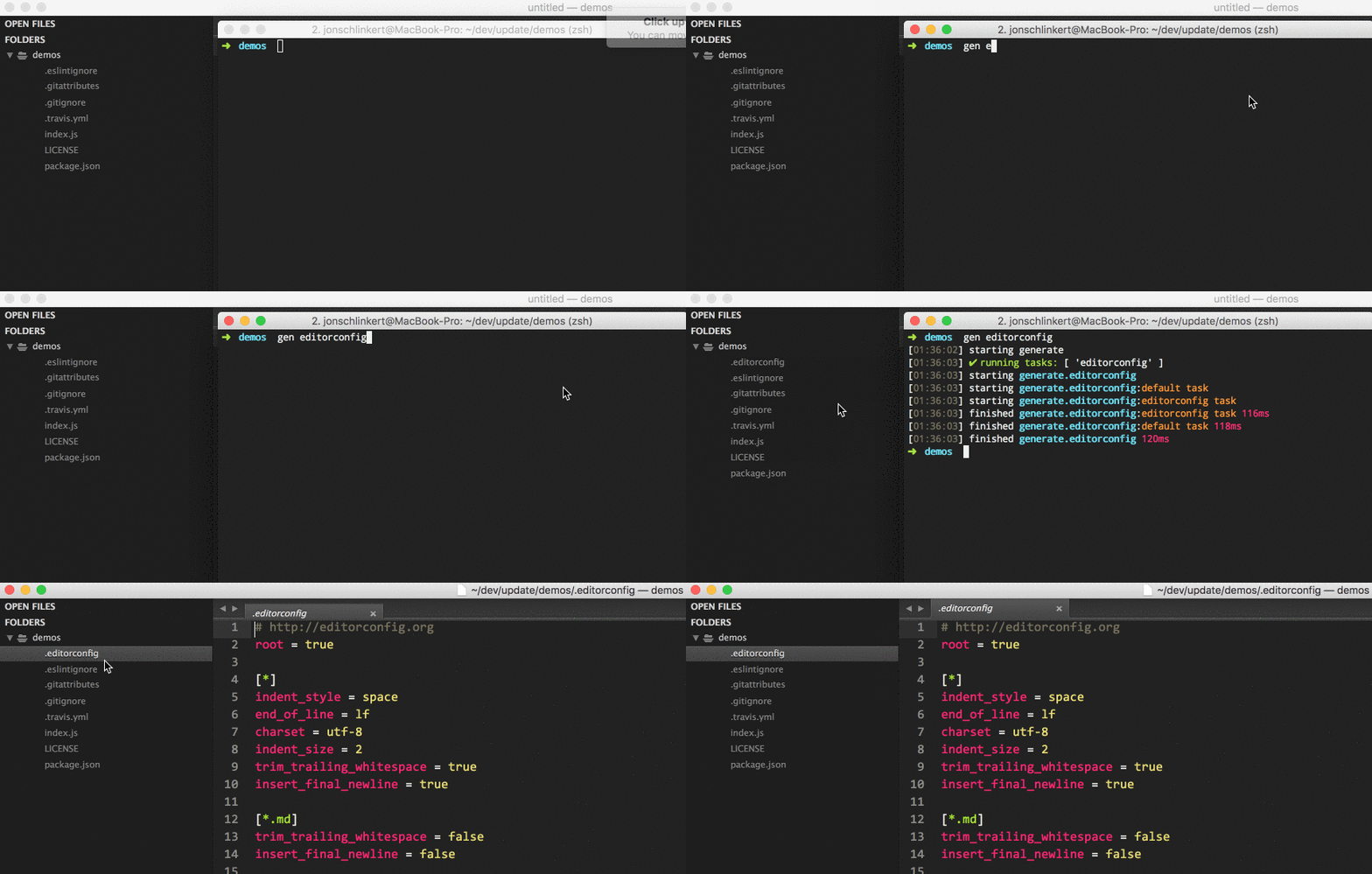
$ gen editorconfig
What you should see in the terminal
If completed successfully, you should see both starting and finished events in the terminal, like the following:
[00:44:21] starting ...
...
[00:44:22] finished ✔
If you do not see one or both of those events, please let us know about it.
To see a general help menu and available commands for Generate's CLI, run:
$ gen help
All available tasks.
Generates a .editorconfig file to the current working directory. You can override the default template by adding a custom template to the templates directory in user home, at the following path: ~/templates/_editorconfig
Example
$ gen editorconfig
Visit Generate's documentation for tasks.
package.json, .git… [more](https://github.com/generate/generate-readme) | [homepage](https://github.com/generate/generate-readme "Generate a README.md using answers to prompts and data from the environment, likepackage.json,.git` config, etc. This generator can be run by command line if Generate is installed globally, or you can use this as a plugin or sub-generator in your own")Are you using Generate in your project? Have you published a generator and want to share your project with the world?
Here are some suggestions!
@generatejs or use the #generatejs hashtaggenerate-editorconfiggeneratejs tag in questions)generategenerator to package.json.Pull requests and stars are always welcome. For bugs and feature requests, please create an issue.
Install dev dependencies:
$ npm install -d && npm test
Jon Schlinkert
Copyright © 2016, Jon Schlinkert. Released under the MIT license.
This file was generated by verb-generate-readme, v0.1.28, on July 28, 2016.
FAQs
The generator creates a `.editorconfig` file in the current working directory. Run from the command line or register as a sub-generator or plugin in your own generator.
The npm package generate-editorconfig receives a total of 3 weekly downloads. As such, generate-editorconfig popularity was classified as not popular.
We found that generate-editorconfig demonstrated a not healthy version release cadence and project activity because the last version was released a year ago. It has 1 open source maintainer collaborating on the project.
Did you know?

Socket for GitHub automatically highlights issues in each pull request and monitors the health of all your open source dependencies. Discover the contents of your packages and block harmful activity before you install or update your dependencies.
Security News
npm rolls out a package release cooldown and scalable trusted publishing updates as ecosystem adoption of install safeguards grows.

Security News
AI agents are writing more code than ever, and that's creating new supply chain risks. Feross joins the Risky Business Podcast to break down what that means for open source security.

Research
/Security News
Socket uncovered four malicious NuGet packages targeting ASP.NET apps, using a typosquatted dropper and localhost proxy to steal Identity data and backdoor apps.