




Product
Socket for Jira Is Now Available
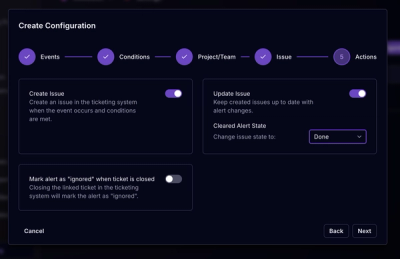
Socket for Jira lets teams turn alerts into Jira tickets with manual creation, automated ticketing rules, and two-way sync.
By Jeppe Hasseriis - Apr 20, 2026
http-error-kit
Advanced tools
A flexible and customizable error-handling library for HTTP applications. Provides structured error responses with optional formatters, predefined HTTP errors, and extensible error types.
http-error-kit is a versatile and customizable error handling library for JavaScript and TypeScript applications. It provides a collection of HTTP error classes that can be tailored to fit various formatting needs, both globally and on a per-instance basis.









NotFoundError, BadRequestError, InternalServerError, etc.)npm install http-error-kit
By default, importing error classes allows their format to be dynamically updated by changing the global formatter.
const { BadRequestError } = require("http-error-kit");
//
import { BadRequestError } from "http-error-kit";

console.log(new BadRequestError("Invalid request", { field: "email" }));
/*  BadRequestError {
 *      statusCode: 400,
 *      message: "Invalid request",
 *      details: {
 *          field: "email"
 *      }
 *  }
 */
After setting a global formatter, the same error class will follow the new structure defined by the formatter.
const { BadRequestError, KitHttpErrorConfig } = require("http-error-kit");
//
import { BadRequestError, KitHttpErrorConfig } from "http-error-kit";

const formatter = (statusCode, message, details, ...args) => ({
    code: statusCode,
    msg: message,
    extra: details,
    traceId: args[0] || "default-trace-id",
});

KitHttpErrorConfig.configureFormatter(formatter);

console.log(new BadRequestError("Invalid request", { field: "email" }));
/*  BadRequestError {
 *      code: 400,
 *      msg: "Invalid request",
 *      extra: {
 *          field: "email"
 *      },
 *      traceId: "default-trace-id"
 *  }
 */
By default, if you import errors without any additional setup, you'll get the generic error implementations.
const { BadRequestError } = require("http-error-kit");
//
import { BadRequestError } from "http-error-kit";

console.log(new BadRequestError("Invalid request", { field: "email" }));
/*  BadRequestError {
 *      statusCode: 400,
 *      message: "Invalid request",
 *      details: {
 *          field: "email"
 *      }
 *  }
 */
This follows a simple structure without any additional formatting.
Note: If you prefer to use errors specifically with simple structure (extended by KitGeneralError), you can explicitly import errors from:
const { BadRequestError } = require("http-error-kit/generic");
You can set a global formatter to customize the error structure across your application.
To enable structured error responses, use KitHttpError with global configuration:
const { BadRequestError, KitHttpErrorConfig } = require("http-error-kit");

KitHttpErrorConfig.configureFormatter(
    (statusCode, message, details, ...args) => ({
        code: statusCode,
        msg: message,
        extra: details,
        traceId: args[0] || "0fcb44cb-4f09-4900-8c4f-73ddd37ffe0a",
    })
);

console.log(
    new BadRequestError("Invalid request", { field: "email" }, "trace-123")
);
/*  BadRequestError {
 *      code: 400,
 *      msg: "Invalid request",
 *      extra: {
 *          field: "email"
 *      },
 *      traceId: "trace-123"
 *  }
 */
A custom formatter allows you to modify the structure of error responses. The formatter function receives the following parameters:
| Parameter | Description |
|---|---|
statusCode | The HTTP status code (e.g., 400 for "Bad Request") |
message | The error message (e.g., "Invalid request") |
details | Additional error details (optional) |
...args | Extra arguments passed, such as a unique trace ID |
| Feature | http-error-kit | http-error-kit/http | http-error-kit/generic |
|---|---|---|---|
| Error Type | Standardized errors (with global formatting) and can be overridden by instance-level formatters at the error instance level | Standardized errors (with global formatting) and can be overridden by instance-level formatters at the error instance level | Static format errors (no dynamic formatting) |
| Import Path | import { BadRequestError } from "http-error-kit"; | import { BadRequestError } from "http-error-kit/http"; | import { BadRequestError } from "http-error-kit/generic"; |
| Customization | Uses global formatter set via KitHttpErrorConfig.configureFormatter with the ability to change format with an instance-level formatter | Uses global formatter set via KitHttpErrorConfig.configureFormatter with the ability to change format with an instance-level formatter | Uses a fixed structure without formatting customization |
| Formatter Usage | Global formatter applied to all errors dynamically but can be customized per instance and does not affect other instances | Global formatter applied to all errors dynamically but can be customized per instance and does not affect other instances | Always follows a predefined static structure |
| Special Classes | KitGeneralError, KitHttpError, KitHttpErrorConfig | KitHttpError, KitHttpErrorConfig | KitGeneralError |
| When to Use? | When you need a globally consistent error structure with the flexibility to override formatting per instance | When you need a globally consistent error structure with the flexibility to override formatting per instance | When you need lightweight, raw errors without customization |
| Example Output | { code: 400, msg: "Invalid request", extra: { field: "email" }, traceId: "trace-123" } | { code: 400, msg: "Invalid request", extra: { field: "email" }, traceId: "trace-456" } | { status: 400, message: "Invalid request" } |
| Best for | Large-scale applications needing standardized error responses with flexible formatting options | Applications needing flexible, instance-based error customization | Minimalist applications needing basic HTTP errors |
Important Note:
If a global formatter is set, all error classes imported from
http-error-kitwork likehttp-error-kit/http.If no global formatter is set, all error classes imported from
http-error-kitwork likehttp-error-kit/generic.
You can define a global formatter to standardize the structure of all error instances.
const { KitHttpErrorConfig } = require("http-error-kit");

KitHttpErrorConfig.configureFormatter(
    (statusCode, message, details, ...args) => ({
        code: statusCode,
        msg: message,
        extra: details,
        traceId: args[0] || "0fcb44cb-4f09-4900-8c4f-73ddd37ffe0a",
    })
);
This formatter will be applied to all error instances imported from the default path (http-error-kit) and those from the http-error-kit/http path, unless an instance-level formatter is set.
For specific cases, you can override the global formatter by setting an instance-level formatter.
const { BadRequestError } = require("http-error-kit/http");

const instanceFormatter = (statusCode, message, details, ...args) => ({
    errorCode: statusCode,
    errorMessage: message,
    errorDetails: details,
    requestId: args[0] || "instance-trace-id",
});

console.log(
    new BadRequestError(
        "Invalid request",
        { field: "email" },
        "trace-456"
    ).setFormatter(instanceFormatter)
);
/*  BadRequestError {
 *      errorCode: 400,
 *      errorMessage: "Invalid request",
 *      errorDetails: {
 *          field: "email"
 *      },
 *      requestId: "trace-456"
 *  }
 */
This will override the global formatter only for this instance
Creates a new instance of the KitGeneralError class with a status code of 400, Bad Request.
message (string): The error message. Defaults to the HTTP status code description for 400. (e.g., "Bad Request").details (any): Additional details about the error, if any.const { BadRequestError } = require("http-error-kit");
console.log(new BadRequestError("Bad Request", { field: "email" }));
/* BadRequestError {
* statusCode: 400,
* message: "Bad Request",
* details: {
* field: "email"
* }
* }
*/
Creates a new instance of the KitGeneralError class with a status code of 401, Unauthorized.
message (string): The error message. Defaults to the HTTP status code description for 401. (e.g., "Unauthorized").details (any): Additional details about the error, if any.const { UnauthorizedError } = require("http-error-kit");
console.log(new UnauthorizedError("Unauthorized", { field: "email" }));
/* UnauthorizedError {
* statusCode: 401,
* message: "Unauthorized",
* details: {
* field: "email"
* }
* }
*/
Creates a new instance of the KitGeneralError class with a status code of 402, Payment Required.
message (string): The error message. Defaults to the HTTP status code description for 402. (e.g., "Payment Required").details (any): Additional details about the error, if any.const { PaymentRequiredError } = require("http-error-kit");
console.log(new PaymentRequiredError("Payment Required", { field: "email" }));
/* PaymentRequiredError {
* statusCode: 402,
* message: "Payment Required",
* details: {
* field: "email"
* }
* }
*/
Creates a new instance of the KitGeneralError class with a status code of 403, Forbidden.
message (string): The error message. Defaults to the HTTP status code description for 403. (e.g., "Forbidden").details (any): Additional details about the error, if any.const { ForbiddenError } = require("http-error-kit");
console.log(new ForbiddenError("Forbidden", { field: "email" }));
/* ForbiddenError {
* statusCode: 403,
* message: "Forbidden",
* details: {
* field: "email"
* }
* }
*/
Creates a new instance of the KitGeneralError class with a status code of 404, Not Found.
message (string): The error message. Defaults to the HTTP status code description for 404. (e.g., "Not Found").details (any): Additional details about the error, if any.const { NotFoundError } = require("http-error-kit");
console.log(new NotFoundError("Not Found", { field: "email" }));
/* NotFoundError {
* statusCode: 404,
* message: "Not Found",
* details: {
* field: "email"
* }
* }
*/
Creates a new instance of the KitGeneralError class with a status code of 405, Method Not Allowed.
message (string): The error message. Defaults to the HTTP status code description for 405. (e.g., "Method Not Allowed").details (any): Additional details about the error, if any.const { MethodNotAllowedError } = require("http-error-kit");
console.log(
new MethodNotAllowedError("Method Not Allowed", { field: "email" })
);
/* MethodNotAllowedError {
* statusCode: 405,
* message: "Method Not Allowed",
* details: {
* field: "email"
* }
* }
*/
Creates a new instance of the KitGeneralError class with a status code of 406, Not Acceptable.
message (string): The error message. Defaults to the HTTP status code description for 406. (e.g., "Not Acceptable").details (any): Additional details about the error, if any.const { NotAcceptableError } = require("http-error-kit");
console.log(new NotAcceptableError("Not Acceptable", { field: "email" }));
/* NotAcceptableError {
* statusCode: 406,
* message: "Not Acceptable",
* details: {
* field: "email"
* }
* }
*/
Creates a new instance of the KitGeneralError class with a status code of 407, Proxy Authentication Required.
message (string): The error message. Defaults to the HTTP status code description for 407. (e.g., "Proxy Authentication Required").details (any): Additional details about the error, if any.const { ProxyAuthenticationRequiredError } = require("http-error-kit");
console.log(
new ProxyAuthenticationRequiredError("Proxy Authentication Required", {
field: "email",
})
);
/* ProxyAuthenticationRequiredError {
* statusCode: 407,
* message: "Proxy Authentication Required",
* details: {
* field: "email"
* }
* }
*/
Creates a new instance of the KitGeneralError class with a status code of 408, Request Timeout.
message (string): The error message. Defaults to the HTTP status code description for 408. (e.g., "Request Timeout").details (any): Additional details about the error, if any.const { RequestTimeoutError } = require("http-error-kit");
console.log(new RequestTimeoutError("Request Timeout", { field: "email" }));
/* RequestTimeoutError {
* statusCode: 408,
* message: "Request Timeout",
* details: {
* field: "email"
* }
* }
*/
Creates a new instance of the KitGeneralError class with a status code of 409, Conflict.
message (string): The error message. Defaults to the HTTP status code description for 409. (e.g., "Conflict").details (any): Additional details about the error, if any.const { ConflictError } = require("http-error-kit");
console.log(new ConflictError("Conflict", { field: "email" }));
/* ConflictError {
* statusCode: 409,
* message: "Conflict",
* details: {
* field: "email"
* }
* }
*/
Creates a new instance of the KitGeneralError class with a status code of 410, Gone.
message (string): The error message. Defaults to the HTTP status code description for 410. (e.g., "Gone").details (any): Additional details about the error, if any.const { GoneError } = require("http-error-kit");
console.log(new GoneError("Gone", { field: "email" }));
/* GoneError {
* statusCode: 410,
* message: "Gone",
* details: {
* field: "email"
* }
* }
*/
Creates a new instance of the KitGeneralError class with a status code of 411, Length Required.
message (string): The error message. Defaults to the HTTP status code description for 411. (e.g., "Length Required").details (any): Additional details about the error, if any.const { LengthRequiredError } = require("http-error-kit");
console.log(new LengthRequiredError("Length Required", { field: "email" }));
/* LengthRequiredError {
* statusCode: 411,
* message: "Length Required",
* details: {
* field: "email"
* }
* }
*/
Creates a new instance of the KitGeneralError class with a status code of 412, Precondition Failed.
message (string): The error message. Defaults to the HTTP status code description for 412. (e.g., "Precondition Failed").details (any): Additional details about the error, if any.const { PreconditionFailedError } = require("http-error-kit");
console.log(
new PreconditionFailedError("Precondition Failed", { field: "email" })
);
/* PreconditionFailedError {
* statusCode: 412,
* message: "Precondition Failed",
* details: {
* field: "email"
* }
* }
*/
Creates a new instance of the KitGeneralError class with a status code of 413, Request Entity Too Large.
message (string): The error message. Defaults to the HTTP status code description for 413. (e.g., "Request Entity Too Large").details (any): Additional details about the error, if any.const { RequestTooLongError } = require("http-error-kit");
console.log(
new RequestTooLongError("Request Entity Too Large", { field: "email" })
);
/* RequestTooLongError {
* statusCode: 413,
* message: "Request Entity Too Large",
* details: {
* field: "email"
* }
* }
*/
Creates a new instance of the KitGeneralError class with a status code of 414, Request-URI Too Long.
message (string): The error message. Defaults to the HTTP status code description for 414. (e.g., "Request-URI Too Long").details (any): Additional details about the error, if any.const { RequestUriTooLongError } = require("http-error-kit");
console.log(
new RequestUriTooLongError("Request-URI Too Long", { field: "email" })
);
/* RequestUriTooLongError {
* statusCode: 414,
* message: "Request-URI Too Long",
* details: {
* field: "email"
* }
* }
*/
Creates a new instance of the KitGeneralError class with a status code of 415, Unsupported Media Type.
message (string): The error message. Defaults to the HTTP status code description for 415. (e.g., "Unsupported Media Type").details (any): Additional details about the error, if any.const { UnsupportedMediaTypeError } = require("http-error-kit");
console.log(
new UnsupportedMediaTypeError("Unsupported Media Type", { field: "email" })
);
/* UnsupportedMediaTypeError {
* statusCode: 415,
* message: "Unsupported Media Type",
* details: {
* field: "email"
* }
* }
*/
Creates a new instance of the KitGeneralError class with a status code of 416, Requested Range Not Satisfiable.
message (string): The error message. Defaults to the HTTP status code description for 416. (e.g., "Requested Range Not Satisfiable").details (any): Additional details about the error, if any.const { RequestedRangeNotSatisfiableError } = require("http-error-kit");
console.log(
new RequestedRangeNotSatisfiableError("Requested Range Not Satisfiable", {
field: "email",
})
);
/* RequestedRangeNotSatisfiableError {
* statusCode: 416,
* message: "Requested Range Not Satisfiable",
* details: {
* field: "email"
* }
* }
*/
Creates a new instance of the KitGeneralError class with a status code of 417, Expectation Failed.
message (string): The error message. Defaults to the HTTP status code description for 417. (e.g., "Expectation Failed").details (any): Additional details about the error, if any.const { ExpectationFailedError } = require("http-error-kit");
console.log(
new ExpectationFailedError("Expectation Failed", { field: "email" })
);
/* ExpectationFailedError {
* statusCode: 417,
* message: "Expectation Failed",
* details: {
* field: "email"
* }
* }
*/
Creates a new instance of the KitGeneralError class with a status code of 418, I'm a teapot.
message (string): The error message. Defaults to the HTTP status code description for 418. (e.g., "I'm a teapot").details (any): Additional details about the error, if any.const { ImATeapotError } = require("http-error-kit");
console.log(new ImATeapotError("I'm a teapot", { field: "email" }));
/* ImATeapotError {
* statusCode: 418,
* message: "I'm a teapot",
* details: {
* field: "email"
* }
* }
*/
Creates a new instance of the KitGeneralError class with a status code of 419, Insufficient Space on Resource.
message (string): The error message. Defaults to the HTTP status code description for 419. (e.g., "Insufficient Space on Resource").details (any): Additional details about the error, if any.const { InsufficientSpaceOnResourceError } = require("http-error-kit");
console.log(
new InsufficientSpaceOnResourceError("Insufficient Space on Resource", {
field: "email",
})
);
/* InsufficientSpaceOnResourceError {
* statusCode: 419,
* message: "Insufficient Space on Resource",
* details: {
* field: "email"
* }
* }
*/
Creates a new instance of the KitGeneralError class with a status code of 420, Method Failure.
message (string): The error message. Defaults to the HTTP status code description for 420. (e.g., "Method Failure").details (any): Additional details about the error, if any.const { MethodFailureError } = require("http-error-kit");
console.log(new MethodFailureError("Method Failure", { field: "email" }));
/* MethodFailureError {
* statusCode: 420,
* message: "Method Failure",
* details: {
* field: "email"
* }
* }
*/
Creates a new instance of the KitGeneralError class with a status code of 421, Misdirected Request.
message (string): The error message. Defaults to the HTTP status code description for 421. (e.g., "Misdirected Request").details (any): Additional details about the error, if any.const { MisdirectedRequestError } = require("http-error-kit");
console.log(
new MisdirectedRequestError("Misdirected Request", { field: "email" })
);
/* MisdirectedRequestError {
* statusCode: 421,
* message: "Misdirected Request",
* details: {
* field: "email"
* }
* }
*/
Creates a new instance of the KitGeneralError class with a status code of 422, Unprocessable Entity.
message (string): The error message. Defaults to the HTTP status code description for 422. (e.g., "Unprocessable Entity").details (any): Additional details about the error, if any.const { UnprocessableEntityError } = require("http-error-kit");
console.log(
new UnprocessableEntityError("Unprocessable Entity", { field: "email" })
);
/* UnprocessableEntityError {
* statusCode: 422,
* message: "Unprocessable Entity",
* details: {
* field: "email"
* }
* }
*/
Creates a new instance of the KitGeneralError class with a status code of 423, Locked.
message (string): The error message. Defaults to the HTTP status code description for 423. (e.g., "Locked").details (any): Additional details about the error, if any.const { LockedError } = require("http-error-kit");
console.log(new LockedError("Locked", { field: "email" }));
/* LockedError {
* statusCode: 423,
* message: "Locked",
* details: {
* field: "email"
* }
* }
*/
Creates a new instance of the KitGeneralError class with a status code of 424, Failed Dependency.
message (string): The error message. Defaults to the HTTP status code description for 424. (e.g., "Failed Dependency").details (any): Additional details about the error, if any.const { FailedDependencyError } = require("http-error-kit");
console.log(new FailedDependencyError("Failed Dependency", { field: "email" }));
/* FailedDependencyError {
* statusCode: 424,
* message: "Failed Dependency",
* details: {
* field: "email"
* }
* }
*/
Creates a new instance of the KitGeneralError class with a status code of 425, Too Early.
message (string): The error message. Defaults to the HTTP status code description for 425. (e.g., "Too Early").details (any): Additional details about the error, if any.const { TooEarlyError } = require("http-error-kit");
console.log(new TooEarlyError("Too Early", { field: "email" }));
/* TooEarlyError {
* statusCode: 425,
* message: "Too Early",
* details: {
* field: "email"
* }
* }
*/
Creates a new instance of the KitGeneralError class with a status code of 426, Upgrade Required.
message (string): The error message. Defaults to the HTTP status code description for 426. (e.g., "Upgrade Required").details (any): Additional details about the error, if any.const { UpgradeRequiredError } = require("http-error-kit");
console.log(new UpgradeRequiredError("Upgrade Required", { field: "email" }));
/* UpgradeRequiredError {
* statusCode: 426,
* message: "Upgrade Required",
* details: {
* field: "email"
* }
* }
*/
Creates a new instance of the KitGeneralError class with a status code of 428, Precondition Required.
message (string): The error message. Defaults to the HTTP status code description for 428. (e.g., "Precondition Required").details (any): Additional details about the error, if any.const { PreconditionRequiredError } = require("http-error-kit");
console.log(
new PreconditionRequiredError("Precondition Required", { field: "email" })
);
/* PreconditionRequiredError {
* statusCode: 428,
* message: "Precondition Required",
* details: {
* field: "email"
* }
* }
*/
Creates a new instance of the KitGeneralError class with a status code of 429, Too Many Requests.
message (string): The error message. Defaults to the HTTP status code description for 429. (e.g., "Too Many Requests").details (any): Additional details about the error, if any.const { TooManyRequestsError } = require("http-error-kit");
console.log(new TooManyRequestsError("Too Many Requests", { field: "email" }));
/* TooManyRequestsError {
* statusCode: 429,
* message: "Too Many Requests",
* details: {
* field: "email"
* }
* }
*/
Creates a new instance of the KitGeneralError class with a status code of 431, Request Header Fields Too Large.
message (string): The error message. Defaults to the HTTP status code description for 431. (e.g., "Request Header Fields Too Large").details (any): Additional details about the error, if any.const { RequestHeaderFieldsTooLargeError } = require("http-error-kit");
console.log(
new RequestHeaderFieldsTooLargeError("Request Header Fields Too Large", {
field: "email",
})
);
/* RequestHeaderFieldsTooLargeError {
* statusCode: 431,
* message: "Request Header Fields Too Large",
* details: {
* field: "email"
* }
* }
*/
Creates a new instance of the KitGeneralError class with a status code of 451, Unavailable For Legal Reasons.
message (string): The error message. Defaults to the HTTP status code description for 451. (e.g., "Unavailable For Legal Reasons").details (any): Additional details about the error, if any.const { UnavailableForLegalReasonsError } = require("http-error-kit");
console.log(
new UnavailableForLegalReasonsError("Unavailable For Legal Reasons", {
field: "email",
})
);
/* UnavailableForLegalReasonsError {
* statusCode: 451,
* message: "Unavailable For Legal Reasons",
* details: {
* field: "email"
* }
* }
*/
Creates a new instance of the KitGeneralError class with a status code of 500, Internal Server Error.
message (string): The error message. Defaults to the HTTP status code description for 500. (e.g., "Internal Server Error").details (any): Additional details about the error, if any.const { InternalServerError } = require("http-error-kit");
console.log(
new InternalServerError("Internal Server Error", { field: "email" })
);
/* InternalServerError {
* statusCode: 500,
* message: "Internal Server Error",
* details: {
* field: "email"
* }
* }
*/
Creates a new instance of the KitGeneralError class with a status code of 501, Not Implemented.
message (string): The error message. Defaults to the HTTP status code description for 501. (e.g., "Not Implemented").details (any): Additional details about the error, if any.const { NotImplementedError } = require("http-error-kit");
console.log(new NotImplementedError("Not Implemented", { field: "email" }));
/* NotImplementedError {
* statusCode: 501,
* message: "Not Implemented",
* details: {
* field: "email"
* }
* }
*/
Creates a new instance of the KitGeneralError class with a status code of 502, Bad Gateway.
message (string): The error message. Defaults to the HTTP status code description for 502. (e.g., "Bad Gateway").details (any): Additional details about the error, if any.const { BadGatewayError } = require("http-error-kit");
console.log(new BadGatewayError("Bad Gateway", { field: "email" }));
/* BadGatewayError {
* statusCode: 502,
* message: "Bad Gateway",
* details: {
* field: "email"
* }
* }
*/
Creates a new instance of the KitGeneralError class with a status code of 503, Service Unavailable.
message (string): The error message. Defaults to the HTTP status code description for 503. (e.g., "Service Unavailable").details (any): Additional details about the error, if any.const { ServiceUnavailableError } = require("http-error-kit");
console.log(
new ServiceUnavailableError("Service Unavailable", { field: "email" })
);
/* ServiceUnavailableError {
* statusCode: 503,
* message: "Service Unavailable",
* details: {
* field: "email"
* }
* }
*/
Creates a new instance of the KitGeneralError class with a status code of 504, Gateway Timeout.
message (string): The error message. Defaults to the HTTP status code description for 504. (e.g., "Gateway Timeout").details (any): Additional details about the error, if any.const { GatewayTimeoutError } = require("http-error-kit");
console.log(new GatewayTimeoutError("Gateway Timeout", { field: "email" }));
/* GatewayTimeoutError {
* statusCode: 504,
* message: "Gateway Timeout",
* details: {
* field: "email"
* }
* }
*/
Creates a new instance of the KitGeneralError class with a status code of 505, HTTP Version Not Supported.
message (string): The error message. Defaults to the HTTP status code description for 505. (e.g., "HTTP Version Not Supported").details (any): Additional details about the error, if any.const { HttpVersionNotSupportedError } = require("http-error-kit");
console.log(
new HttpVersionNotSupportedError("HTTP Version Not Supported", {
field: "email",
})
);
/* HttpVersionNotSupportedError {
* statusCode: 505,
* message: "HTTP Version Not Supported",
* details: {
* field: "email"
* }
* }
*/
Creates a new instance of the KitGeneralError class with a status code of 506, Variant Also Negotiates.
message (string): The error message. Defaults to the HTTP status code description for 506. (e.g., "Variant Also Negotiates").details (any): Additional details about the error, if any.const { VariantAlsoNegotiatesError } = require("http-error-kit");
console.log(
new VariantAlsoNegotiatesError("Variant Also Negotiates", {
field: "email",
})
);
/* VariantAlsoNegotiatesError {
* statusCode: 506,
* message: "Variant Also Negotiates",
* details: {
* field: "email"
* }
* }
*/
Creates a new instance of the KitGeneralError class with a status code of 507, Insufficient Storage.
message (string): The error message. Defaults to the HTTP status code description for 507. (e.g., "Insufficient Storage").details (any): Additional details about the error, if any.const { InsufficientStorageError } = require("http-error-kit");
console.log(
new InsufficientStorageError("Insufficient Storage", { field: "email" })
);
/* InsufficientStorageError {
* statusCode: 507,
* message: "Insufficient Storage",
* details: {
* field: "email"
* }
* }
*/
Creates a new instance of the KitGeneralError class with a status code of 508, Loop Detected.
message (string): The error message. Defaults to the HTTP status code description for 508. (e.g., "Loop Detected").details (any): Additional details about the error, if any.const { LoopDetectedError } = require("http-error-kit");
console.log(new LoopDetectedError("Loop Detected", { field: "email" }));
/* LoopDetectedError {
* statusCode: 508,
* message: "Loop Detected",
* details: {
* field: "email"
* }
* }
*/
Creates a new instance of the KitGeneralError class with a status code of 510, Not Extended.
message (string): The error message. Defaults to the HTTP status code description for 510. (e.g., "Not Extended").details (any): Additional details about the error, if any.const { NotExtendedError } = require("http-error-kit");
console.log(new NotExtendedError("Not Extended", { field: "email" }));
/* NotExtendedError {
* statusCode: 510,
* message: "Not Extended",
* details: {
* field: "email"
* }
* }
*/
Creates a new instance of the KitGeneralError class with a status code of 511, Network Authentication Required.
message (string): The error message. Defaults to the HTTP status code description for 511. (e.g., "Network Authentication Required").details (any): Additional details about the error, if any.const { NetworkAuthenticationRequiredError } = require("http-error-kit");
console.log(
new NetworkAuthenticationRequiredError("Network Authentication Required", {
field: "email",
})
);
/* NetworkAuthenticationRequiredError {
* statusCode: 511,
* message: "Network Authentication Required",
* details: {
* field: "email"
* }
* }
*/
Represents a general error with a status code, message, and optional details.
✅ Available in:
http-error-kitandhttp-error-kit/generic
statusCode (number): The HTTP status code associated with the error (e.g., 500).message (string): A human-readable error message. (e.g., "Internal Server Error").details (any): Additional details about the error, if any.const { KitGeneralError } = require("http-error-kit");
console.log(
new KitGeneralError(500, "Internal Server Error", { field: "email" })
);
/* KitGeneralError {
* statusCode: 500,
* message: "Internal Server Error",
* details: {
* field: "email"
* }
* }
*/
Represents a general error with a status code, message, and optional details.
✅ Available in:
http-error-kitandhttp-error-kit/http
statusCode (number): The HTTP status code associated with the error (e.g., 500).message (string): A human-readable error message. (e.g., "Internal Server Error").details (any): Additional details about the error, if any.const formatter = (statusCode, message, details, ...args) => ({
code: statusCode,
msg: message,
extra: details,
traceId: args[0] || "default-trace-id",
});
console.log(new KitHttpError(400, "Bad Request", {}).setFormatter(formatter));
/* KitHttpError {
* code: 400,
* msg: "Invalid request",
* extra: {
* field: "email"
* },
* traceId: "0fcb44cb-4f09-4900-8c4f-73ddd37ffe0a"
* }
*/
The original author of the project is Himanshu Bansal
This is all voluntary work, so if you want to support my efforts you can
You can also use the following:
http-error-kit project is open-sourced software licensed under the MIT license by Himanshu Bansal.
FAQs
A flexible and customizable error-handling library for HTTP applications. Provides structured error responses with optional formatters, predefined HTTP errors, and extensible error types.
The npm package http-error-kit receives a total of 1 weekly downloads. As such, http-error-kit popularity was classified as not popular.
We found that http-error-kit demonstrated a not healthy version release cadence and project activity because the last version was released a year ago. It has 1 open source maintainer collaborating on the project.
Did you know?

Socket for GitHub automatically highlights issues in each pull request and monitors the health of all your open source dependencies. Discover the contents of your packages and block harmful activity before you install or update your dependencies.
Product
Socket for Jira lets teams turn alerts into Jira tickets with manual creation, automated ticketing rules, and two-way sync.

Company News
Socket won two 2026 Reppy Awards from RepVue, ranking in the top 5% of all sales orgs. AE Alexandra Lister shares what it's like to grow a sales career here.

Security News
NIST will stop enriching most CVEs under a new risk-based model, narrowing the NVD's scope as vulnerability submissions continue to surge.