

Product
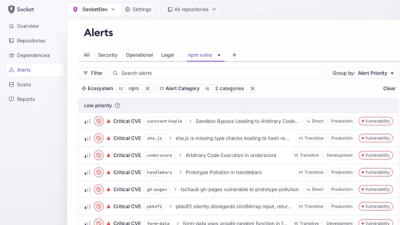
Introducing Custom Tabs for Org Alerts
Create and share saved alert views with custom tabs on the org alerts page, making it easier for teams to return to consistent, named filter sets.
By André Staltz - Jan 20, 2026
http-middleware
Advanced tools





Middleware layer for http.
$ npm install http-middleware
const mw = require('http-middleware')
const http = require('http')

http.createServer((req, res) => {
  const fns = [
    (req, res) => res.write('oh yeah!'),
    (req, res, next) => {
      res.statusCode = 200
      next()
    }
  ]
  mw(req, res, fns, res.end)
}).listen(1337)

httpMiddleware()
Create a middleware layer that runs an array of middleware functions in
sequence. Middleware functions have a signature of req, res, next where
next is optional.
Middleware is typically an array of functions that is run before executing 'business logic'. Function types include authentication, rate limiting, logging and more.
Frameworks are a bundle of opinions. By splitting features off into separate modules (like this middleware module) users can compose their perfect framework. See http-framework for more modules in this spirit.
FAQs
Middleware layer for http
The npm package http-middleware receives a total of 1 weekly downloads. As such, http-middleware popularity was classified as not popular.
We found that http-middleware demonstrated a not healthy version release cadence and project activity because the last version was released a year ago. It has 1 open source maintainer collaborating on the project.
Did you know?

Socket for GitHub automatically highlights issues in each pull request and monitors the health of all your open source dependencies. Discover the contents of your packages and block harmful activity before you install or update your dependencies.
Product
Create and share saved alert views with custom tabs on the org alerts page, making it easier for teams to return to consistent, named filter sets.

Product
Socket’s Rust and Cargo support is now generally available, providing dependency analysis and supply chain visibility for Rust projects.

Security News
Chrome 144 introduces the Temporal API, a modern approach to date and time handling designed to fix long-standing issues with JavaScript’s Date object.