

Product
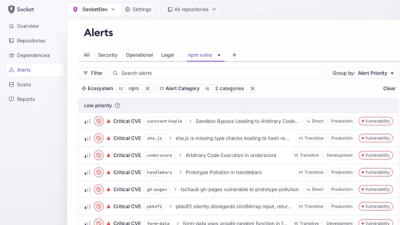
Introducing Custom Tabs for Org Alerts
Create and share saved alert views with custom tabs on the org alerts page, making it easier for teams to return to consistent, named filter sets.
By André Staltz - Jan 20, 2026
Self-signed PEM key and certificate ready for use in your HTTPS server.
A dead simple way to get an HTTPS server running in development with no need to generate the self signed PEM key and certificate.


npm install https-pem
Warning: Upon installation a private key and a self signed
certificate will be generated inside ./node_modules/https-pem. The
certificate is valid for 365 days and no attempt have been made to make
this secure in any way. I suggest only using this for testing and
development where you just need an easy and quick way to run an HTTPS
server with Node.js.
var https = require('https')
var pem = require('https-pem')

var server = https.createServer(pem, function (req, res) {
  res.end('This is servered over HTTPS')
})

server.listen(443, function () {
  console.log('The server is running on https://localhost')
})
When connecting to an HTTPS server from Node.js that uses a self-signed
certificate, https.request will normally emit an error and refuse to
complete the reuqest. To get around that simply set the
rejectUnauthorized option to false:
var opts = { rejectUnauthorized: false }

var req = https.request(opts, function (res) {
  // ...
})

req.end()
If using curl to connect to a Node.js HTTPS server using a
self-signed certificate, use the -k option:
curl -k https://localhost:4443
The https-pem module simply exposes an object with two properties:
key and cert.
pem.keyThe private key (RSA).
pem.certThe certificate.
MIT
FAQs
Self-signed PEM key and certificate ready for use in your HTTPS server
The npm package https-pem receives a total of 1,370 weekly downloads. As such, https-pem popularity was classified as popular.
We found that https-pem demonstrated a not healthy version release cadence and project activity because the last version was released a year ago. It has 1 open source maintainer collaborating on the project.
Did you know?

Socket for GitHub automatically highlights issues in each pull request and monitors the health of all your open source dependencies. Discover the contents of your packages and block harmful activity before you install or update your dependencies.
Product
Create and share saved alert views with custom tabs on the org alerts page, making it easier for teams to return to consistent, named filter sets.
Product
Socket’s Rust and Cargo support is now generally available, providing dependency analysis and supply chain visibility for Rust projects.

Security News
Chrome 144 introduces the Temporal API, a modern approach to date and time handling designed to fix long-standing issues with JavaScript’s Date object.