


Research
PyPI Package Impersonates SymPy to Deliver Cryptomining Malware
Malicious PyPI package sympy-dev targets SymPy users, a Python symbolic math library with 85 million monthly downloads.
By Kirill Boychenko - Jan 21, 2026
Install My Stuff - an opinionated npm module installer
npm install -g ims
IMS is a npm module installer that uses an p2p cache hosted on the Dat network to resolve all dependencies as fast as possible.
The cache is stored in a hypertrie which makes it fast to update and always get the latest version while minimising the amount of roundtrips, compared to npm install.
The module tarballs themself are still downloaded from the npm registry
# installs hypercore to ./node_modules
ims hypercore
For more options do ims --help
Usage: ims <package-name?> [options]

  --save, -s        saves the dep to package.json
  --save-dev, -S    saves the dev dep to package.json
  --global, -g      installs as a cli tool
  --production, -p  skip dev dependencies
  --update, -u      force update the cache
  --quiet, -q       do not print anything
  --seed            seed all metadata on the dat network

If <package-name> is omitted the deps from package.json is used
IMS stores its cache in ~/.ims.
Note that it uses sparse files for its database format so use ls -sh to list the actual size of the cache.
MIT
FAQs
Install My Stuff - an opinionated npm module installer
The npm package ims receives a total of 1 weekly downloads. As such, ims popularity was classified as not popular.
We found that ims demonstrated a not healthy version release cadence and project activity because the last version was released a year ago. It has 1 open source maintainer collaborating on the project.
Did you know?

Socket for GitHub automatically highlights issues in each pull request and monitors the health of all your open source dependencies. Discover the contents of your packages and block harmful activity before you install or update your dependencies.
Research
Malicious PyPI package sympy-dev targets SymPy users, a Python symbolic math library with 85 million monthly downloads.
Product
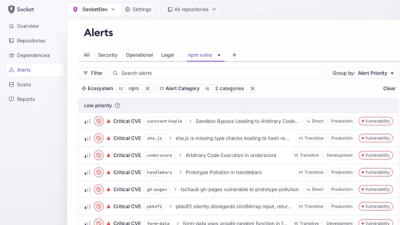
Create and share saved alert views with custom tabs on the org alerts page, making it easier for teams to return to consistent, named filter sets.
Product
Socket’s Rust and Cargo support is now generally available, providing dependency analysis and supply chain visibility for Rust projects.