

Security News
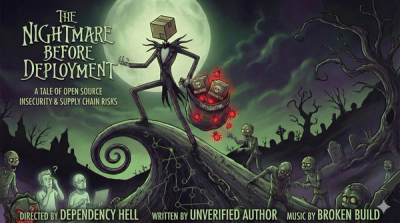
The Nightmare Before Deployment
Season’s greetings from Socket, and here’s to a calm end of year: clean dependencies, boring pipelines, no surprises.
By Ahmad Nassri - Dec 16, 2025
js-generic-functions
Advanced tools
An implementation of generic functions based on CLOS and the protocols defined in the Art of the Metaobject protocol, adapted for JS. These adaptations include using the prototype chain instead of classes and additionally providing extensible specializers (as in https://github.com/sbcl/specializable). For the moment, this is only used to provide a Shape specializer, as the details of the interaction between such specializers and subtyping are an open question.
import { defgeneric } from "./genfuns.js";
Defining a function works by calling with some information about the function name and arguments. Methods are then added by calling the appropriate methods with a pair of arguments: a list of specializers (prototypes in the simple case, although there are other options) and a function to run if those specializers match.
const example1generic = defgeneric("example1", "a", "b")
  .primary([Number, Object], (n, __) => [1, n])
  .primary([Object, Number], (_, n) => [2, n])
  .primary([Object, Object], (_, __) => [5, null]);
After a generic function has been defined, you can get the function to call it by accessing its attribute.
const example1 = example1generic.fn;

expect(example1(5, {})).toEqual([1, 5]);
expect(example1({}, 6)).toEqual([2, 6]);
expect(example1("hello", {})).toEqual([5, null]);
expect(example1({}, "world")).toEqual([5, null]);
expect(example1({}, {})).toEqual([5, null]);
If a separate reference to the generic function object is maintained, you can add methods like so:
example1generic
  .primary([String, Object], (s, __) => [3, s])
  .primary([Object, String], (_, s) => [4, s]);

expect(example1("hello", {})).toEqual([3, "hello"]);
expect(example1({}, "world")).toEqual([4, "world"]);
import { Shape, Eql } from "./genfuns.js";
const example2 = defgeneric("example2", "inp")
  .primary([Shape("a", "b")], inp => `a: ${inp.a} b: ${inp.b}`)
  .primary([Shape("a")], inp => `a: ${inp.a} b: <missing>`)
  .primary([Shape(["c", 1])], inp => `c: one`)
  .primary([Shape(["c", 2])], inp => `c: two`)
  .primary([Eql(1)], inp => "one").fn;

expect(example2({ a: 3, q: "whatever" })).toEqual("a: 3 b: <missing>");
expect(example2({ a: 3, b: 4, q: "whatever" })).toEqual("a: 3 b: 4");
expect(example2({ c: 1, q: "whatever" })).toEqual("c: one");
expect(example2({ c: 2, q: "whatever" })).toEqual("c: two");
expect(example2(1)).toEqual("one");
FAQs
A CLOS-inspired implementation of generic functions
The npm package js-generic-functions receives a total of 109 weekly downloads. As such, js-generic-functions popularity was classified as not popular.
We found that js-generic-functions demonstrated a healthy version release cadence and project activity because the last version was released less than a year ago. It has 0 open source maintainers collaborating on the project.
Did you know?

Socket for GitHub automatically highlights issues in each pull request and monitors the health of all your open source dependencies. Discover the contents of your packages and block harmful activity before you install or update your dependencies.
Security News
Season’s greetings from Socket, and here’s to a calm end of year: clean dependencies, boring pipelines, no surprises.

Research
/Security News
Impostor NuGet package Tracer.Fody.NLog typosquats Tracer.Fody and its author, using homoglyph tricks, and exfiltrates Stratis wallet JSON/passwords to a Russian IP address.

Security News
Deno 2.6 introduces deno audit with a new --socket flag that plugs directly into Socket to bring supply chain security checks into the Deno CLI.