

Product
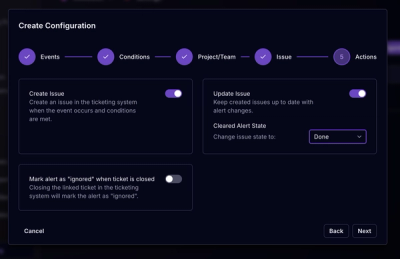
Socket for Jira Is Now Available
Socket for Jira lets teams turn alerts into Jira tickets with manual creation, automated ticketing rules, and two-way sync.
By Jeppe Hasseriis - Apr 20, 2026
openapi-to-postmanv2
Advanced tools

Supercharge your API workflow. Modern software is built on APIs. Postman helps you develop APIs faster.



To use the converter as a Node module, you need to have a copy of the NodeJS runtime. The easiest way to do this is through npm. If you have NodeJS installed you have npm installed as well.
$ npm install openapi-to-postmanv2
If you want to use the converter in the CLI, install it globally with NPM:
$ npm i -g openapi-to-postmanv2
The converter can be used as a CLI tool as well. The following command line options are available.
openapi2postmanv2 [options]
-s <source>, --spec <source>
Used to specify the OpenAPI specification (file path) which is to be converted
-o <destination>, --output <destination>
Used to specify the destination file in which the collection is to be written
-p, --pretty
Used to pretty print the collection object while writing to a file
-i, --interface-version
Specifies the interface version of the converter to be used. Value can be 'v2' or 'v1'. Default is 'v2'.
-O, --options
Used to supply options to the converter, for complete options details see here
-c, --options-config
Used to supply options to the converter through config file, for complete options details see here
-t, --test
Used to test the collection with an in-built sample specification
-v, --version
Specifies the version of the converter
-h, --help
Specifies all the options along with a few usage examples on the terminal
--sync <collectionFile>
Sync spec changes with an existing Postman Collection file
--sync-options <syncOptions>
Comma-separated list of sync options (e.g., syncExamples=true)
--sync-options-config <syncOptionsConfig>
JSON file containing sync options
$ openapi2postmanv2 -s spec.yaml -o collection.json -p -O folderStrategy=Tags,includeAuthInfoInExample=false
$ openapi2postmanv2 -s spec.yaml -o collection.json -p -c ./examples/cli-options-config.json
"<Error: Too many levels of nesting to fake this schema>" kind of errors present in converted collection)$ openapi2postmanv2 -s spec.yaml -o collection.json -p -O folderStrategy=Tags,requestParametersResolution=Example,optimizeConversion=false,stackLimit=50
$ openapi2postmanv2 --test
The sync functionality allows you to update an existing Postman collection with changes from your OpenAPI specification.
$ openapi2postmanv2 -s spec.yaml --sync collection.json -o synced-collection.json
$ openapi2postmanv2 -s spec.yaml --sync collection.json --sync-options syncExamples=true -o synced-collection.json
$ openapi2postmanv2 -s spec.yaml --sync collection.json --sync-options-config sync-options.json -o synced-collection.json
sync-options.json:
{
  "syncExamples": true
}
For a complete list of sync options and their usage, see SYNC_OPTIONS.md
In order to use the convert in your node application, you need to import the package using require.
var Converter = require('openapi-to-postmanv2')
The converter provides the following functions:
The convert function takes in your OpenAPI 3.0, 3.1 and Swagger 2.0 specification (YAML / JSON) and converts it to a Postman collection.
Signature: convert (data, options, callback);
data:
{ type: 'file', data: 'filepath' }
OR
{ type: 'string', data: '<entire OpenAPI string - JSON or YAML>' }
OR
{ type: 'json', data: OpenAPI-JS-object }
options:
{
  schemaFaker: true,
  requestNameSource: 'fallback',
  indentCharacter: ' '
}
/*
All three properties are optional. Check the options section below for possible values for each option.
*/
Note: All possible values of options and their usage can be found over here: OPTIONS.md
callback:
function (err, result) {
  /*
  result = {
    result: true,
    output: [
      {
        type: 'collection',
        data: {..collection object..}
      }
    ]
  }
  */
}
The syncCollection function syncs changes from an OpenAPI specification with an existing Postman collection.
Signature: syncCollection (data, options, collection, syncOptions, callback);
data:
{ type: 'file', data: 'filepath' }
OR
{ type: 'string', data: '<entire OpenAPI string - JSON or YAML>' }
OR
{ type: 'json', data: OpenAPI-JS-object }
options:
{
  parametersResolution: 'Example',
  folderStrategy: 'Tags'
}
/*
Regular conversion options. Check the options section below for possible values.
*/
collection:
// Existing Postman collection object (JSON)
const collection = {
  info: { name: 'My API', schema: '...' },
  item: [...]
}
syncOptions:
{
  syncExamples: true
}
/*
Sync-specific options that control the merge behavior.
All sync options are optional. Check SYNC_OPTIONS.md for details.
*/
Note: All possible values of sync options can be found here: SYNC_OPTIONS.md
callback:
function (err, result) {
  /*
  result = {
    result: true,
    output: [
      {
        type: 'collection',
        data: {..synced collection object..}
      }
    ]
  }
  */
}
Check out complete list of options and their usage at OPTIONS.md
result - Flag responsible for providing a status whether the conversion was successful or not.
reason - Provides the reason for an unsuccessful conversion, defined only if result if false.
output - Contains an array of Postman objects, each one with a type and data. The only type currently supported is collection.
const fs = require('fs'),
  Converter = require('openapi-to-postmanv2'),
  openapiData = fs.readFileSync('sample-spec.yaml', {encoding: 'UTF8'});

Converter.convert({ type: 'string', data: openapiData },
  {}, (err, conversionResult) => {
    if (!conversionResult.result) {
      console.log('Could not convert', conversionResult.reason);
    }
    else {
      console.log('The collection object is: ', conversionResult.output[0].data);
    }
  }
);
const fs = require('fs'),
  Converter = require('openapi-to-postmanv2'),
  openapiData = fs.readFileSync('sample-spec.yaml', {encoding: 'UTF8'}),
  existingCollection = JSON.parse(fs.readFileSync('collection.json', {encoding: 'UTF8'}));

const syncOptions = {
  syncExamples: true
};

Converter.syncCollection(
  { type: 'string', data: openapiData },
  {}, // conversion options
  existingCollection,
  syncOptions,
  (err, syncResult) => {
    if (!syncResult.result) {
      console.log('Could not sync', syncResult.reason);
    }
    else {
      console.log('The collection object is: ', syncResult.output[0].data);
    }
  }
);
The validate function is meant to ensure that the data that is being passed to the convert function is a valid JSON object or a valid (YAML/JSON) string.
The validate function is synchronous and returns a status object which conforms to the following schema
{
  type: 'object',
  properties: {
    result: { type: 'boolean'},
    reason: { type: 'string' }
  },
  required: ['result']
}
result - true if the data looks like OpenAPI and can be passed to the convert function
reason - Provides a reason for an unsuccessful validation of the specification
| postman | openapi | related options |
|---|---|---|
| collectionName | info.title | - |
| description | info.description + info.contact | - |
| collectionVariables | server.variables + pathVariables | - |
| folderName | paths.path / tags.name | folderStrategy |
| requestName | operationItem(method).summary / operationItem(method).operationId / url | requestNameSource |
| request.method | path.method | - |
| request.headers | parameter (in = header) | - |
| request.body | operationItem(method).requestBody | requestParametersResolution, exampleParametersResolution |
| request.url.raw | server.url (path level server >> openapi server) + path | - |
| request.url.variables | parameter (in = path) | - |
| request.url.params | parameter (in = query) | - |
| api_key in (query or header) | components.securitySchemes.api_key | includeAuthInfoInExample |
FAQs
Convert a given OpenAPI specification to Postman Collection v2.0
The npm package openapi-to-postmanv2 receives a total of 116,864 weekly downloads. As such, openapi-to-postmanv2 popularity was classified as popular.
We found that openapi-to-postmanv2 demonstrated a healthy version release cadence and project activity because the last version was released less than a year ago. It has 10 open source maintainers collaborating on the project.
Did you know?

Socket for GitHub automatically highlights issues in each pull request and monitors the health of all your open source dependencies. Discover the contents of your packages and block harmful activity before you install or update your dependencies.
Product
Socket for Jira lets teams turn alerts into Jira tickets with manual creation, automated ticketing rules, and two-way sync.
Company News
Socket won two 2026 Reppy Awards from RepVue, ranking in the top 5% of all sales orgs. AE Alexandra Lister shares what it's like to grow a sales career here.

Security News
NIST will stop enriching most CVEs under a new risk-based model, narrowing the NVD's scope as vulnerability submissions continue to surge.