Research
Namastex.ai npm Packages Hit with TeamPCP-Style CanisterWorm Malware
Malicious Namastex.ai npm packages appear to replicate TeamPCP-style Canister Worm tradecraft, including exfiltration and self-propagation.
particle-cli-library-manager
Advanced tools
This is a node module for managing repositories of firmware libraries. It supports two types of repositories:
a local repo, stored as a directory on the file system
Build library repo (http://build.particle.io)
The local library repo is writable, while Build is read-only.
The module provides library management:
enumerate libraries in a repository
add a library to a repository (such as reading a library from Build and adding it to the local repository)
TODO: remove library is not supported in this prototype.
When changing the code please adhere to test-first principles - first change the unit tests and integration tests to fail without your intended change, and then make the change, tweaking code/tests until green is seen.

FAQs
library manager work in progress
The npm package particle-cli-library-manager receives a total of 5 weekly downloads. As such, particle-cli-library-manager popularity was classified as not popular.
We found that particle-cli-library-manager demonstrated a not healthy version release cadence and project activity because the last version was released a year ago. It has 3 open source maintainers collaborating on the project.
Did you know?

Socket for GitHub automatically highlights issues in each pull request and monitors the health of all your open source dependencies. Discover the contents of your packages and block harmful activity before you install or update your dependencies.

Research
Malicious Namastex.ai npm packages appear to replicate TeamPCP-style Canister Worm tradecraft, including exfiltration and self-propagation.

Product
Explore exportable charts for vulnerabilities, dependencies, and usage with Reports, Socket’s new extensible reporting framework.

Product
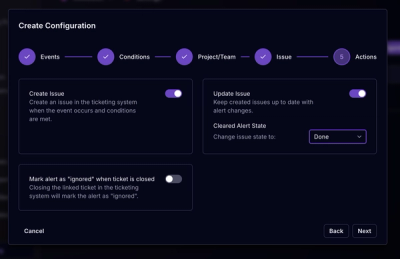
Socket for Jira lets teams turn alerts into Jira tickets with manual creation, automated ticketing rules, and two-way sync.