

Product
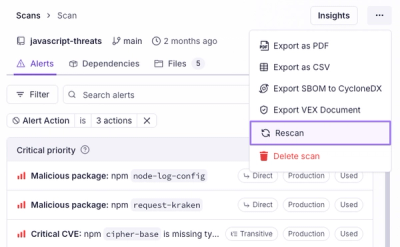
Introducing Immutable Scans
Scan results now load faster and remain consistent over time, with stable URLs and on-demand rescans for fresh security data.
By Nolan Lawson - Jan 23, 2026
Fetch npm registry metadata for a list of npm package names
Download node at nodejs.org and install it, if you haven't already.
npm install pkgs --save
var pkgs = require("pkgs")

// Pass in an array of package names
pkgs(["ghwd", "domready", "lodash.pluck"], function(err, packages){
  console.log(err, packages)
})

// Pick some desired properties
var names = ["ghwd", "domready", "lodash.pluck"]
var options = {
  pick: ["name", "description", "repository"]
}
pkgs(names, options, function(err, packages){
  console.log(err, packages)
})

// Alternatively, omit some undesireable properties
var names = ["ghwd", "domready", "lodash.pluck"]
var options = {
  omit: ["versions", "readme"]
}
pkgs(names, options, function(err, packages){
  console.log(err, packages)
})
npm install
npm test
ISC
Generated by package-json-to-readme
FAQs
Fetch npm registry metadata for a list of npm package names
We found that pkgs demonstrated a not healthy version release cadence and project activity because the last version was released a year ago. It has 2 open source maintainers collaborating on the project.
Did you know?

Socket for GitHub automatically highlights issues in each pull request and monitors the health of all your open source dependencies. Discover the contents of your packages and block harmful activity before you install or update your dependencies.
Product
Scan results now load faster and remain consistent over time, with stable URLs and on-demand rescans for fresh security data.
Product
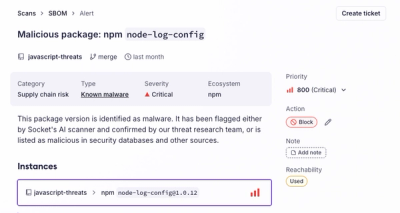
Socket's new Alert Details page is designed to surface more context, with a clearer layout, reachability dependency chains, and structured review.
Product
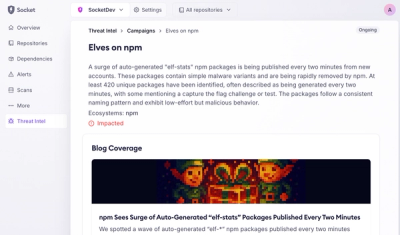
Campaign-level threat intelligence in Socket now shows when active supply chain attacks affect your repositories and packages.