

Product
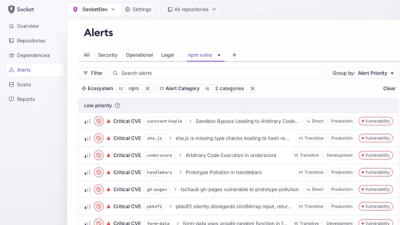
Introducing Custom Tabs for Org Alerts
Create and share saved alert views with custom tabs on the org alerts page, making it easier for teams to return to consistent, named filter sets.
By André Staltz - Jan 20, 2026
replicate-mini
Advanced tools
This is a low-level Node.js client for Replicate's HTTP API.
It is dynamically generated from Replicate's OpenAPI schema.
npm install replicate-mini
Create a Replicate API token and set the REPLICATE_API_TOKEN environment variable:
export REPLICATE_API_TOKEN=r8_...
Then create the client:
import Replicate from 'replicate-mini'

const replicate = new Replicate()
Then make requests:
const prediction = await replicate.predictions.create({
  version: '5c7d5dc6dd8bf75c1acaa8565735e7986bc5b66206b55cca93cb72c9bf15ccaa',
  input: { text: 'whirled peas' }
})

console.log({ prediction })
account.get()Get the authenticated account
collections.list()List collections of models
collections.get({collection_slug})Get a collection of models
Params:
collection_slug: Required. The slug of the collection, like super-resolution or image-restoration. See replicate.com/collections.deployments.list()List deployments
deployments.create({hardware, max_instances, min_instances, model, name, version})Create a deployment
Params:
hardware: Required. The SKU for the hardware used to run the modelmax_instances: Required. The maximum number of instances for scalingmin_instances: Required. The minimum number of instances for scalingmodel: Required. The full name of the model that you want to deploy ename: Required. The name of the deploymentversion: Required. The 64-character string ID of the model version that you want to deploydeployments.delete({deployment_owner, deployment_name})Delete a deployment
Params:
deployment_owner: Required. The name of the user or organization that owns the deployment.deployment_name: Required. The name of the deployment.deployments.get({deployment_owner, deployment_name})Get a deployment
Params:
deployment_owner: Required. The name of the user or organization that owns the deployment.deployment_name: Required. The name of the deployment.deployments.update({deployment_owner, deployment_name})Update a deployment
Params:
deployment_owner: Required. The name of the user or organization that owns the deployment.deployment_name: Required. The name of the deployment.hardware: The SKU for the hardware used to run the modelmax_instances: The maximum number of instances for scalingmin_instances: The minimum number of instances for scalingversion: The ID of the model version that you want to deploydeployments.predictions.create({deployment_owner, deployment_name, input})Create a prediction using a deployment
Params:
deployment_owner: Required. The name of the user or organization that owns the deployment.deployment_name: Required. The name of the deployment.input: Required. The model's input as a JSON objectstream: **This field is deprecatedwebhook: An HTTPS URL for receiving a webhook when the prediction has new outputwebhook_events_filter: By default, we will send requests to your webhook URL whenever there are new outputs or the prediction has finishedhardware.list()List available hardware for models
models.list()List public models
models.create({hardware, name, owner, visibility})Create a model
Params:
hardware: Required. The SKU for the hardware used to run the modelname: Required. The name of the modelowner: Required. The name of the user or organization that will own the modelvisibility: Required. Whether the model should be public or privatecover_image_url: A URL for the model's cover imagedescription: A description of the modelgithub_url: A URL for the model's source code on GitHublicense_url: A URL for the model's licensepaper_url: A URL for the model's papermodels.search()Search public models
models.delete({model_owner, model_name})Delete a model
Params:
model_owner: Required. The name of the user or organization that owns the model.model_name: Required. The name of the model.models.get({model_owner, model_name})Get a model
Params:
model_owner: Required. The name of the user or organization that owns the model.model_name: Required. The name of the model.models.predictions.create({model_owner, model_name, input})Create a prediction using an official model
Params:
model_owner: Required. The name of the user or organization that owns the model.model_name: Required. The name of the model.input: Required. The model's input as a JSON objectstream: **This field is deprecatedwebhook: An HTTPS URL for receiving a webhook when the prediction has new outputwebhook_events_filter: By default, we will send requests to your webhook URL whenever there are new outputs or the prediction has finishedmodels.versions.list({model_owner, model_name})List model versions
Params:
model_owner: Required. The name of the user or organization that owns the model.model_name: Required. The name of the model.models.versions.delete({model_owner, model_name, version_id})Delete a model version
Params:
model_owner: Required. The name of the user or organization that owns the model.model_name: Required. The name of the model.version_id: Required. The ID of the version.models.versions.get({model_owner, model_name, version_id})Get a model version
Params:
model_owner: Required. The name of the user or organization that owns the model.model_name: Required. The name of the model.version_id: Required. The ID of the version.trainings.create({model_owner, model_name, version_id, destination, input})Create a training
Params:
model_owner: Required. The name of the user or organization that owns the model.model_name: Required. The name of the model.version_id: Required. The ID of the version.destination: Required. A string representing the desired model to push to in the format {destination_model_owner}/{destination_model_name}input: Required. An object containing inputs to the Cog model's train() functionwebhook: An HTTPS URL for receiving a webhook when the training completeswebhook_events_filter: By default, we will send requests to your webhook URL whenever there are new outputs or the training has finishedpredictions.list()List predictions
predictions.create({input, version})Create a prediction
Params:
input: Required. The model's input as a JSON objectversion: Required. The ID of the model version that you want to runstream: **This field is deprecatedwebhook: An HTTPS URL for receiving a webhook when the prediction has new outputwebhook_events_filter: By default, we will send requests to your webhook URL whenever there are new outputs or the prediction has finishedpredictions.get({prediction_id})Get a prediction
Params:
prediction_id: Required. The ID of the prediction to get.predictions.cancel({prediction_id})Cancel a prediction
Params:
prediction_id: Required. The ID of the prediction to cancel.trainings.list()List trainings
trainings.get({training_id})Get a training
Params:
training_id: Required. The ID of the training to get.trainings.cancel({training_id})Cancel a training
Params:
training_id: Required. The ID of the training you want to cancel.webhooks.default.secret.get()Get the signing secret for the default webhook
FAQs
A low-level Node.js client for Replicate's HTTP API
The npm package replicate-mini receives a total of 0 weekly downloads. As such, replicate-mini popularity was classified as not popular.
We found that replicate-mini demonstrated a not healthy version release cadence and project activity because the last version was released a year ago. It has 0 open source maintainers collaborating on the project.
Did you know?

Socket for GitHub automatically highlights issues in each pull request and monitors the health of all your open source dependencies. Discover the contents of your packages and block harmful activity before you install or update your dependencies.
Product
Create and share saved alert views with custom tabs on the org alerts page, making it easier for teams to return to consistent, named filter sets.
Product
Socket’s Rust and Cargo support is now generally available, providing dependency analysis and supply chain visibility for Rust projects.

Security News
Chrome 144 introduces the Temporal API, a modern approach to date and time handling designed to fix long-standing issues with JavaScript’s Date object.