

Security News
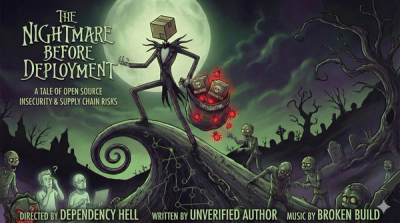
The Nightmare Before Deployment
Season’s greetings from Socket, and here’s to a calm end of year: clean dependencies, boring pipelines, no surprises.
By Ahmad Nassri - Dec 16, 2025
secure-file-transfer
Advanced tools
[**API documentation**](https://jeremyckahn.github.io/secure-file-transfer/)
secure-file-transfernpm i --save secure-file-transfer
secure-file-transfer (SFT) is the easiest solution for securely getting a file from one web browser to another. It works by connecting two people via WebTorrent and transferring files peer-to-peer via WebRTC. Files are encrypted prior to transmission and decrypted upon receipt, so data is never exposed to anyone other than the intended recipient. Files are never sent to a server, and no server setup is needed to use SFT.
SFT is the library that Chitchatter uses to transfer files to connected peers.
secure-file-transfer?SFT builds on top of WebTorrent and several other excellent JavaScript libraries. It is specially tuned to minimize memory usage, thus enabling the delivery of very large files (as much as your browser can handle).
WebTorrent is a powerful library, but there are a number of important things it doesn't do:
wormhole-crypto to do this automatically.By default, WebTorrent stores torrents in system memory. This is also not suitable for very large files. To work around this, SFT uses idb-chunk-store to stream data directly from the sender's disk to the receiver's and keep memory usage low.
SFT has no hard limits around file sizes, but there are a number of browser limitations to keep in mind.
Since torrent data is temporarily held in IndexedDB via idb-chunk-store (to minimize memory usage), it is subject to browser storage limits. Once downloaded, the data is streamed from IndexedDB to the local file system as a plain file via StreamSaver.js. However, browsers will limit how long the stream can last. Currently, the time limit for this operation is 30 seconds for Firefox and 5 minutes for Chromium-based browsers.
On one page have, something like this (in TypeScript):
import { fileTransfer } from "secure-file-transfer";

document.body.innerHTML = `
<input type="text" placeholder="Encryption key" />
<input type="file" multiple />
<h1>Magnet URI:</h1>
<p />
`;

const fileInput = document.querySelector('[type="file"]');
const passwordInput = document.querySelector('[type="text"]');
const p = document.querySelector("p");

const handleChange = async (evt: Event) => {
  const password = passwordInput.value;
  const magnetURI = await fileTransfer.offer(evt.target.files, password);
  p.innerText = magnetURI;
};

fileInput?.addEventListener("change", handleChange);
Then on another page, something like this:
import { fileTransfer } from "secure-file-transfer";

document.body.innerHTML = `
<input type="text" placeholder="Encryption key" style="display: block;" />
<textarea placeholder="Magnet URI"></textarea>
<button style="display: block;">Download file(s)</button>
<p></p>
`;

const downloadButton = document.querySelector("button");
const passwordInput = document.querySelector('[type="text"]');
const magnetUriInput = document.querySelector("textarea");
const status = document.querySelector("p");

const handleDownloadClick = async (evt: Event) => {
  status?.innerText = "Downloading...";
  const password = passwordInput.value;
  const magnetUri = magnetUriInput.value;
  await fileTransfer.download(magnetUri, password, { doSave: true });
  status?.innerText = "Done!";
};

downloadButton.addEventListener("click", handleDownloadClick);
If the encryption keys match, the file will be transferred directly from the offerer to the receiver and saved to the local file system (so long as both peers keep their pages open).
MIT.
FAQs
A library to encrypt and transfer files P2P in the browser
The npm package secure-file-transfer receives a total of 46 weekly downloads. As such, secure-file-transfer popularity was classified as not popular.
We found that secure-file-transfer demonstrated a not healthy version release cadence and project activity because the last version was released a year ago. It has 1 open source maintainer collaborating on the project.
Did you know?

Socket for GitHub automatically highlights issues in each pull request and monitors the health of all your open source dependencies. Discover the contents of your packages and block harmful activity before you install or update your dependencies.
Security News
Season’s greetings from Socket, and here’s to a calm end of year: clean dependencies, boring pipelines, no surprises.

Research
/Security News
Impostor NuGet package Tracer.Fody.NLog typosquats Tracer.Fody and its author, using homoglyph tricks, and exfiltrates Stratis wallet JSON/passwords to a Russian IP address.

Security News
Deno 2.6 introduces deno audit with a new --socket flag that plugs directly into Socket to bring supply chain security checks into the Deno CLI.