

Product
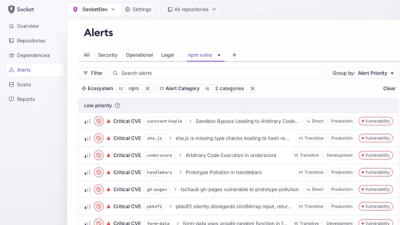
Introducing Custom Tabs for Org Alerts
Create and share saved alert views with custom tabs on the org alerts page, making it easier for teams to return to consistent, named filter sets.
By André Staltz - Jan 20, 2026
Docker implemented in shell. Forked from bocker.
cgroups, iptables, chroot and namespaces(7) Usage: shocker [options] <command>
Commands:
list # list containers
start # start a container
change # modify a container
stop # stop a container
remove # remove a container
image list # list images
image pull # fetch a remote image
image create # create an image
image change # modify an image
image remove # remove an image
Options:
-h, --help output usage information
-v, --version output version information
Examples:
$ shocker image pull -h # output usage for the pull command
$ shocker image pull alpine@latest # fetch alpine linux from docker
$ shocker image list # list local images
$ shocker start img_1235 ash # start an ash shell from an image
$ shocker change img_1235 -n beep # rename a container
$ shocker change beep -m 500m # change a container's memory limit
$ shocker list # list containers
$ shocker stop beep # stop a running container
$ shocker remove beep # remove a stopped container
$ shocker image remove img_1235 # remove a local image
$ curl -sL https://github.com/stamf/shocker/archive/master.tar.gz | tar xz
The following packages are needed to run shocker.
Because most distributions do not ship a new enough version of util-linux you will probably need to grab the sources from here and compile it yourself.
Additionally your system will need to be configured with the following:
/var/shockerbridge0 and an IP of 10.0.0.1/24/proc/sys/net/ipv4/ip_forwardbridge0 to a physical interface.Even if you meet the above prerequisites you probably still want to run shocker in a virtual machine. Shocker runs as root and among other things needs to make changes to your network interfaces, routing table, and firewall rules.
This means btrfs is not available on your machine. Luckily many package
managers offer a way to install this in a single command:
Debian/Ubuntu: sudo apt-get install btrfs-toolsThat means we don't have a btrfs filesystem mounted, so let's create one!
From a file! Because that's easier than doing partitions!
# create a new filesystem from an empty file
# skip this step if mounting an actual device
$ dd if=/dev/zero of=btrfs-hdd.img bs=1G count=2
$ sudo losetup loop0 btrfs-hdd.img

# mount the filesystem
$ sudo mkfs.btrfs /dev/loop0

# create `/var/shocker` if it does not exist
$ [ -d '/var/shocker' ] || sudo mkdir -p '/var/shocker'

# open file as block device and mount
$ sudo mount '/dev/loop0' '/var/shocker'
$ sudo btrfs filesystem show '/var/shocker'
Not every distro adheres to the Linux Filesystem Hierarchy Standard, but no need to sweat about it, we can create our own:
$ sudo mkdir /tmp
$ sudo chmod 1777 /tmp   # open to everyone + set sticky bit
This means that a network device is not found. To enable it run shocker route <devicename> to setup iptables rules and link the device.
This means cgroups are not yet mounted on your system. Use cgconfig to start
them up (example below uses System V init):
$ sudo service cgconfig start
GPL-3
FAQs
Docker implemented in shell
The npm package shocker receives a total of 4 weekly downloads. As such, shocker popularity was classified as not popular.
We found that shocker demonstrated a not healthy version release cadence and project activity because the last version was released a year ago. It has 1 open source maintainer collaborating on the project.
Did you know?

Socket for GitHub automatically highlights issues in each pull request and monitors the health of all your open source dependencies. Discover the contents of your packages and block harmful activity before you install or update your dependencies.
Product
Create and share saved alert views with custom tabs on the org alerts page, making it easier for teams to return to consistent, named filter sets.
Product
Socket’s Rust and Cargo support is now generally available, providing dependency analysis and supply chain visibility for Rust projects.

Security News
Chrome 144 introduces the Temporal API, a modern approach to date and time handling designed to fix long-standing issues with JavaScript’s Date object.