

Product
Introducing Reports: An Extensible Reporting Framework for Socket Data
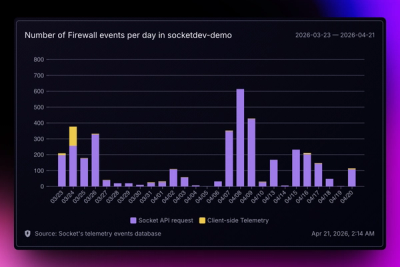
Explore exportable charts for vulnerabilities, dependencies, and usage with Reports, Socket’s new extensible reporting framework.
By André Staltz - Apr 21, 2026
spawnpoint
Advanced tools
Agnostic JS framework that empowers devs to focus on quickly building apps, rather than focusing on application config, health-checks, application structure, or architecture to build a 12 factor app in Docker.






Agnostic JS framework that empowers devs to focus on quickly building apps, rather than focusing on application config, health-checks, application structure, or architecture to build a 12 factor app in Docker.
This quick demo shows that you can create a basic API in just a couple files that's defined by configuration, but is 12 factor ready, Docker ready, and much more! Check out the full demo here.
npm install spawnpoint --save
// ~/app.js
const spawnpoint = require('spawnpoint');

const app = new spawnpoint();
app.setup();
// ~/config/app.json
{
	"name": "Example App",
	"plugins": [
		"spawnpoint-express", // this creates an express server
		"spawnpoint-redis"	// this establishes a connection to a redis server via redisio
	],
	"autoload": [
		// this autoloads all js files in the ~/controllers folder
		{
			"name": "Controllers",
			"folder": "controllers"
		}
	]
}
// ~/controllers/app.js
module.exports = (app) => {
	// express is already setup and configured via JSON
	app.server.get('/user/:id', (req, res) => {
		// redis is already connected and ready
		app.redis.get(`user:${req.params.id}`, (err, results) => {
			if(err){ res.fail(err); } // automatic error handling

			// return JSON formated success with a success code
			res.success('users.list', {
				user: JSON.parse(results)
			});
		});
	});
};
Spawnpoint plugins create opinionated & re-usable components that reduce the code needed to kickstart projects. Plugins are configured via JSON config files, making them easier to share between projects with different needs.
We constantly found our dev team rebuilding the same components to our micro services that make up the Multiplayer Gaming Cloud platform at Nodecraft. Most of the features had blatant copy/paste to ensure our applications could:
require() recursion management overhead ?--command="args" that override config filesThe most opinionated design choice that Spawnpoint makes is hoisting the entire framework runtime into each file. You can name this variable anything, but the best practice is to name this variable app. All system models, libraries, and config are hoisted to this variable with several namespaces:
app.configAll application config is mounted here. For example app.config.express is where all configuration is available to the spawnpoint-express plugin.
app.statusTracks the current application lifecycle.
app.containerizedDetects if app is running in a container.
app.cwdReturns the main folder where your application lives.
When you hoist your library on the app variable you can access it on any other autoloaded js file.
module.exports = (app) => {
	app.yourLibName = {
		add(a, b){
			return a + b;
		}
	};
}
app.server.post('/add', (req, res) => {
	// redis is already connected and ready
	let results = app.yourLibName.add(req.body.a, req.body.b);
	res.success('math.add', {
		results: results
	});
});
Get the full API Docs here.
FAQs
Agnostic JS framework that empowers devs to focus on quickly building apps, rather than focusing on application config, health-checks, application structure, or architecture to build a 12 factor app in Docker.
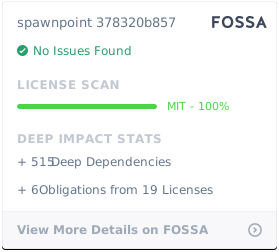
We found that spawnpoint demonstrated a healthy version release cadence and project activity because the last version was released less than a year ago. It has 3 open source maintainers collaborating on the project.
Did you know?

Socket for GitHub automatically highlights issues in each pull request and monitors the health of all your open source dependencies. Discover the contents of your packages and block harmful activity before you install or update your dependencies.
Product
Explore exportable charts for vulnerabilities, dependencies, and usage with Reports, Socket’s new extensible reporting framework.
Product
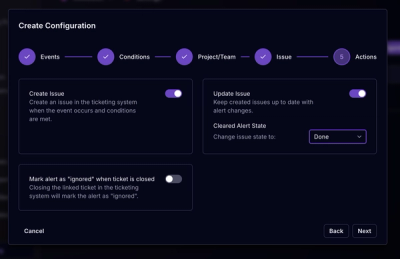
Socket for Jira lets teams turn alerts into Jira tickets with manual creation, automated ticketing rules, and two-way sync.
Company News
Socket won two 2026 Reppy Awards from RepVue, ranking in the top 5% of all sales orgs. AE Alexandra Lister shares what it's like to grow a sales career here.