


Security News
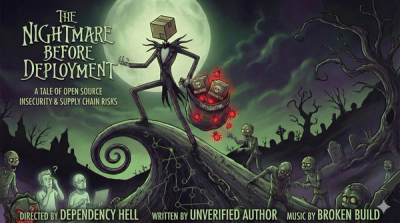
The Nightmare Before Deployment
Season’s greetings from Socket, and here’s to a calm end of year: clean dependencies, boring pipelines, no surprises.
By Ahmad Nassri - Dec 16, 2025
LibVLCSharp is a cross-platform audio and video API for .NET platforms based on VideoLAN's LibVLC Library. It provides a comprehensive multimedia API that can be used across mobile, server and desktop to render video and output audio. Mono, .NET Framework and .NET Core runtimes are supported. This package contains the core features of LibVLCSharp (libvlc loading and initialization, .NET-friendly classes to ease the use of libvlc...). All other `LibVLCSharp.*` packages depend on this one. Features: - Play every media file formats, every codec and every streaming protocols - Run on every platform, from desktop (Windows, Linux, Mac) to mobile (Android, iOS) and TVs - Hardware and efficient decoding on every platform, up to 8K - Network browsing for distant filesystems (SMB, FTP, SFTP, NFS...) and servers (UPnP, DLNA) - Playback of Audio CD, DVD and Bluray with menu navigation - Support for HDR, including tonemapping for SDR streams - Audio passthrough with SPDIF and HDMI, including for Audio HD codecs, like DD+, TrueHD or DTS-HD - Support for video and audio filters - Support for 360 video and 3D audio playback, including Ambisonics - Able to cast and stream to distant renderers, like Chromecast and UPnP renderers. This package also contains the views for the following platforms: - Android - iOS - Mac - tvOS - UWP If you need Xamarin.Forms support, see LibVLCSharp.Forms. LibVLC needs to be installed separately, see VideoLAN.LibVLC.* packages.


LibVLCSharp is a cross-platform audio and video API for .NET platforms based on VideoLAN's LibVLC Library. It provides a comprehensive multimedia API that can be used across mobile, server and desktop to render video and output audio as well as encode and stream.
The official repository URL for this repo is https://code.videolan.org/videolan/LibVLCSharp.
Check out libvlc-nuget to get a basic understanding of how libvlc works, what it can offer and how to install it with NuGet.
Some of the features include:
Most things you can achieve with the regular VLC desktop app, you can also achieve using libvlc.
Full featured video control for Xamarin.Forms available in LibVLCSharp.Forms (iOS/Android) and Uno platform (iOS/Android/UWP).

Mono, .NET Framework and .NET Core runtimes are supported.
LibVLC is the actual VLC engine written mostly in C/C++ and compiled for your target platform. More information here.
| Platform | LibVLC Package | NuGet | Minimum OS Version |
|---|---|---|---|
| Windows | VideoLAN.LibVLC.Windows |  | Windows XP |
| UWP | VideoLAN.LibVLC.UWP |  | Windows 10 |
| Mac | VideoLAN.LibVLC.Mac |  | macOS 10.7 |
| Android | VideoLAN.LibVLC.Android |  | Android 2.3 |
| iOS | VideoLAN.LibVLC.iOS |  | iOS 8.4 |
| tvOS | VideoLAN.LibVLC.tvOS |  | tvOS 10.2 |
| Linux | Linux guide | N/A | N/A |
dotnet add package VideoLAN.LibVLC.[Windows|UWP|Android|iOS|Mac|tvOS]
LibVLCSharp is the .NET wrapper that consumes LibVLC and allows you to interact with native code from C#/F#.
| Platform | LibVLCSharp Package | NuGet |
|---|---|---|
| .NET Standard | LibVLCSharp |  |
| Xamarin.Android | LibVLCSharp | |
| Xamarin.iOS | LibVLCSharp | |
| Xamarin.tvOS | LibVLCSharp | |
| Xamarin.Mac | LibVLCSharp | |
| UWP | LibVLCSharp | |
| Xamarin.Forms | LibVLCSharp.Forms |  |
| MAUI | LibVLCSharp.MAUI |  |
| WPF | LibVLCSharp.WPF |  |
| Xamarin.Forms.WPF | LibVLCSharp.Forms.WPF |  |
| GTK | LibVLCSharp.GTK |  |
| Xamarin.Forms.GTK | LibVLCSharp.Forms.GTK |  |
| Windows Forms | LibVLCSharp.WinForms |  |
| Uno Platform | LibVLCSharp.Uno |  |
| Avalonia | LibVLCSharp.Avalonia |  |
| Eto.Forms | LibVLCSharp.Eto |  |
| Unity3D - Windows | VLC for Unity (Windows) |  |
| Unity3D - UWP | VLC for Unity (UWP) | |
| Unity3D - Android | VLC for Unity (Android) | |
| Unity3D - iOS | VLC for Unity (iOS) | |
| Unity3D - macOS | VLC for Unity (macOS) | |
LibVLCSharp 4 preview and LibVLC 4 nightly builds are distributed using https://feedz.io/ for now. To pull pre-release versions into your project, use the following NuGet.config file:
<?xml version="1.0" encoding="utf-8"?>
<configuration>
  <packageSources>
    <add key="videolan-preview" value="https://f.feedz.io/videolan/preview/nuget/index.json" />
  </packageSources>
</configuration>
See the docs for preview builds installation details.
Follow the Getting started guide. Make sure you read it since it contains platform-specific caveats
Our general documentation is part of this repository and we also have an API docs website.
Feel free to browse it and if you see something missing, you can improve it by sending a PR.
It includes helpful documents such as:
This document details how to use LibVLCSharp in a correct way, notably taking into consideration the native interop part.
This is a Q&A document which I compiled from all the questions I got asked regarding LibVLC and LibVLCSharp. Continuously updated.
When you encounter an issue with LibVLC/LibVLCSharp, identifying the cause is not always straightforward. This document gives you clues on how to go about it.
This page focuses on the core native library and contains information regarding advanced libvlc configuration and its versioning strategy by VideoLAN.
This page indexes all available tutorial materials about LibVLCSharp. There are currently videos, talks, blogposts and code samples.
Here we list several interesting projects made by the community using LibVLCSharp. Feel free to send a PR to yours!
In September 2022, the first book ever about LibVLC, the VideoLAN community and LibVLCSharp was released!
The Good Parts of LibVLC contains everything you need to know about VLC, LibVLC and how to use it from .NET with LibVLCSharp.
For more advanced samples, have a look at libvlcsharp-samples with apps such as:
Feel free to suggest and contribute new samples.
using var libvlc = new LibVLC(enableDebugLogs: true);
using var media = new Media(libvlc, new Uri(@"C:\tmp\big_buck_bunny.mp4"));
using var mediaplayer = new MediaPlayer(media);

mediaplayer.Play();

Console.ReadKey();
LibVLC.cs: Main object pointing to a native libvlc instance in native code.MediaPlayer.cs: Manages playback, offers event listeners and more. Accessible from VideoView with data-binding support.Media.cs: Class representing and providing information about a media such as a video or audio file or stream.VideoView.cs: Custom native view which holds a MediaPlayer object.MediaDiscoverer.cs: This object should be used to find media on NAS and any SMB/UPnP-enabled device on your local network.RendererDiscoverer.cs: Use this to find and use a Chromecast or other distant renderers.Dialog.cs: Dialogs can be raised from the libvlc engine in some cases. Register callbacks with this object.The LibVLCSharp.Forms and Uno packages features a MediaPlayerElement control, similar to the ones provided by the .NET Framework on WPF and UWP. It currently supports iOS, Android and UWP (Uno only).
If you have a request or question regarding the roadmap, feel free to open an issue (using an issue template) or PR.
As this is a libvlc binding, we try to follow the libvlc versioning scheme as much as possible. The versioning strategy is explained in the versioning document.
Check out the NEWS file for details about each release.
Pull requests are more than welcome! If you do submit one, please make sure to read the contributing guidelines first, and use our pull request template.
You can look through issues we currently have on the VideoLAN Gitlab. Please pick one of our GitLab issue templates so we can assist you better.
There are up for grabs tickets as well if you would like to start contributing.
You have encountered an issue and wish to report it to the VLC dev team?
You can create one on our Gitlab (using an issue template) for .NET related questions/problems.
For LibVLC/VLC specific issues, usually native code, please go to the bug tracker of the VLC project.
Before creating an issue or ticket, please double check for duplicates!
We are on
We regularly monitor the libvlcsharp tag on 
If you have any question or if you're not sure it's actually an issue, please visit our forum.
If you would like VLC developers to provide you with:
Feel free to contact us.
Please read and follow the VideoLAN CoC license.
LibVLCSharp is released under the LGPLv2.1 and is also available under a commercial license.
Note: the .NET4.0 LibVLCSharp build references a nuget package that may indicate its license as the .NET Library license but it's actually opensource under MIT.

FAQs
LibVLCSharp is a cross-platform audio and video API for .NET platforms based on VideoLAN's LibVLC Library. It provides a comprehensive multimedia API that can be used across mobile, server and desktop to render video and output audio. Mono, .NET Framework and .NET Core runtimes are supported. This package contains the core features of LibVLCSharp (libvlc loading and initialization, .NET-friendly classes to ease the use of libvlc...). All other `LibVLCSharp.*` packages depend on this one. Features: - Play every media file formats, every codec and every streaming protocols - Run on every platform, from desktop (Windows, Linux, Mac) to mobile (Android, iOS) and TVs - Hardware and efficient decoding on every platform, up to 8K - Network browsing for distant filesystems (SMB, FTP, SFTP, NFS...) and servers (UPnP, DLNA) - Playback of Audio CD, DVD and Bluray with menu navigation - Support for HDR, including tonemapping for SDR streams - Audio passthrough with SPDIF and HDMI, including for Audio HD codecs, like DD+, TrueHD or DTS-HD - Support for video and audio filters - Support for 360 video and 3D audio playback, including Ambisonics - Able to cast and stream to distant renderers, like Chromecast and UPnP renderers. This package also contains the views for the following platforms: - Android - iOS - Mac - tvOS - UWP If you need Xamarin.Forms support, see LibVLCSharp.Forms. LibVLC needs to be installed separately, see VideoLAN.LibVLC.* packages.
We found that libvlcsharp demonstrated a healthy version release cadence and project activity because the last version was released less than a year ago. It has 1 open source maintainer collaborating on the project.
Did you know?

Socket for GitHub automatically highlights issues in each pull request and monitors the health of all your open source dependencies. Discover the contents of your packages and block harmful activity before you install or update your dependencies.
Security News
Season’s greetings from Socket, and here’s to a calm end of year: clean dependencies, boring pipelines, no surprises.
Research
/Security News
Impostor NuGet package Tracer.Fody.NLog typosquats Tracer.Fody and its author, using homoglyph tricks, and exfiltrates Stratis wallet JSON/passwords to a Russian IP address.

Security News
Deno 2.6 introduces deno audit with a new --socket flag that plugs directly into Socket to bring supply chain security checks into the Deno CLI.