

Product
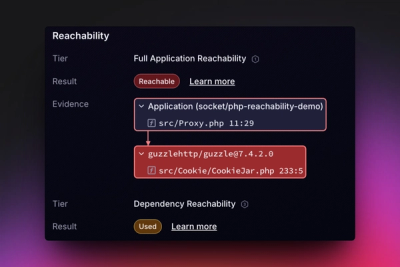
Introducing Reachability for PHP
Reachability analysis for PHP is now available in experimental, helping teams identify which vulnerabilities are actually exploitable.
By Benjamin Barslev - Apr 24, 2026
chuk-sessions
Advanced tools
CHUK Sessions provides a comprehensive, async-first session management system with automatic expiration, and support for both in-memory and Redis storage backends. Perfect for web applications, MCP servers, API gateways, and microservices that need reliable, scalable session handling.
Simple, fast async session management for Python




Dead simple session management with automatic expiration, multiple storage backends, and multi-tenant isolation. Perfect for web apps, APIs, and any system needing reliable sessions.
┌─────────────────────────────────────────────────────────────┐
│ Your Application │
└─────────────────────────────────┬───────────────────────────┘
│
┌─────────────┴─────────────┐
│ Convenience API Layer │
│ get_session() / session │
└─────────────┬─────────────┘
│
┌─────────────┴─────────────┐
│ SessionManager │
│ • Lifecycle Management │
│ • TTL & Expiration │
│ • Metadata & Validation │
│ • Multi-tenant Isolation │
└─────────────┬─────────────┘
│
┌─────────────┴─────────────┐
│ Provider Factory │
│ Auto-detect from env │
└─────────────┬─────────────┘
│
┌─────────────────┴─────────────────┐
│ │
┌───────────▼──────────┐ ┌───────────▼──────────┐
│ Memory Provider │ │ Redis Provider │
│ • In-process cache │ │ • Persistent store │
│ • 1.3M ops/sec │ │ • Distributed │
│ • Dev/Testing │ │ • Persistent store │
└──────────────────────┘ └──────────────────────┘
Features:
✓ Pydantic models with validation ✓ Type-safe enums (no magic strings)
✓ Automatic TTL expiration ✓ Multi-sandbox isolation
✓ CSRF protection utilities ✓ Cryptographic session IDs
✓ 202 tests, 90% coverage ✓ Battle-tested
# Basic installation (memory provider only)
pip install chuk-sessions

# With Redis support
pip install chuk-sessions[redis]

# Full installation with all optional dependencies
pip install chuk-sessions[all]

# Development installation
pip install chuk-sessions[dev]
import asyncio
from chuk_sessions import get_session

async def main():
    async with get_session() as session:
        # Store with auto-expiration
        await session.setex("user:123", 3600, "Alice")  # 1 hour TTL

        # Retrieve
        user = await session.get("user:123")  # "Alice"

        # Automatically expires after TTL

asyncio.run(main())
That's it! Sessions automatically expire and you get instant performance.
Session Lifecycle:
┌─────────────┐
│ 1. Create   │  mgr.allocate_session(user_id="alice")
└──────┬──────┘
       │ ← Returns session_id: "sess-alice-1234..."
       ▼
┌─────────────┐
│ 2. Validate │  mgr.validate_session(session_id)
└──────┬──────┘
       │ ← Returns: True (session exists & not expired)
       ▼
┌─────────────┐
│ 3. Use      │  mgr.get_session_info(session_id)
└──────┬──────┘  mgr.update_session_metadata(...)
       │ ← Access/modify session data
       ▼
┌─────────────┐
│ 4. Extend   │  mgr.extend_session_ttl(session_id, hours=2)
└──────┬──────┘  (optional - keep session alive)
       │
       ▼
┌─────────────┐
│ 5. Expire   │  Automatic after TTL
└──────┬──────┘  or mgr.delete_session(session_id)
       │
       ▼
    [Done]
SessionStatus.ACTIVE, ProviderType.REDISSessionMetadata, CSRFTokenInfo, etc.from chuk_sessions import SessionManager, SessionStatus, SessionMetadata
# Type-safe with IDE autocomplete
mgr = SessionManager(sandbox_id="my-app")
session_id = await mgr.allocate_session()
# Pydantic models with validation
info: dict = await mgr.get_session_info(session_id)
metadata = SessionMetadata(**info)
print(metadata.status) # SessionStatus.ACTIVE
from chuk_sessions import get_session

async with get_session() as session:
    await session.set("key", "value")              # Default 1hr expiration
    await session.setex("temp", 60, "expires")     # Custom 60s expiration
    value = await session.get("key")               # Auto-cleanup when expired
from chuk_sessions import SessionManager

# Each app gets isolated sessions
web_app = SessionManager(sandbox_id="web-portal")
api_service = SessionManager(sandbox_id="api-gateway")

# Full session lifecycle
session_id = await web_app.allocate_session(
    user_id="alice@example.com",
    custom_metadata={"role": "admin", "login_time": "2024-01-01T10:00:00Z"}
)

# Validate, extend, update
await web_app.validate_session(session_id)
await web_app.extend_session_ttl(session_id, additional_hours=2)
await web_app.update_session_metadata(session_id, {"last_activity": "now"})
# Development - blazing fast in-memory (default)
export SESSION_PROVIDER=memory

# Persistent - Redis standalone (requires chuk-sessions[redis])
export SESSION_PROVIDER=redis
export SESSION_REDIS_URL=redis://localhost:6379/0

# Persistent - Redis Cluster with automatic detection
export SESSION_PROVIDER=redis
export SESSION_REDIS_URL=redis://node1:7000,node2:7001,node3:7002
Actual performance from examples/performance_test.py:
| Provider | Operation | Throughput | Avg Latency | P95 Latency |
|---|---|---|---|---|
| Memory | GET | 1,312,481 ops/sec | 0.001ms | 0.001ms |
| Memory | SET | 1,141,011 ops/sec | 0.001ms | 0.001ms |
| Memory | DELETE | 1,481,848 ops/sec | 0.001ms | 0.001ms |
| Redis | GET | ~20K ops/sec | 0.05ms | 0.08ms |
| Redis | SET | ~18K ops/sec | 0.06ms | 0.09ms |
Concurrent Access (5 sessions, 500 ops):
Based on examples/chuk_session_example.py:
web_app = SessionManager(sandbox_id="my-web-app")

# Login
session_id = await web_app.allocate_session(
    user_id="alice@example.com",
    ttl_hours=8,
    custom_metadata={"role": "admin", "theme": "dark"}
)

# Middleware validation
if not await web_app.validate_session(session_id):
    raise Unauthorized("Please log in")
api = SessionManager(sandbox_id="api-gateway", default_ttl_hours=1)

session_id = await api.allocate_session(
    user_id="client_123",
    custom_metadata={"tier": "premium", "requests": 0, "limit": 1000}
)

# Check/update rate limits
info = await api.get_session_info(session_id)
requests = info['custom_metadata']['requests']
if requests >= info['custom_metadata']['limit']:
    raise RateLimitExceeded()

await api.update_session_metadata(session_id, {"requests": requests + 1})
from chuk_sessions import get_session

async with get_session() as session:
    # Email verification code (10 minute expiry)
    await session.setex(f"verify:{email}", 600, "ABC123")

    # Later: verify and consume
    code = await session.get(f"verify:{email}")
    if code == user_code:
        await session.delete(f"verify:{email}")  # One-time use
        return True
Set via environment variables:
# Provider selection
export SESSION_PROVIDER=memory          # Default - no extra dependencies
export SESSION_PROVIDER=redis           # Requires: pip install chuk-sessions[redis]

# TTL settings
export SESSION_DEFAULT_TTL=3600         # 1 hour default

# Redis config (if using redis provider)
# Standalone Redis
export SESSION_REDIS_URL=redis://localhost:6379/0

# Redis Cluster (comma-separated hosts - automatically detected)
export SESSION_REDIS_URL=redis://node1:7000,node2:7001,node3:7002

# Redis with TLS
export SESSION_REDIS_URL=rediss://localhost:6380/0
export REDIS_TLS_INSECURE=1             # Set to 1 to skip certificate verification (dev only)
| Command | Includes | Use Case |
|---|---|---|
pip install chuk-sessions | Memory provider only | Development, testing, lightweight apps |
pip install chuk-sessions[redis] | + Redis support | Persistent apps with Redis |
pip install chuk-sessions[all] | All optional features | Maximum compatibility |
pip install chuk-sessions[dev] | Development tools | Contributing, testing |
from chuk_sessions import get_session

async with get_session() as session:
    await session.set(key, value)           # Store with default TTL
    await session.setex(key, ttl, value)    # Store with custom TTL (seconds)
    value = await session.get(key)          # Retrieve (None if expired)
    deleted = await session.delete(key)     # Delete (returns bool)
from chuk_sessions import SessionManager

mgr = SessionManager(sandbox_id="my-app", default_ttl_hours=24)

# Session lifecycle
session_id = await mgr.allocate_session(user_id="alice", custom_metadata={})
is_valid = await mgr.validate_session(session_id)
info = await mgr.get_session_info(session_id)
success = await mgr.update_session_metadata(session_id, {"key": "value"})
success = await mgr.extend_session_ttl(session_id, additional_hours=2)
success = await mgr.delete_session(session_id)

# Admin helpers
stats = mgr.get_cache_stats()
cleaned = await mgr.cleanup_expired_sessions()
All examples are tested and working! Run them to see CHUK Sessions in action:
# Simple 3-line example - perfect first step
python examples/simple_example.py

# Interactive tutorial with explanations
python examples/quickstart.py
Output:
User: Alice
Token: secret123
Missing: None
# Complete feature demonstration
python examples/chuk_session_example.py
Shows:
# Benchmark your system
python examples/performance_test.py
Output includes:
# CSRF protection examples
python examples/csrf_demo.py

# Secure session ID generation
python examples/session_id_demo.py
Features demonstrated:
Perfect for web frameworks, API servers, MCP implementations, or any Python app needing sessions.
# Clone and install dependencies
git clone https://github.com/chrishayuk/chuk-sessions.git
cd chuk-sessions
make dev-install

# Run tests
make test

# Run tests with coverage (90%+ coverage)
make test-cov

# Run all checks (lint, typecheck, security, tests)
make check

# Format code
make format

# Build package
make build
# Bump version
make bump-patch  # 0.5 → 0.6
make bump-minor  # 0.5 → 1.0
make bump-major  # 0.5 → 1.0.0

# Create release (triggers GitHub Actions → PyPI)
make publish
make test - Run testsmake test-cov - Run tests with coverage reportmake lint - Run code linters (ruff)make format - Auto-format codemake typecheck - Run type checking (mypy)make security - Run security checks (bandit)make check - Run all checksmake clean - Clean build artifactsmake build - Build distribution packagesmake publish - Create tag and trigger automated releaseSee make help for all available commands.
Apache 2.0
FAQs
CHUK Sessions provides a comprehensive, async-first session management system with automatic expiration, and support for both in-memory and Redis storage backends. Perfect for web applications, MCP servers, API gateways, and microservices that need reliable, scalable session handling.
We found that chuk-sessions demonstrated a healthy version release cadence and project activity because the last version was released less than a year ago. It has 1 open source maintainer collaborating on the project.
Did you know?

Socket for GitHub automatically highlights issues in each pull request and monitors the health of all your open source dependencies. Discover the contents of your packages and block harmful activity before you install or update your dependencies.
Product
Reachability analysis for PHP is now available in experimental, helping teams identify which vulnerabilities are actually exploitable.
Product
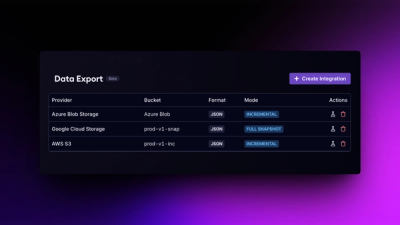
Export Socket alert data to your own cloud storage in JSON, CSV, or Parquet, with flexible snapshot or incremental delivery.
Research
/Security News
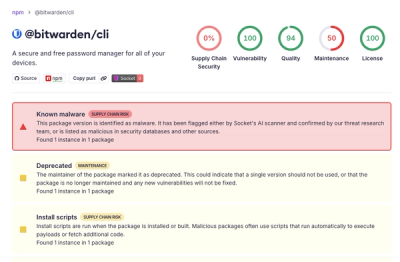
Bitwarden CLI 2026.4.0 was compromised in the Checkmarx supply chain campaign after attackers abused a GitHub Action in Bitwarden’s CI/CD pipeline.