


Product
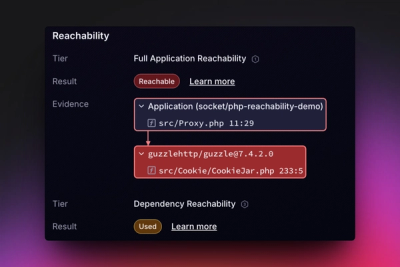
Introducing Reachability for PHP
Reachability analysis for PHP is now available in experimental, helping teams identify which vulnerabilities are actually exploitable.
By Benjamin Barslev - Apr 24, 2026
clarion
Advanced tools



A lightweight, cloud-deployed web API for serving machine learning classification models.
This project serves as the practical application for the "Cloud Computing for Data Science" diploma curriculum. Its goal is to take a trained machine learning model and make it accessible to the world through a simple, robust API.
This project picks up where the AutoCleanSE project leaves off. We will use the clean data produced by AutoCleanSE to train a model, and then we will build the infrastructure to deploy and serve that model in the cloud.
.pkl file) and use it to make live predictions.We have successfully established programmatic access to a local, S3-compatible MinIO server using boto3. This proves our ability to interact with cloud storage, which is the foundational first step.
This project uses MinIO to simulate AWS S3 locally. This allows for rapid, offline development.
# First, ensure the MinIO container exists. If not, create it.
# This command runs the server in the background.
podman run -d -p 9000:9000 -p 9001:9001 --name minio-server -v ~/minio-data:/data -e "MINIO_ROOT_USER=admin" -e "MINIO_ROOT_PASSWORD=password" minio/minio server /data --console-address ":9001"

# To start the server for a new work session:
podman start minio-server

# To stop the server:
podman stop minio-server
The current test script demonstrates how to connect to the MinIO server.
# cloud_test.py
import boto3

# --- Configuration ---
access_key = "admin"
secret_key = "password"
endpoint_url = "http://127.0.0.1:9000"
# ---

s3_client = boto3.client(
    's3',
    endpoint_url=endpoint_url,
    aws_access_key_id=access_key,
    aws_secret_access_key=secret_key
)

response = s3_client.list_buckets()
print("Successfully connected. Found buckets:")
for bucket in response['Buckets']:
    print(f"- {bucket['Name']}")
Distributed under the MIT License.
FAQs
A Python package for advanced data classification.
We found that clarion demonstrated a healthy version release cadence and project activity because the last version was released less than a year ago. It has 1 open source maintainer collaborating on the project.
Did you know?

Socket for GitHub automatically highlights issues in each pull request and monitors the health of all your open source dependencies. Discover the contents of your packages and block harmful activity before you install or update your dependencies.
Product
Reachability analysis for PHP is now available in experimental, helping teams identify which vulnerabilities are actually exploitable.
Product
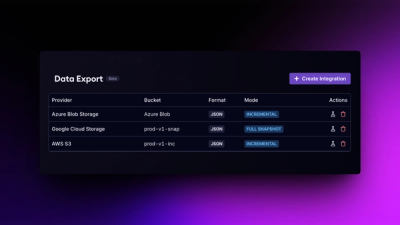
Export Socket alert data to your own cloud storage in JSON, CSV, or Parquet, with flexible snapshot or incremental delivery.
Research
/Security News
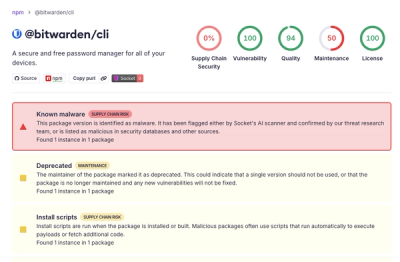
Bitwarden CLI 2026.4.0 was compromised in the Checkmarx supply chain campaign after attackers abused a GitHub Action in Bitwarden’s CI/CD pipeline.