

Company News
Socket Has Acquired Secure Annex
Socket has acquired Secure Annex to expand extension security across browsers, IDEs, and AI tools.
By Feross Aboukhadijeh - Apr 28, 2026
django-olympus
Advanced tools
[![build-status-image]][build-status] [![coverage-status-image]][codecov] [![pypi-version]][pypi]
Collect data from django models into ElasticSearch.
This Django application provides a OlympusCollector class that is a wrapper for the ElasticSearch API and database
(using their official package).
To know more about how to use it, please check the Setup section.
After adding django-olympus as part of your required packages, add olympus to INSTALLED_APPS in your settings.py.
The following settings are available for customization:
| Name | Default | Description |
|---|---|---|
| OLYMPUS_ELASTICSEARCH_URL | None | This should point to the ElasticSearch server running. |
| OLYMPUS_ELASTICSEARCH_VERIFY_CERTS | None | This should tell whether certificates should be verified - only set this to false for local development |
Since this application provides a baseline Collector class, this will help you bootstrap data collectors to send
information to ElasticSearch. The following section details how to write your own collectors.
To create your own collector, in any Django app of your project, extend the OlympusCollector class and implement the
collect method to specify all the logic you need.
#myapp/occ.py
from olympus.base import OlympusCollector


class SampleCollector(OlympusCollector):
    index_name = "sample_collector"  # can be anything you'd like.
    index_date_pattern = "%Y.%m.%d"  # can be anything you'd like.
    index_lifecycle_name = "something"  # if you use default lifecycle policies and would like to assign a different one.

    def collect(self):
        self.logger.info(f"started {self.index_name}")  # Base class provides built-in logging.

        data = some_func()  # Some logic to retrieve data, either from API, from Django's Database or whatever.

        yield = {
            "_id": "1",  # _id is mandatory and can be anything, really, as long as it is unique.
            "some": data.attribute,
            "more": data.attribute2,
        }
To keep collectors organized, you might want to create an occ.py file in each app, implementing the collectors. Each
app can implement as many collectors as necessary, there is really no restrictions.
olympus API provides a Django command called push_to_es which allows you to run a collector. To run the sample
above, ./manage.py push_to_es myapp.SampleCollector would be required.
Apps with collectors must be part of your settings.py file, otherwise collectors are not initialized and not added
to the list - hence push_to_es will fail.
FAQs
Collect data from django models into ElasticSearch
We found that django-olympus demonstrated a healthy version release cadence and project activity because the last version was released less than a year ago. It has 1 open source maintainer collaborating on the project.
Did you know?

Socket for GitHub automatically highlights issues in each pull request and monitors the health of all your open source dependencies. Discover the contents of your packages and block harmful activity before you install or update your dependencies.
Company News
Socket has acquired Secure Annex to expand extension security across browsers, IDEs, and AI tools.

Research
/Security News
Socket is tracking cloned Open VSX extensions tied to GlassWorm, with several updated from benign-looking sleepers into malware delivery vehicles.
Product
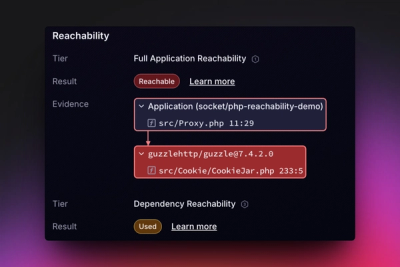
Reachability analysis for PHP is now available in experimental, helping teams identify which vulnerabilities are actually exploitable.