

Security News
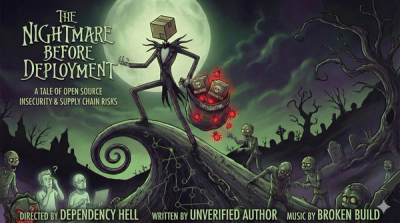
The Nightmare Before Deployment
Season’s greetings from Socket, and here’s to a calm end of year: clean dependencies, boring pipelines, no surprises.
By Ahmad Nassri - Dec 16, 2025
dygest
Advanced tools

dygest is command line tool that takes .txt files as input and extracts content insights using Large Language Models and NER (Named Entity Recognition).
It generates summaries, keywords and table of contents and exports human-readable markdown or html documents. It also comes with customizable template support for html.

Text insights
Generate concise insights for your text files using various LLM services by creating summaries, keywords, table of contents (TOC) and named entities (NER).
Unified LLM Interface
dygest uses litellm and provides integration for various LLM service providers: OpenAI, Anthropic, HuggingFace, Groq, Ollama etc. Check the complete provider list for all available services.
Token Friendly
dygest performs token-heavy text analysis and summarization tasks. Therefore, the underlying LLM pipeline can be tailored to your needs and specific rate limits using a mixed experts approach.
Mixed Experts Approach
dygest utilizes two fully customizable LLMs to handle different processing tasks. The first, referred to as the light_model, is designed for lighter tasks such as summarization and keyword extraction. The second, called the expert_model, is optimized for more complex tasks like constructing Tables of Contents (TOCs).
This flexibility allows for various pipeline configurations. For example, the light_model can run locally using Ollama, while the expert_model can leverage an external API service like OpenAI or Groq. This approach ensures efficiency and adaptability based on specific requirements.
Named Entity Recognition (NER)
Named Entity Recognition via fast and reliable flair framework (identifies persons, organisations, locations etc.).
Customizable HTML Templates
By default dygest will create a .html file that can be viewed in standard browsers and combines summaries, keywords, TOC and NER for your text. Two default templates are available (tabs and plain), but you are able to customize your own as well.
Input Formats: .txt, .csv, .xlsx, .doc, .docx, .pdf, .html, .xml
Export Formats: .json, .md, .html
>=3.10OpenAI, Anthropic and Groq and / or a running Ollama instancepippython3 -m venv venv
source venv/bin/activate
pip install dygest
git clone https://github.com/tsmdt/dygest.git
cd dygest
python3 -m venv venv
source venv/bin/activate
pip install .
Copy the .env.example in the project directory and rename it to .env. Update the dygest settings by running the dygest config command or edit the .env manually.
 Usage: dygest config [OPTIONS]

 Configure LLMs, Embeddings and Named Entity Recognition. (Config file: .env)

╭─ Options ──────────────────────────────────────────────────────────────────────────────────────────────────────────────────────────╮
│ --add_custom       -add               TEXT     Add a custom key-value pair to the config .env (format: KEY=VALUE). [default: None] │
│ --light_model      -l                 TEXT     LLM model name for lighter tasks (summarization, keywords) [default: None]          │
│ --expert_model     -x                 TEXT     LLM model name for heavier tasks (TOCs). [default: None]                            │
│ --embedding_model  -e                 TEXT     Embedding model name. [default: None]                                               │
│ --temperature      -t                 FLOAT    Temperature of LLM. [default: None]                                                 │
│ --sleep            -s                 FLOAT    Pause LLM requests to prevent rate limit errors (in seconds). [default: None]       │
│ --chunk_size       -c                 INTEGER  Maximum number of tokens per chunk. [default: None]                                 │
│ --ner                     --no-ner             Enable Named Entity Recognition (NER). Defaults to False. [default: no-ner]         │
│ --precise                 --fast               Enable precise mode for NER. Defaults to fast mode. [default: fast]                 │
│ --lang             -lang              TEXT     Language of file(s) for NER. Defaults to auto-detection. [default: None]            │
│ --view_config      -v                          View loaded config parameters.                                                      │
│ --help                                         Show this message and exit.                                                         │
╰────────────────────────────────────────────────────────────────────────────────────────────────────────────────────────────────────╯
The configuration is saved as .env in the project directory and can be easily edited either by hand or using the dygest config command.
If you want to add custom keys and values (e.g. for adding a custom api_base) just type dygest config -add CUSTOM_PROVIDER_API_BASE=https://custom-provider.com/v1
LIGHT_MODEL='ollama/gemma3:12b'
EXPERT_MODEL='groq/llama-3.3-70b-versatile'
EMBEDDING_MODEL='ollama/nomic-embed-text:latest'
TEMPERATURE='0.1'
SLEEP='0'
CHUNK_SIZE='1000'
NER='True'
NER_LANGUAGE='auto'
NER_PRECISE='False'

# API KEYS
OPENAI_API_KEY=''
GROQ_API_KEY=''

# CUSTOM SETTINGS
OLLAMA_API_BASE='http://localhost:11434'
Run the dygest LLM pipeline with the dygest run command:
 Usage: dygest run [OPTIONS]

 Create insights for your documents (summaries, keywords, TOCs).

╭─ Options ──────────────────────────────────────────────────────────────────────────────────────────────────────────────────────────╮
│ --files             -f         TEXT                      Path to the input folder or file. [default: None]                         │
│ --output_dir        -o         TEXT                      If not provided, outputs will be saved in the input folder.               │
│                                                          [default: None]                                                           │
│ --export_format     -ex        [all|json|markdown|html]  Set the data format for exporting. [default: html]                        │
│ --toc               -t                                   Create a Table of Contents (TOC) for the text. Defaults to False.         │
│ --summarize         -s                                   Include a short summary for the text. Defaults to False.                  │
│ --keywords          -k                                   Create descriptive keywords for the text. Defaults to False.              │
│ --sim_threshold     -sim       FLOAT                     Similarity threshold for removing duplicate topics. [default: 0.85]       │
│ --default_template  -dt        [tabs|plain]              Choose a built-in HTML template ('tabs' or 'plain'). [default: tabs]      │
│ --user_template     -ut        DIRECTORY                 Provide a custom folder path for an HTML template. [default: None]        │
│ --skip_html         -skip                                Skip files if HTML already exists in the same folder. Defaults to False.  │
│ --export_metadata   -meta                                Enable exporting metadata to output file(s). Defaults to False.           │
│ --verbose           -v                                   Enable verbose output. Defaults to False.                                 │
│ --help                                                   Show this message and exit.                                               │
╰────────────────────────────────────────────────────────────────────────────────────────────────────────────────────────────────────╯
View the documentation for detailed usage information.
dygest uses great python packages:
litellm: https://github.com/BerriAI/litellmflair: https://github.com/flairNLP/flairtyper: https://github.com/fastapi/typerjson_repair: https://github.com/mangiucugna/json_repairmarkitdown: https://github.com/microsoft/markitdown@software{dygest,
author = {Thomas Schmidt},
title = {DYGEST: Document Insights Generator},
organization = {Mannheim University Library},
year = {2025},
url = {https://github.com/tsmdt/whisply}
}
FAQs
DYGEST: Document Insights Generator
We found that dygest demonstrated a healthy version release cadence and project activity because the last version was released less than a year ago. It has 1 open source maintainer collaborating on the project.
Did you know?

Socket for GitHub automatically highlights issues in each pull request and monitors the health of all your open source dependencies. Discover the contents of your packages and block harmful activity before you install or update your dependencies.
Security News
Season’s greetings from Socket, and here’s to a calm end of year: clean dependencies, boring pipelines, no surprises.
Research
/Security News
Impostor NuGet package Tracer.Fody.NLog typosquats Tracer.Fody and its author, using homoglyph tricks, and exfiltrates Stratis wallet JSON/passwords to a Russian IP address.

Security News
Deno 2.6 introduces deno audit with a new --socket flag that plugs directly into Socket to bring supply chain security checks into the Deno CLI.