labelme
Image annotation with Python.
Description
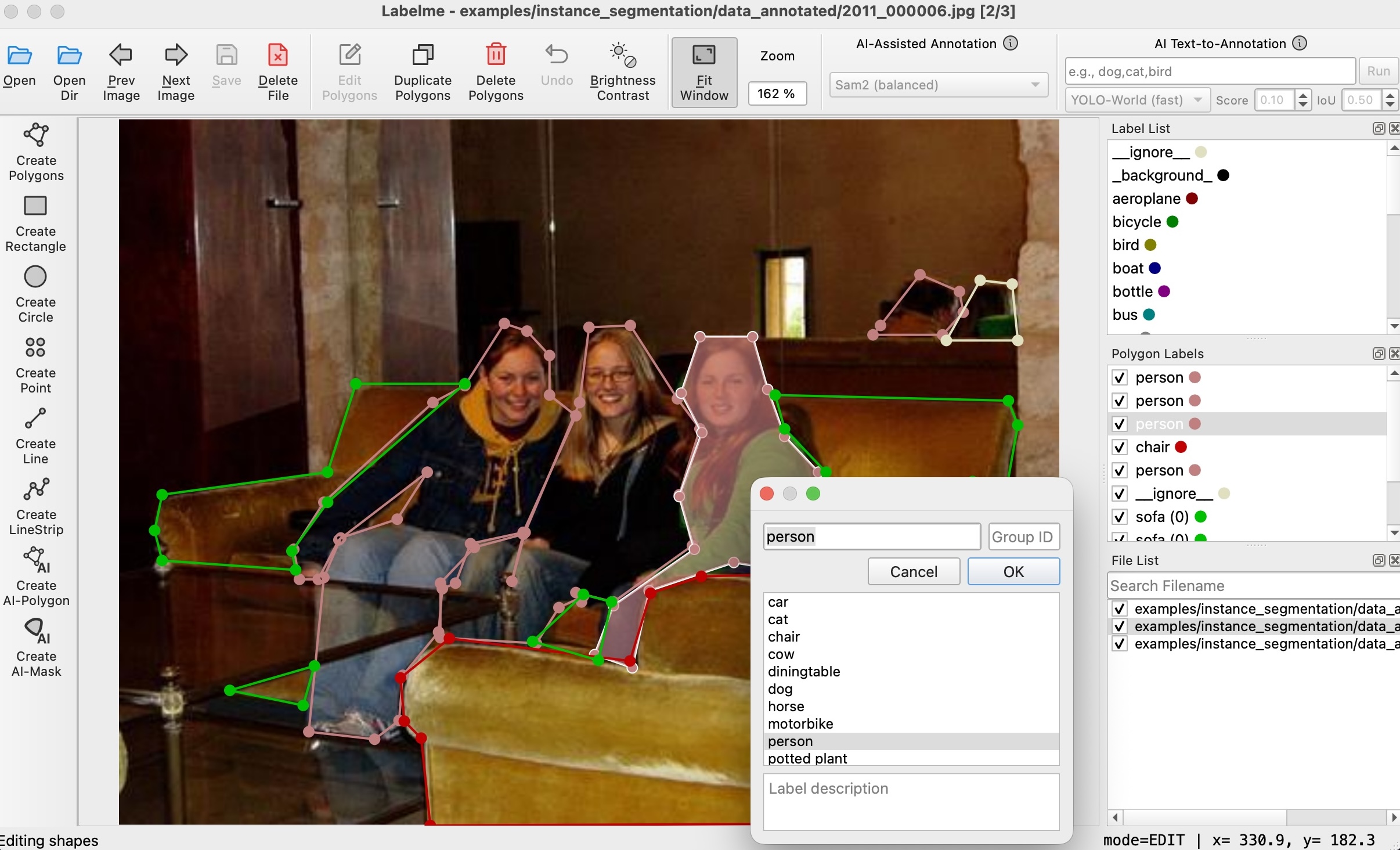
Labelme is a graphical image annotation tool inspired by http://labelme.csail.mit.edu.
It is written in Python and uses Qt for its graphical interface.
Looking for a simple install without Python or Qt? Get the standalone app at labelme.io.

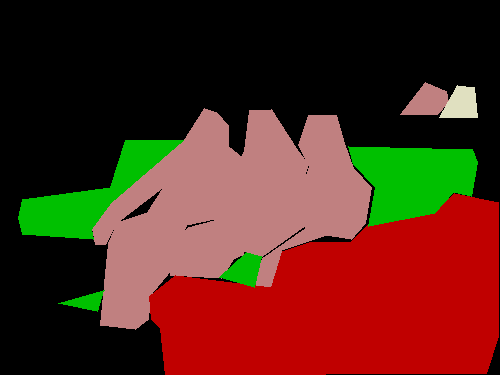

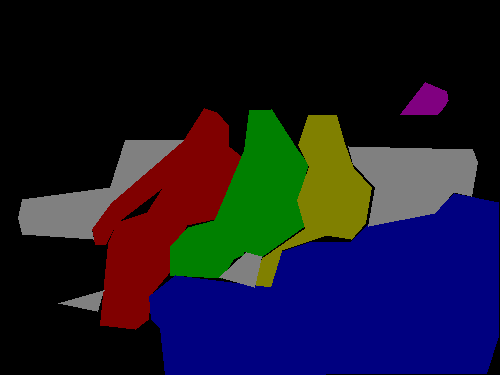
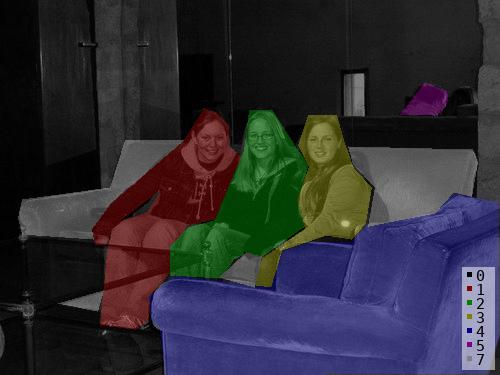
VOC dataset example of instance segmentation.
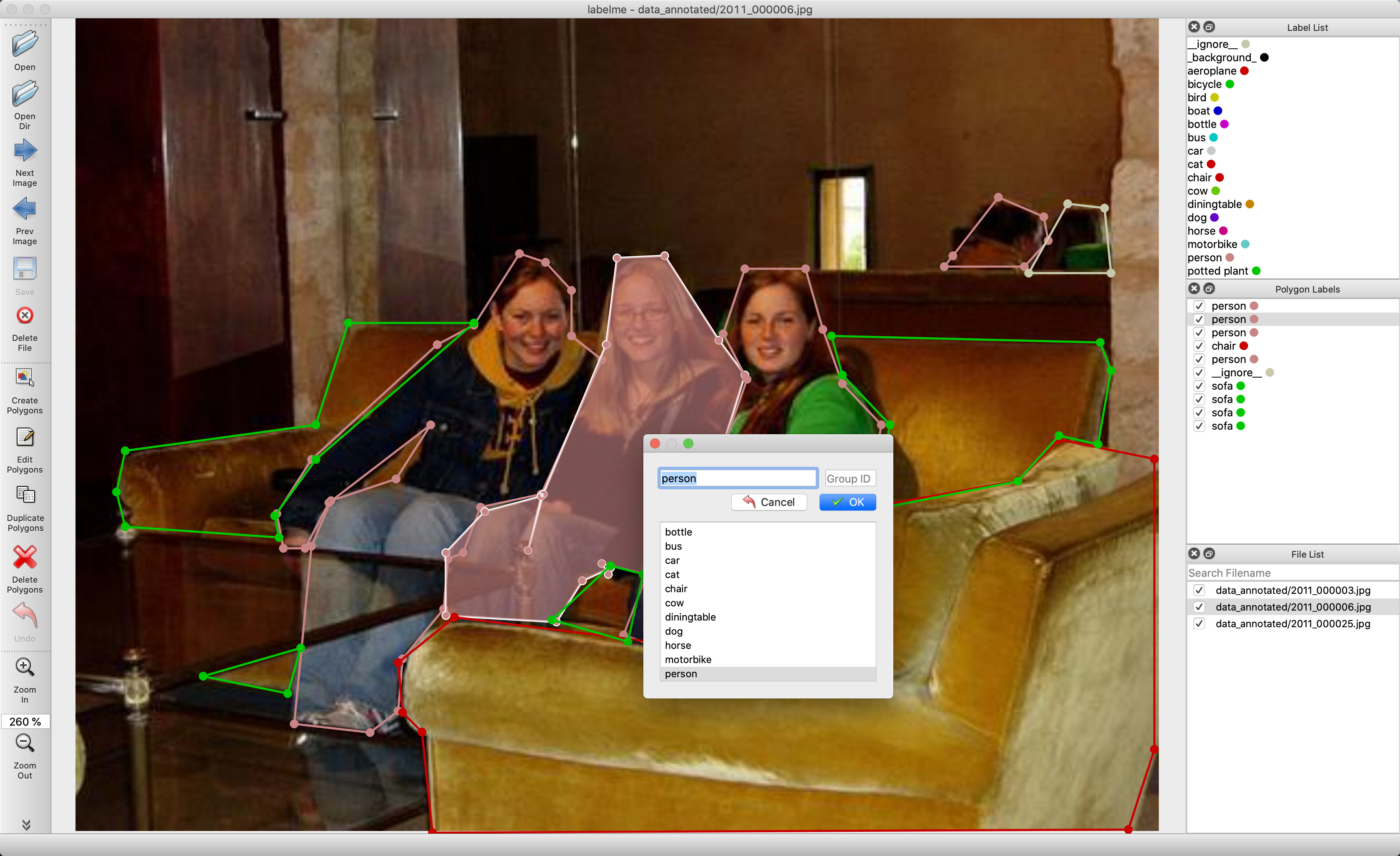
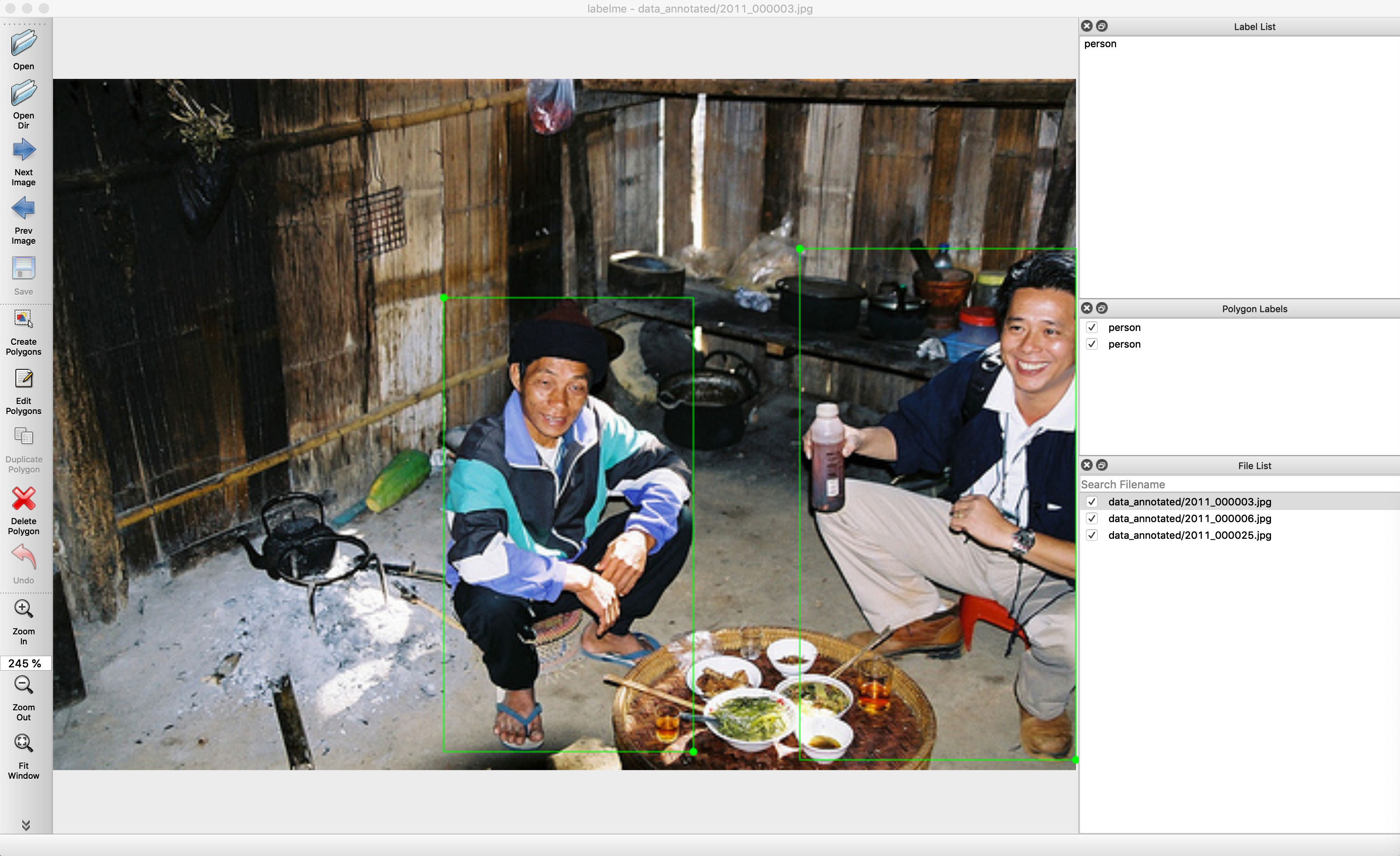
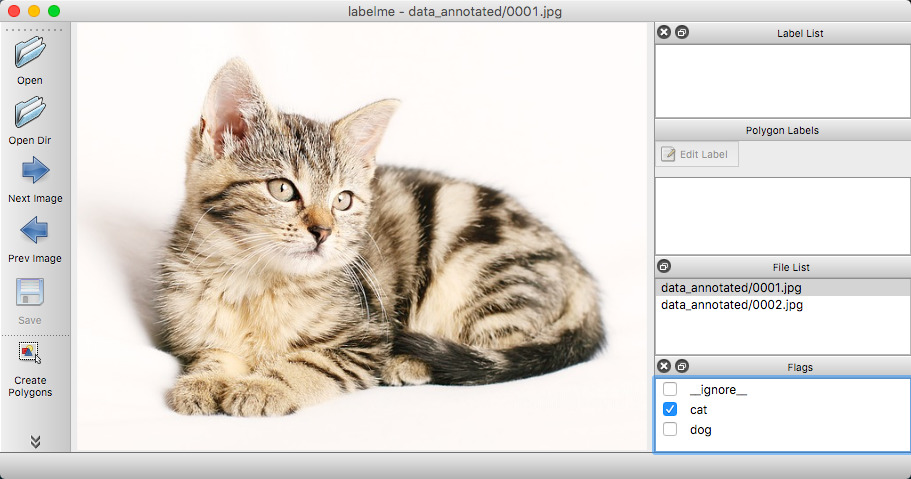
Other examples (semantic segmentation, bbox detection, and classification).


Various primitives (polygon, rectangle, circle, line, and point).

Multi-language support (English, 中文, 日本語, 한국어, Deutsch, Français, and more).
Features
🌏 Available in 20 languages - English · 日本語 · 한국어 · 简体中文 · 繁體中文 · Deutsch · Ελληνικά · Français · Español · Italiano · Português · Nederlands · Magyar · Русский · ไทย · Tiếng Việt · Türkçe · Українська · Polski · فارسی (LANG=ja_JP.UTF-8 labelme)
Installation
There are 3 options to install labelme:
Option 1: Using pip
For more detail, check "Install Labelme using Terminal"
pip install labelme
Option 2: Using standalone executable (Easiest)
If you're willing to invest in the convenience of simple installation without any dependencies (Python, Qt),
you can download the standalone executable from "Install Labelme as App".
It's a one-time payment for lifetime access, and it helps us to maintain this project.
Option 3: Using a package manager in each Linux distribution
In some Linux distributions, you can install labelme via their package managers (e.g., apt, pacman). The following systems are currently available:

Usage
Run labelme --help for detail.
The annotations are saved as a JSON file.
labelme
cd examples/tutorial
labelme apc2016_obj3.jpg
labelme apc2016_obj3.jpg --output annotations/
labelme apc2016_obj3.jpg --with-image-data
labelme apc2016_obj3.jpg \
--labels highland_6539_self_stick_notes,mead_index_cards,kong_air_dog_squeakair_tennis_ball
cd examples/semantic_segmentation
labelme data_annotated/
labelme data_annotated/ --labels labels.txt
Command Line Arguments
--output specifies the location that annotations will be written to. If the location ends with .json, a single annotation will be written to this file. Only one image can be annotated if a location is specified with .json. If the location does not end with .json, the program will assume it is a directory. Annotations will be stored in this directory with a name that corresponds to the image that the annotation was made on.- The first time you run labelme, it will create a config file at
~/.labelmerc. Add only the settings you want to override. For all available options and their defaults, see default_config.yaml. If you would prefer to use a config file from another location, you can specify this file with the --config flag.
- Without the
--nosortlabels flag, the program will list labels in alphabetical order. When the program is run with this flag, it will display labels in the order that they are provided.
- Flags are assigned to an entire image. Example
- Labels are assigned to a single polygon. Example
FAQ
Examples
How to build standalone executable
LABELME_PATH=./labelme
OSAM_PATH=$(python -c 'import os, osam; print(os.path.dirname(osam.__file__))')
pip install 'numpy<2.0'
pyinstaller labelme/labelme/__main__.py \
--name=Labelme \
--windowed \
--noconfirm \
--specpath=build \
--add-data=$(OSAM_PATH)/_models/yoloworld/clip/bpe_simple_vocab_16e6.txt.gz:osam/_models/yoloworld/clip \
--add-data=$(LABELME_PATH)/config/default_config.yaml:labelme/config \
--add-data=$(LABELME_PATH)/icons/*:labelme/icons \
--add-data=$(LABELME_PATH)/translate/*:translate \
--icon=$(LABELME_PATH)/icons/icon-256.png \
--onedir
Acknowledgement
This repo is the fork of mpitid/pylabelme.