MultiHTTP
MultiHTTP is a simple, yet elegant, HTTP library for sending multiple asyncronous requests, built on the classic requests library.
>>> import multihttp
>>> r = multihttp.get('https://httpbin.org/basic-auth/user/pass', auth=('user', 'pass'), amount=100)
>>> r.status_code
200
>>> r.headers['content-type']
'application/json; charset=utf8'
>>> r.encoding
'utf-8'
>>> r.text
'{"authenticated": true, ...'
>>> r.json()
{'authenticated': True, ...}
MultiHTTP allows you to send thousands of HTTP/1.1 requests extremely easily. There’s no need to manually add query strings to your URLs, or to form-encode your PUT & POST data — but nowadays, just use the json method!



Installing MultiHTTP and Supported Versions
MultiHTTP is available on PyPI:
$ python -m pip install multihttp
MultiHTTP officially supports Python 3.7+.
Supported Features & Best–Practices
MultiHTTP is ready for the demands of building robust and reliable HTTP–speaking applications, for the needs of today.
- Keep-Alive & Connection Pooling
- International Domains and URLs
- Sessions with Cookie Persistence
- Browser-style TLS/SSL Verification
- Basic & Digest Authentication
- Familiar
dict–like Cookies
- Automatic Content Decompression and Decoding
- Multi-part File Uploads
- SOCKS Proxy Support
- Connection Timeouts
- Streaming Downloads
- Automatic honoring of
.netrc
- Chunked HTTP Requests
API Reference and User Guide available on Read the Docs
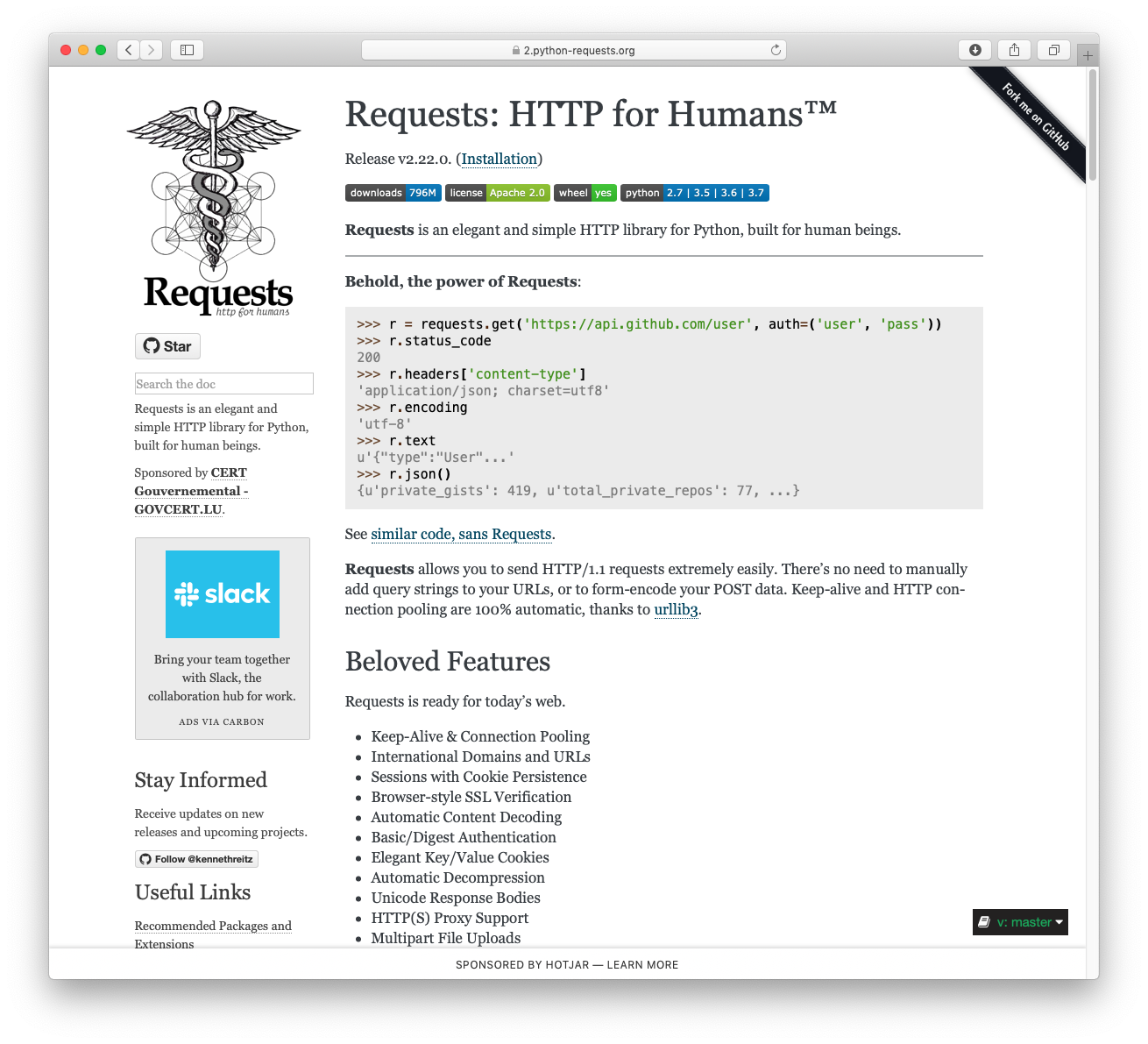
Cloning the repository
When cloning the Requests repository, you may need to add the -c fetch.fsck.badTimezone=ignore flag to avoid an error about a bad commit (see
this issue for more background):
git clone -c fetch.fsck.badTimezone=ignore https://github.com/psf/requests.git
You can also apply this setting to your global Git config:
git config --global fetch.fsck.badTimezone ignore