pybalt 





Features
pybalt is a powerful and flexible tool for downloading media files from various platforms, including YouTube, X (formerly Twitter), Reddit, Instagram, TikTok, and more. It works using cobalt processing instances and serves both as a CLI and a Python module.
https://github.com/user-attachments/assets/cf5fd9a9-520b-4970-b8c2-42baa80d7523
⚙️ Installation
Install pybalt with pip:
pip install pybalt -U
Or install pybalt on Windows with the bat file included in the repo (if you don't have Python installed):
- Open PowerShell or Command Prompt with administrator rights (to allow pip to create aliases
cobalt and pybalt in the terminal, and install python if needed)
- Type this command:
powershell -Command "Invoke-WebRequest -Uri https://raw.githubusercontent.com/nichind/pybalt/main/install.bat -OutFile install.bat; .\install.bat"
⚡️ Quickstart
[!NOTE]
pybalt will automatically detect if you're running a local cobalt instance and use it first before trying public instances.
[!NOTE]
If the cobalt alias isn't working in your terminal, use python -m pybalt <command> instead.
[!CAUTION]
Remuxing (-r) requires ffmpeg to be installed on your device and added to your system path.
Command Line Usage
The CLI is intuitive and easy to use! Here are some examples:
- Download a YouTube video at maximum resolution (
-vQ max) and remux it (-remux):
cobalt "https://youtube.com/watch?v=DG2QqcHwNdE" -remux -vQ max
- Remux an existing video file:
cobalt "C:/Users/username/Videos/video.mp4"
- Download multiple videos from links in a text file:
cobalt "path/to/links.txt"
- Download a video and open it immediately:
cobalt "https://youtube.com/watch?v=DG2QqcHwNdE" -o
- Download a video and show it in File Explorer/Finder:
cobalt "https://youtube.com/watch?v=DG2QqcHwNdE" -s
- Specify quality, format, and download location:
cobalt "https://youtube.com/watch?v=DG2QqcHwNdE" -vQ 1080 -aF mp3 --audioBitrate 320 -fp "C:/Downloads"
Use cobalt -h to see all available options.
Managing Instances
pybalt can work with multiple cobalt instances, including your own local instance:
- List configured instances:
cobalt -li
cobalt -ai "https://example-instance.com" "optional-api-key"
cobalt -ri 1
Local Instance Management
Run your own cobalt instance with Docker:
cobalt -ls
- Start/stop your local instance:
cobalt -lstart
cobalt -lstop
- Check local instance status:
cobalt -lstatus
💻 Python Module Integration
pybalt can be easily integrated into your Python projects:
Basic Download
from pybalt import download
from asyncio import run
async def main():
file_path = await download("https://youtube.com/watch?v=DG2QqcHwNdE")
print(f"Downloaded to: {file_path}")
file_path = await download(
"https://youtube.com/watch?v=DG2QqcHwNdE",
videoQuality="1080",
audioFormat="mp3",
audioBitrate="320",
filenameStyle="pretty",
remux=True
)
print(f"Downloaded to: {file_path}")
run(main())
Advanced Usage with InstanceManager
from pybalt.core.wrapper import InstanceManager
from asyncio import run
async def main():
manager = InstanceManager(debug=True)
instances = await manager.get_instances()
print(f"Found {len(instances)} available instances")
file_path = await manager.download(
url="https://youtube.com/watch?v=DG2QqcHwNdE",
videoQuality="1080",
remux=True
)
print(f"Downloaded to: {file_path}")
urls = [
"https://youtube.com/watch?v=DG2QqcHwNdE",
"https://youtube.com/watch?v=anotherVideo"
]
async for path in manager.download_generator(urls=urls, remux=True):
print(f"Downloaded: {path}")
run(main())
Track Download Progress
from pybalt import download
from asyncio import run
async def main():
async def status_callback(downloaded_size, total_size, download_speed, eta, **kwargs):
percent = (downloaded_size / total_size * 100) if total_size > 0 else 0
print(f"Downloaded: {downloaded_size / 1024 / 1024:.2f}MB / "
f"{total_size / 1024 / 1024:.2f}MB ({percent:.1f}%) at "
f"{download_speed / 1024 / 1024:.2f}MB/s, ETA: {eta:.0f}s")
async def done_callback(file_path, downloaded_size, time_passed, **kwargs):
print(f"Download completed in {time_passed:.2f}s")
print(f"File saved to: {file_path}")
file_path = await download(
"https://youtube.com/watch?v=DG2QqcHwNdE",
status_callback=status_callback,
done_callback=done_callback
)
run(main())
Using Status Parent
from pybalt import download
from asyncio import run, create_task
class StatusParent:
def __init__(self):
self.downloaded_size = 0
self.total_size = 0
self.download_speed = 0
self.eta = 0
self.completed = False
self.file_path = None
async def main():
status = StatusParent()
task = create_task(download(
"https://youtube.com/watch?v=DG2QqcHwNdE",
status_parent=status
))
while not task.done():
if status.total_size > 0:
percent = status.downloaded_size / status.total_size * 100
print(f"Progress: {percent:.1f}% - Speed: {status.download_speed / 1024 / 1024:.2f}MB/s")
await run(sleep(1))
file_path = await task
print(f"Downloaded to: {file_path}")
run(main())
⚙️ Configuration System
pybalt features a comprehensive configuration system for customizing behavior:
Command-line Configuration Interface
Open the interactive configuration interface:
cobalt -c
Get a specific configuration value:
cobalt -gc "network" "timeout"
Set a configuration value:
cobalt -sc "network" "timeout" "30"
Configuration File Locations
- Windows:
%APPDATA%\pybalt\settings.ini
- macOS:
~/Library/Application Support/pybalt/settings.ini
- Linux:
~/.config/pybalt/settings.ini
Main Configuration Sections
- general: General settings like user agent and debug mode
- network: Connection settings like timeouts, proxies, and retries
- instances: Cobalt instance settings
- user_instances: User-defined cobalt instances
- paths: Download paths and file locations
- local: Local instance configuration
- ffmpeg: Remuxing settings
- display: UI/progress display settings
📦 Environment Variables
You can configure pybalt with environment variables:
PYBALT_CONFIG_DIR=path/to/config/dir        # Custom config directory
PYBALT_CONFIG_PATH=path/to/settings.ini     # Custom config file path

# Section-specific settings
PYBALT_GENERAL_DEBUG=True                   # Enable debug mode
PYBALT_GENERAL_USER_AGENT=custom-agent      # Custom user agent

PYBALT_NETWORK_TIMEOUT=30                   # Network timeout
PYBALT_NETWORK_USE_SYSTEM_PROXY=True        # Use system proxy
PYBALT_NETWORK_PROXY=http://my-proxy:8080   # Custom proxy

PYBALT_PATHS_DEFAULT_DOWNLOADS_DIR=/path    # Custom download directory

PYBALT_LOCAL_LOCAL_INSTANCE_PORT=9000       # Local instance port
You can also set variables in a .env file in your project directory.
🛠️ Local Instance
pybalt can set up and manage a local cobalt instance using Docker:
Setting Up a Local Instance
cobalt -ls
This interactive wizard will guide you through:
- Setting a port for your instance
- Configuring API key authentication (optional)
- Setting duration limits
- Configuring proxy settings
- Setting up cookies for authenticated services
Managing Your Local Instance
Start your local instance:
cobalt -lstart
Stop your local instance:
cobalt -lstop
Check the status:
cobalt -lstatus
Restart your instance:
cobalt -lrestart
🌐 API Server
pybalt includes a built-in API server that allows you to interact with multiple cobalt instances through a single HTTP request. It also provides a web UI for easy downloading.
Starting the API Server
Start the API server in detached mode:
cobalt --api-start
Specify a custom port (default is 8009):
cobalt --api-port 8080 --api-start
Managing the API Server
Check if the API server is running:
cobalt --api-status
Stop the running API server:
cobalt --api-stop
API Endpoints
The API server exposes the following endpoints:
- GET
/: Returns information about the API server, including version and instance count
- POST
/: Accepts a JSON payload with a URL and parameters to download content and returns a JSON response with download information
- GET
/ui: Serves a web-based user interface for downloading content
Web UI

The API server includes a comprehensive web UI that allows you to:
- Download videos from various platforms through a user-friendly interface
- Configure advanced settings such as video quality, audio format, and file naming
- Track the download progress
- Ignore specific instances that might be causing issues
- Copy direct download links
Access the web UI at http://localhost:8009/ui (or your custom port).
API Usage Examples
Example API Request:
curl -X POST "http://localhost:8009/" \
     -H "Content-Type: application/json" \
     -d '{"url": "https://www.youtube.com/watch?v=DG2QqcHwNdE", "videoQuality": "1080", "audioFormat": "mp3"}'
Example API Response:
{
  "status": "tunnel",
  "url": "http://download-link.mp4",
  "instance_info": {
    "url": "https://instance-url.com",
  },
}
👥 Used by
pybalt is used by the following projects:
👥 Contributors

🌟 That's it!
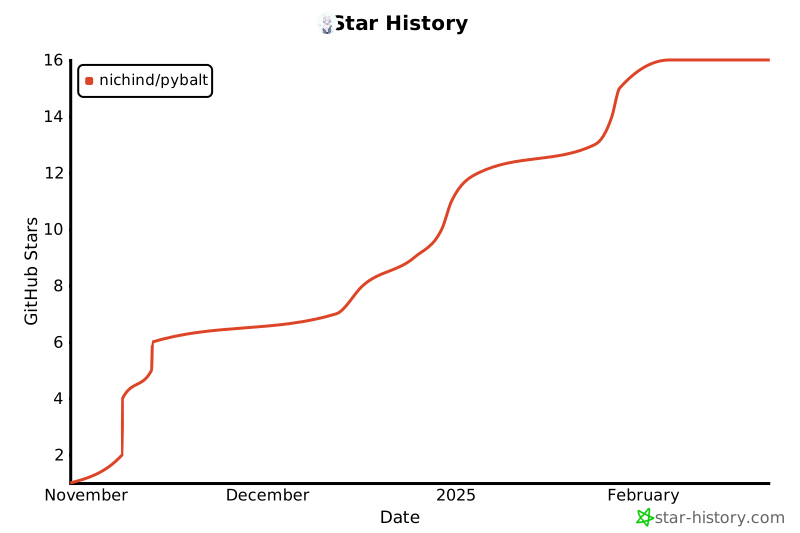
I spent too much time on this project... please consider leaving a :star: if you like it!