


Product
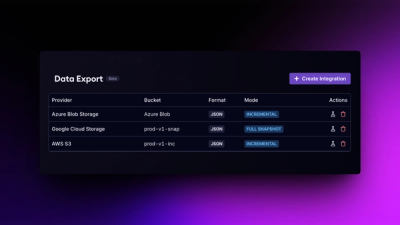
Introducing Data Exports
Export Socket alert data to your own cloud storage in JSON, CSV, or Parquet, with flexible snapshot or incremental delivery.
By Ola Adekola - Apr 23, 2026
pytoon
Advanced tools
PyToon is a Python-based animation library for animating characters and their mouth movements. This tool uses machine learning-based audio analysis techniques to automatically lip-sync animated character mouth movements to a given audio recording of someone talking.
pip3 install pytoonbrew install ffmpegsudo apt install ffmpegIf you have a transcript of the audio, you can directly pass it to the animate function.
from pytoon.animator import animate
from moviepy.editor import VideoFileClip

# Read audio transcript to a string.
transcript_path = "./.temp/speech.txt"
with open(transcript_path, "r") as file:
    transcript = file.read()

# Create a PyToon animation
animation = animate(
    audio_file="speech.mp3",  # Input audio
    transcript=transcript,   # Audio transcript
)

# Overlay the animation on top of another video and save as an .mp4 file.
background_video = VideoFileClip("./path/to/background_video.mp4")
animation.export(path='video_with_transcript.mp4', background=background_video, scale=0.7)
If you do not have a transcript, PyToon can automatically generate one using text-to-speech.
from pytoon.animator import animate
from moviepy.editor import VideoFileClip

# Create a PyToon animation without providing a transcript
animation = animate(
    audio_file="speech.mp3"  # Input audio (transcript will be auto-generated)
)

# Overlay the animation on top of another video and save as an .mp4 file.
background_video = VideoFileClip("./path/to/background_video.mp4")
animation.export(path='video_auto_transcript.mp4', background=background_video, scale=0.7)
This project uses character images created by lazykh.
FAQs
A Python library for lip-syncing cartoons to voice recordings.
We found that pytoon demonstrated a healthy version release cadence and project activity because the last version was released less than a year ago. It has 1 open source maintainer collaborating on the project.
Did you know?

Socket for GitHub automatically highlights issues in each pull request and monitors the health of all your open source dependencies. Discover the contents of your packages and block harmful activity before you install or update your dependencies.
Product
Export Socket alert data to your own cloud storage in JSON, CSV, or Parquet, with flexible snapshot or incremental delivery.
Research
/Security News
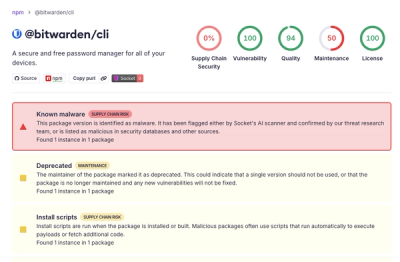
Bitwarden CLI 2026.4.0 was compromised in the Checkmarx supply chain campaign after attackers abused a GitHub Action in Bitwarden’s CI/CD pipeline.
Research
/Security News
Docker and Socket have uncovered malicious Checkmarx KICS images and suspicious code extension releases in a broader supply chain compromise.