


Security News
Deno 2.6 + Socket: Supply Chain Defense In Your CLI
Deno 2.6 introduces deno audit with a new --socket flag that plugs directly into Socket to bring supply chain security checks into the Deno CLI.
By Sarah Gooding - Dec 12, 2025
textbelt-py
Advanced tools





A Python client for Textbelt SMS API.
Simple and easy to use python package to send and receive text messages, one-time passwords, and mobile verification messages using the Textbelt SMS API.
Implemented using pydantic to handle request/response data validation and requests to make network calls to the API, Allows for easy setup and configuration to handle any texting use case. Provides a simple and straight forward error handing flow in case of any failures to make error scenarios easy to debug.
Library supports all the functionalities listed in the Textbelt documentation. This includes sending and receiving messages, checking message delivery status, creating, sending, and verifying one-time passwords, and checking credit balance. Read the official docs for more details on all the current features provided by Textbelt.
[!NOTE] Requires a valid Textbelt API key to be purchased and loaded with credits in order to make use of this library.
The library can be installed in your project using your favorite python package manager.
To install using pip:
pip install textbelt-py
To install using poetry:
poetry add textbelt-py
Here are a few common ways on how to use the package.
from textbelt_py import SMSRequest, TextbeltClient


TEXTBELT_API_KEY = "<YOUR-API-KEY-HERE>"


# setup client with api key
texbelt_client = TextbeltClient(TEXTBELT_API_KEY)

# create request
sms_request = SMSRequest(phone="+12123124123", message="Hello World!")

# send text
sms_response = textbelt_client.send_sms(sms_request)

# check response
print("Message sent successfully: " + sms_response.success)
import json

from textbelt_py import SMSRequest, TextbeltClient


TEXTBELT_API_KEY = "<YOUR-API-KEY-HERE>"
REPLY_WEBHOOK_URL = "https://website.com/webhook-reply"


# setup client with api key
texbelt_client = TextbeltClient(TEXTBELT_API_KEY)

# create request with reply webhook
sms_request = SMSRequest(
	phone="+12123124123",
	message="Hello World",
	reply_webhook_url=REPLY_WEBHOOK_URL,
	webhook_data="custom webhook data",
)

# send text
sms_response = textbelt_client.send_sms(sms_request)

# check response
print("Message sent successfully: " + sms_response.success)


...


# handle reply within webhook route
def reply_webhook_handler(data):
	# request header info
	request_timestamp = headers.get("X-textbelt-timestamp")
	request_signature = headers.get("X-textbelt-signature")

	# request body, convert to json string
	request_payload = body.get(json=True)
	request_payload_json_string = json.dumps(request_payload)

	# verify and parse webhook data
	is_valid, webhook_payload = textbelt_client.verify_webhook(
		request_timestamp,
		request_signature,
		request_payload_json_string,
	)

	# check reply is valid
	print("Reply webhook is valid: " + is_valid)

	# check message content
	print("Message from: " + webhook_payload.from_number)
	print("Message text: " + webhook.text)
from textbelt_py import OTPGenerateRequest, TextbeltClient


TEXTBELT_API_KEY = "<YOUR-API-KEY-HERE>"


# setup client with api key
texbelt_client = TextbeltClient(TEXTBELT_API_KEY)

# create request
otp_generate_request = OTPGenerateRequest(phone="+15557727420", user_id="user_id_12345")

# send otp
otp_generate_response = textbelt_client.send_otp(otp_generate_request)

# check response
print("OTP sent successfully: " + otp_generate_response.success)
from textbelt_py import OTPVerificationRequest, TextbeltClient


TEXTBELT_API_KEY = "<YOUR-API-KEY-HERE>"


# setup client with api key
texbelt_client = TextbeltClient(TEXTBELT_API_KEY)

# create request
otp_verification_request = OTPVerificationRequest(otp="321654", user_id="userid_12345")

# verify otp
otp_verification_response = textbelt_client.verify_otp(otp_verification_request)

# check otp is valid
print("OTP is valid: " + otp_verification_response.is_valid_otp)
from textbelt_py import TextbeltClient


TEXTBELT_API_KEY = "<YOUR-API-KEY-HERE>"


# setup client with api key
texbelt_client = TextbeltClient(TEXTBELT_API_KEY)

# use text_id of a previously sent SMS
text_id = "12345"
sms_status_response = textbelt_client.check_sms_delivery_status(text_id)

# check response
print("SMS delivery status: " + sms_status_response.status)
from textbelt_py import TextbeltClient


TEXTBELT_API_KEY = "<YOUR-API-KEY-HERE>"


# setup client with api key
texbelt_client = TextbeltClient(TEXTBELT_API_KEY)

# check credit balance for account
credit_balance_response = textbelt_client.check_credit_balance()

# check response
print("Remaining credit balance: " + credit_balance_response.quota_remaining)
from pydantic import ValidationError
from requests.exceptions import HTTPError

from textbelt_py import TextbeltClient, TextbeltException


TEXTBELT_API_KEY = "<YOUR-API-KEY-HERE>"


# setup client with api key
texbelt_client = TextbeltClient(TEXTBELT_API_KEY)

# try/except client methods and handle exceptions accordingly
try:
	textbelt_client.send_sms(None)
except TextbeltException as e:
	if e.ex_type is HTTPError:
		# handle requests http error
		print("Http error occurred")
	elif e.ex_type is ValidationError:
		# handle pydantic validation error
		print("Validation error occurred")
	else:
		# handle all other exceptions
		print(f"Exception type {e.ex_type} | Exception: {e.exception} | Message: {e.message}")
The source code can easily be installed and setup locally to make modifications as needed. It is managed using poetry. Development is made easy with code formatting and linting using ruff and type-checked with mypy. All linters, formatters, type-checking, and tests are executed on commit using pre-commit. The Makefile is used to automate the development process, and can be used to run linting/formatting, as well as run tests.
[!TIP] To see a list of all the commands in the Makefile, run the following command:
make help
The following are required to build and develop locally:
First, we need to download the source. Clone the repo by running the following command in your working directory:
git clone git@github.com:wfar/textbelt-py.git
Once repo is downloaded, we need to build and install packages required for development. Run the following to install all dependencies:
make install
Then, run the following command to source and activate the virtual environment through poetry:
eval $(poetry env activate)
[!Note] This will only work for activating poetry's virtual environment if you are using bash/zsh. To learn how to activate for your shell, see poetry docs for more details.
You are now all set and can start developing.
All tests files are located within the package's tests directory. It currently contains both unit and integration tests. Tests are executed using pytest framework. Running tests will also provide a test coverage report.
To run all tests in the repo, run the following command:
make test
[!IMPORTANT] Make sure to set the proper values in the
tests/.env.testenvironment file or integration tests will fail. Don't worry, running integration tests will not use any of your SMS credits in your account!
Thanks for taking the time to contribute to the repo! Any and all contributions are welcome, including bug reporting, enhancements, feature requests, and PRs.
If you found a bug and want to report it or want to add a new feature, create an issue with clear details of the problem to start a discussion. If a change is warranted, clone/fork the repo to start developing and create a PR for review.
FAQs
A Python client for Textbelt SMS API
We found that textbelt-py demonstrated a healthy version release cadence and project activity because the last version was released less than a year ago. It has 1 open source maintainer collaborating on the project.
Did you know?

Socket for GitHub automatically highlights issues in each pull request and monitors the health of all your open source dependencies. Discover the contents of your packages and block harmful activity before you install or update your dependencies.
Security News
Deno 2.6 introduces deno audit with a new --socket flag that plugs directly into Socket to bring supply chain security checks into the Deno CLI.
Security News
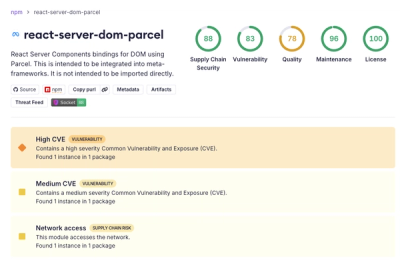
New DoS and source code exposure bugs in React Server Components and Next.js: what’s affected and how to update safely.

Security News
Socket CEO Feross Aboukhadijeh joins Software Engineering Daily to discuss modern software supply chain attacks and rising AI-driven security risks.