


Security News
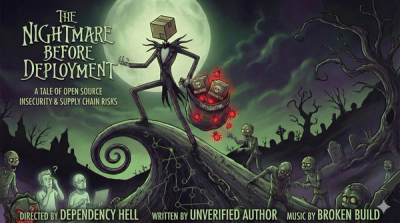
The Nightmare Before Deployment
Season’s greetings from Socket, and here’s to a calm end of year: clean dependencies, boring pipelines, no surprises.
By Ahmad Nassri - Dec 16, 2025
xml2rfc
Advanced tools
xml2rfc generates RFCs and IETF drafts from document source in XML according to the IETF xml2rfc v2 and v3 vocabularies.





The IETF uses a specific format for the standards and other documents it publishes as RFCs, and for the draft documents which are produced when developing documents for publications. There exists a number of different tools to facilitate the formatting of drafts and RFCs according to the existing rules, and this tool, xml2rfc, is one of them. It takes as input an xml file that contains the text and meta-information about author names etc., and transforms it into suitably formatted output. The input xml file should follow the grammars in RFC7749 (for v2 documents) or RFC7991 (for v3 documents).
RFCXML vocabulary reference is available at authors.ietf.org.
xml2rfc provides a variety of output formats. See the command line help for a full list of formats. It also provides conversion from v2 to v3, and can run the preptool on its input.
xml2rfc is available as Python package. You can install it with following command:
pip install xml2rfc
If you're using pipx, you can install xml2rfc with the following command:
pipx install xml2rfc
xml2rfc also provides pdf extra package to install required packages required for PDF file generation.
See next section about additional requirements for PDF generation.
To install xml2rfc with PDF generation support run:
pip install "xml2rfc[pdf]"
To install pdf extra with pipx run:
pipx install "xml2rfc[pdf]"
In order to generate PDFs, xml2rfc uses the WeasyPrint module, which depends on external libraries that must be installed as native packages on your platform, separately from the xml2rfc install.
First, install the Pango, and other required libraries on your system. See installation instructions on the WeasyPrint Docs.
Next, install WeasyPrint python modules using pip.
pip install "xml2rfc[pdf]"
tar.gz or the zip archive.xml2rfc-fonts archive.noto and roboto_mono directories to your operating system.With these installed and available to xml2rfc, the --pdf switch will be enabled.
To update xml2rfc, run the following command:
pip install --upgrade xml2rfc
If you are using pipx, you can update it with:
pipx upgrade xml2rfc
xml2rfc accepts a single XML document as input and outputs to one or more conversion formats.
xml2rfc SOURCE [options] FORMATS...
Run xml2rfc --help for a full listing of command-line options.
This project is following the standard Git Feature Workflow development model. Learn about all the various steps of the development workflow, from creating a fork to submitting a pull request, in the Contributing guide.
Make sure to read the Styleguides section to ensure a cohesive code format across the project.
You can submit bug reports, enhancements and new feature requests in the discussions area. Accepted tickets will be converted to issues.
As outlined in the Contributing guide, you will first want to create a fork of the xml2rfc project in your personal GitHub account before cloning it.
For example (replace USERNAME with your GitHub username):
git clone https://github.com/USERNAME/xml2rfc.git
Run ./run.sh command to build and start a docker development environment.
The initial build may take time because it downloads all required fonts as well.
./run.sh
FAQs
xml2rfc generates RFCs and IETF drafts from document source in XML according to the IETF xml2rfc v2 and v3 vocabularies.
We found that xml2rfc demonstrated a healthy version release cadence and project activity because the last version was released less than a year ago. It has 0 open source maintainers collaborating on the project.
Did you know?

Socket for GitHub automatically highlights issues in each pull request and monitors the health of all your open source dependencies. Discover the contents of your packages and block harmful activity before you install or update your dependencies.
Security News
Season’s greetings from Socket, and here’s to a calm end of year: clean dependencies, boring pipelines, no surprises.

Research
/Security News
Impostor NuGet package Tracer.Fody.NLog typosquats Tracer.Fody and its author, using homoglyph tricks, and exfiltrates Stratis wallet JSON/passwords to a Russian IP address.

Security News
Deno 2.6 introduces deno audit with a new --socket flag that plugs directly into Socket to bring supply chain security checks into the Deno CLI.