AdminNeo
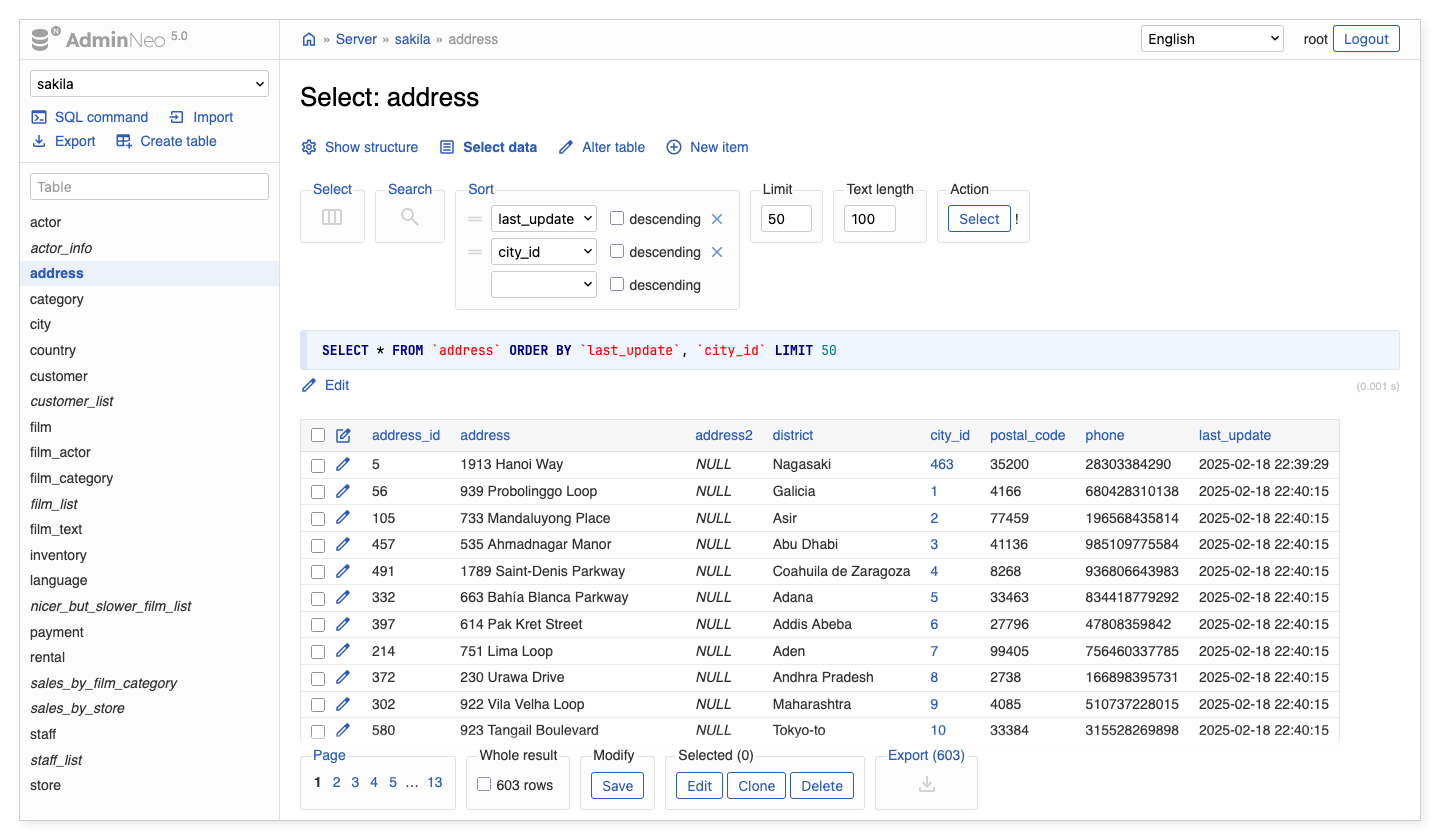
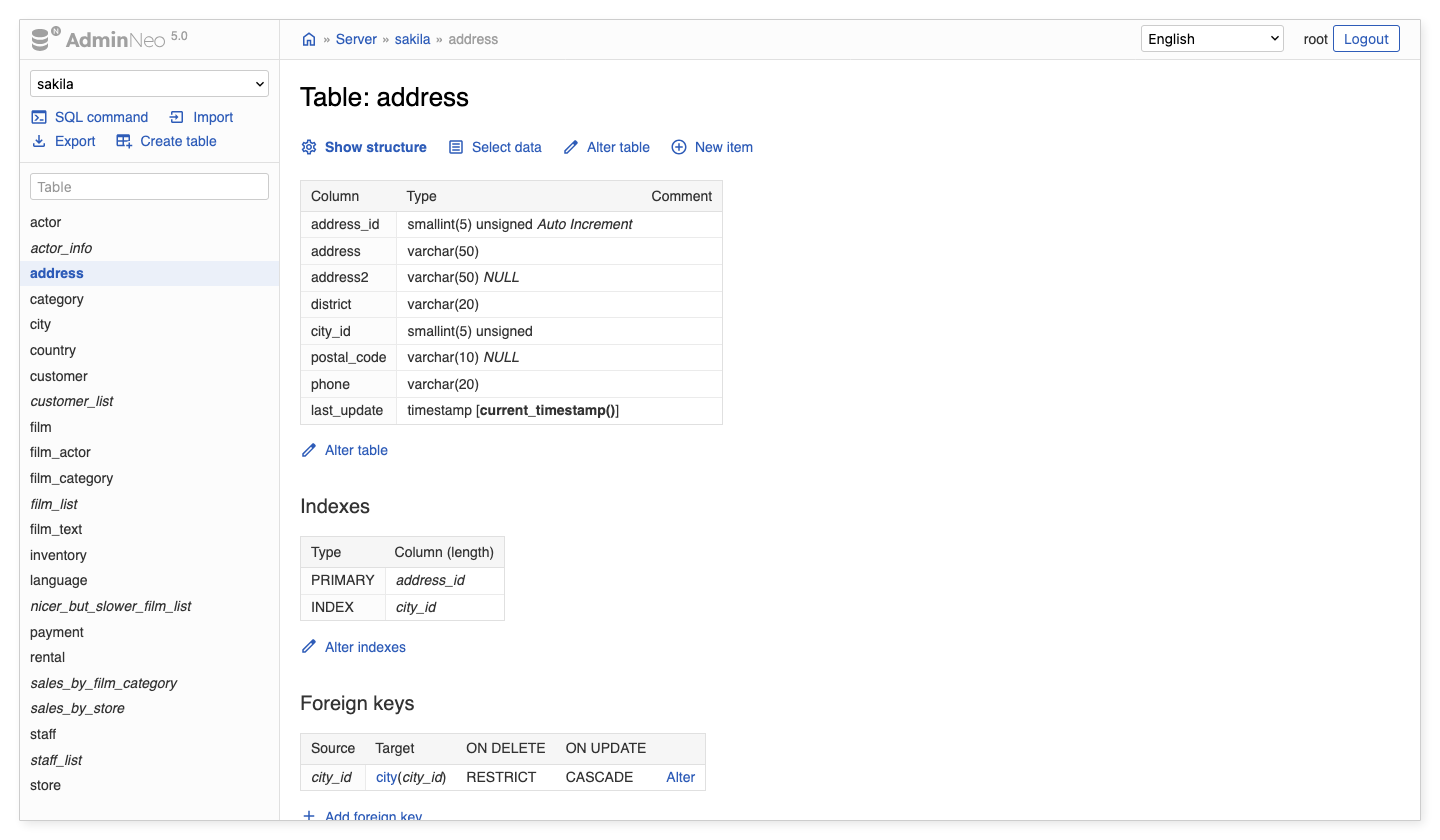
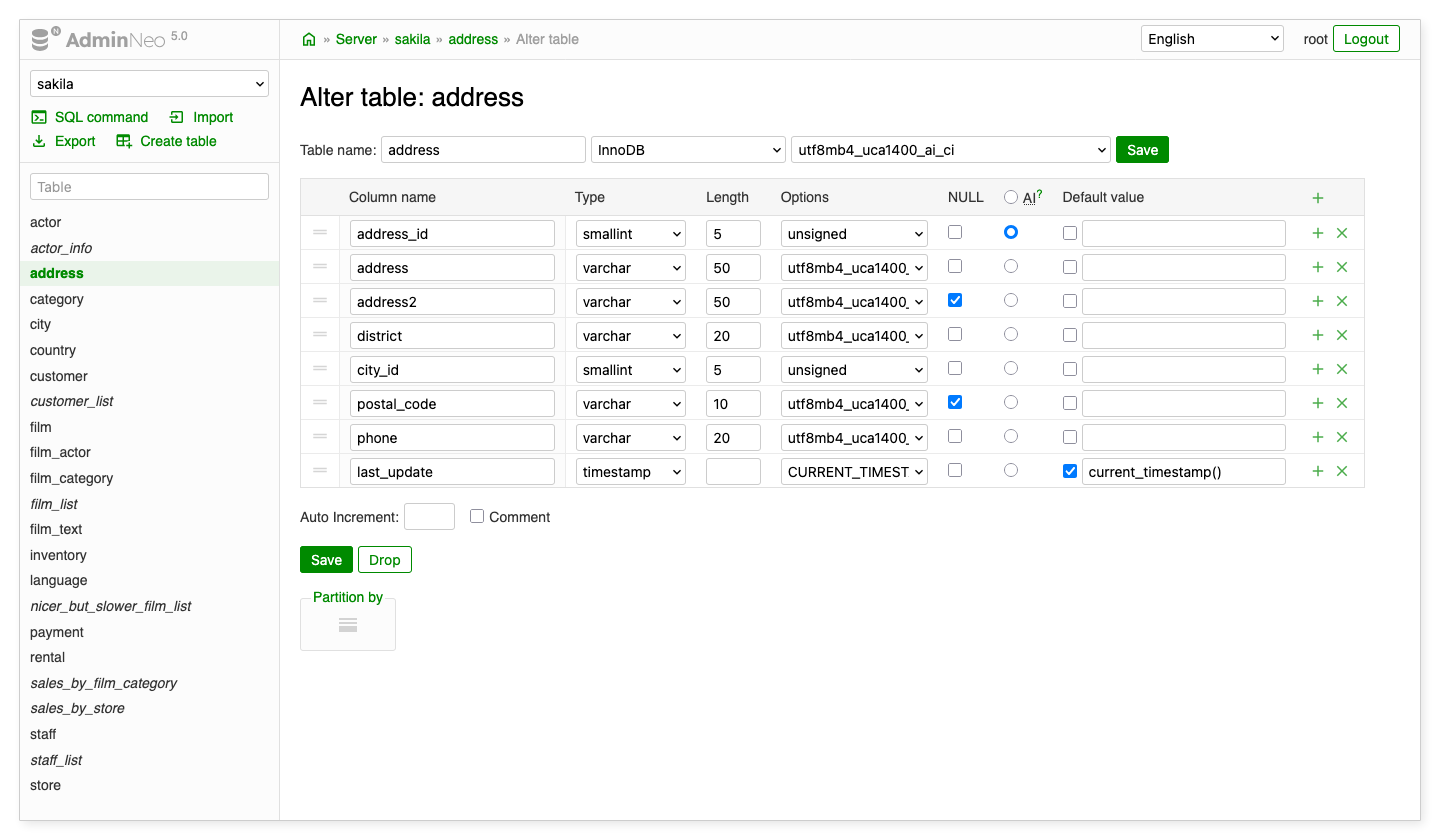
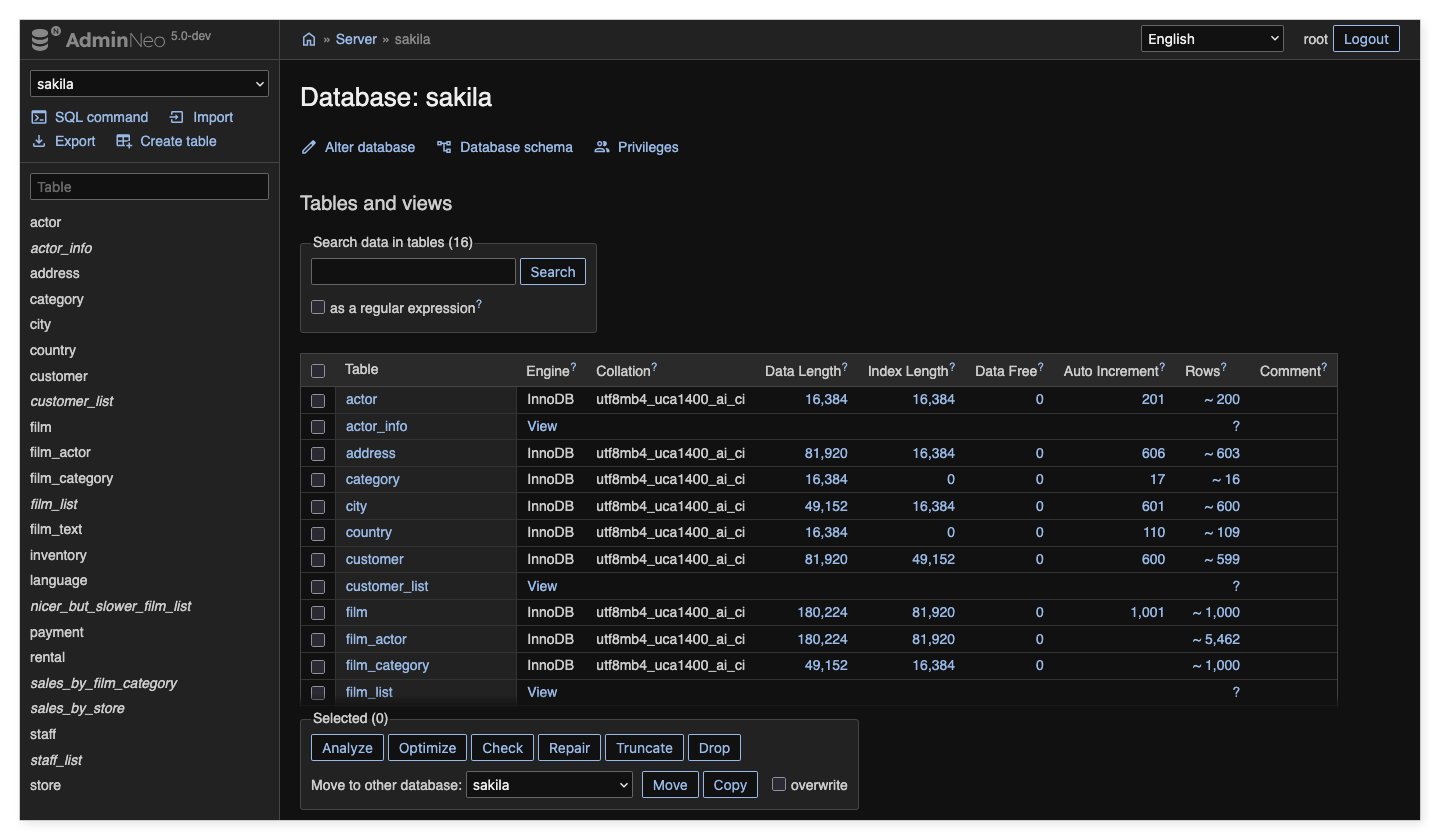
AdminNeo is a full-featured database management tool written in PHP. It consists of a single file ready to deploy
to the target server. As a companion, EditorNeo offers data manipulation for end-users.
AdminNeo is based on the Adminer project by Jakub Vrána.
Key features
- Clean modern user interface
- Managing the structure of databases and tables
- Data manipulation and searching
- Exporting and importing databases and data
- Executing batch SQL commands
- Extendable by plugins
- And much more…
Supported databases
- MySQL, MariaDB, PostgreSQL, MS SQL, SQLite, Oracle
- MongoDB, SimpleDB
- Elasticsearch (beta), ClickHouse (alpha)
Installation
Just a few steps to start using AdminNeo:
AdminNeo can be also configured and extended by
plugins or customizations.
For accessing a database that does not support a password, see further instructions.
Requirements
- PHP 5.4+ with enabled sessions, modern web browser.
- Running AdminNeo from the source code requires PHP 7.1+.
It is also recommended to install OpenSSL PHP extension for improved
security of stored login information.
Migrating from older versions
Version 5 has been significantly redesigned and refactored. Unfortunately, this has resulted in many changes that break
backward compatibility.
A complete list of changes can be found in the Upgrade Guide.
Docker
The official Docker image is available on Docker Hub. Follow the
instructions on the Docker page to get started.
Main project files
- admin/index.php - Development version of AdminNeo.
- editor/index.php - Development version of EditorNeo.
- bin/compile.php - Create a single file version.
- bin/update-translations.php - Update translation files.
- examples - Examples of customizations and plugins usage.
- tests - Katalon Automation Recorder test suites.
Updating translations
- Download the current source code.
- Run
php bin/update-translations.php [language] where language is the language code (e.g. de).
- Translate all missing texts with
null values and/or correct existing translations.
- Create a pull request or send your updates by another channel (e.g., in new GitHub issue).