


Product
Socket for Jira Is Now Available
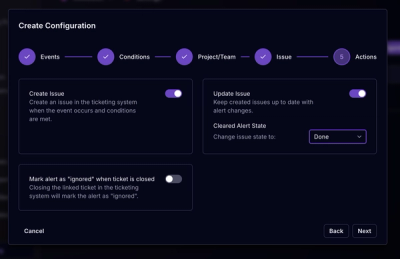
Socket for Jira lets teams turn alerts into Jira tickets with manual creation, automated ticketing rules, and two-way sync.
By Jeppe Hasseriis - Apr 20, 2026
Questions? Call us at (844) SOCKET-0
Quickly evaluate the security and health of any open source package.
@operato/input
9.0.38
by nalshya113
Live on npm
Blocked by Socket
Most of the code is standard cloud SDK and protocol handling (AWS, Google Secret Manager, serialization/deserialization, HTTP handlers) and expected in such a bundle. However, there is a highly suspicious function (NpmModule.updatePackage) that downloads a package tarball, modifies package.json, injects a local bundle.js (if present on disk), repacks, and runs npm publish. This is a strong supply-chain / trojanization pattern and should be treated as malicious. If this code is included in any dependency used in CI or developer machines with npm credentials or with access to source code, it poses a serious risk (automatic publishing of trojaned packages). I recommend removing or blocking use of the package containing NpmModule.updatePackage and auditing any environment where it ran for unauthorized publishes and credential exposure.
fsd
0.0.565
Removed from pypi
Blocked by Socket
The module contains high-risk operations: executing arbitrary shell commands via subprocess with shell=True and writing/appending to files without validation. If the steps JSON or the user input is untrusted, an attacker can achieve remote code execution, modify arbitrary files, and change process state (cwd). There are no signs of network exfiltration or hardcoded credentials in this fragment, but the command execution sink is sufficient to escalate to any of those behaviors if exploited. Recommendation: treat inputs (steps, file names, user-provided suggested commands) as untrusted; remove shell=True or use argument lists, validate and canonicalize file paths, avoid executing suggested commands automatically, and employ strict prompting and auditing. Overall this code is not itself evidently obfuscated or explicitly malicious, but it poses a significant supply-chain/runtime risk when given untrusted instructions.
Live on pypi for 5 days, 4 hours and 32 minutes before removal. Socket users were protected even while the package was live.
regscale-cli
6.20.1.1
Live on pypi
Blocked by Socket
This obfuscated Python module prompts for a user password, generates or loads a symmetric Fernet key into a hidden directory, and then encrypts or decrypts files in-place based on their extensions. All string constants (file paths, commands, extensions) are built via indexing into a single alphabet string to thwart analysis. It writes key and token files to disk, calls os.system under specific OS checks, and uses sys.exit to abort on failed validation. There are no network calls, but the script will irreversibly overwrite user files with ciphertext until the correct password is supplied—matching ransomware-like behavior and posing a severe risk to data integrity if executed without isolation.
pinokiod
7.1.73
by cocktailpeanut
Live on npm
Blocked by Socket
The SweetAlert2 library code is mostly benign and serves as a UI modal dialog tool. However, it contains a suspicious and potentially malicious snippet that targets Russian users on certain domains to play an unsolicited audio prank, disabling pointer events and potentially disrupting user interaction. This behavior is unexpected and should be considered a moderate security risk and potential malware. The rest of the code shows no signs of malicious intent. The provided reports were invalid and unhelpful. Users should be cautious about this version of the library due to the embedded prank behavior.
ailever
0.1.0
Live on pypi
Blocked by Socket
This module presents a high supply-chain and privilege-risk: it fetches untrusted JSON from hard-coded external URLs and uses that data to perform account enrollment and to control authentication flow at import time. Those behaviors allow a remote actor to inject accounts, change authentication behavior (including bypassing interactive checks), and cause unexpected side effects simply by modifying the hosted JSON. The truncated import at the end increases concern about tampering or incomplete disclosure. Recommend treating this code as malicious/untrusted: do not import or run it in production, audit the package origin, remove or sandbox it, and require code signing or integrity verification for any remote-controlled config before allowing such behavior.
alexwilliam
1.1.1
by zhxpolice
Live on npm
Blocked by Socket
This module immediately performs unauthorized reconnaissance and data exfiltration: it runs shell commands to collect hostname, user, working directory, and directory listing, encodes the results, and sends them to a hardcoded external HTTP endpoint on import. This is malicious behavior and should be treated as a compromise. Remove the package, block the destination host, audit systems where it was installed, and investigate the package source and dependency chain.
arc402-cli
0.9.10
by arc402
Live on npm
Blocked by Socket
The threat is a malicious drain routine in package/dist/drain-v4.js that, using a locally stored private key and WalletConnect/MetaMask prompts, executes an on-chain transfer to a hardcoded owner address. It is designed as a backdoor-like supply-chain compromise intended to drain funds after approval, and should be considered malware to remove from dependencies and investigate any systems where config privateKey or walletConnectProjectId are present.
api-perf
1.5.0
by brion25
Removed from npm
Blocked by Socket
This code exhibits an unsafe pattern: it dynamically resolves and requires a module path derived from external input without validation or error handling, enabling arbitrary code execution if args.config is attacker-controlled. The snippet itself is not clearly malicious, but it creates a high-risk sink (dynamic require) that could be abused by attacker-supplied or tampered files. Recommend restricting allowed config locations, using data-only config formats for untrusted input, and adding robust error handling.
Live on npm for 1 hour and 14 minutes before removal. Socket users were protected even while the package was live.
seismonitor
0.0.40
Live on pypi
Blocked by Socket
This module is a wrapper for Seisan seismic tools and a formatter for STATION0.HYP files. It performs numerous system-level operations: downloading and extracting external software, installing system packages via apt-get with sudo, copying a packaged lib into /usr/lib, and executing external Seisan binaries via pexpect/subprocess. There is no clear code that exfiltrates secrets or establishes backdoors, but the lack of integrity checks on downloads, the requirement for root operations, and frequent shell command usage create substantial supply-chain and privilege escalation risk. Use in environments where the package or its downloaded content could be tampered with is dangerous. Recommend not running download_seisan() with sudo on production hosts and reviewing/locking sources, adding checksum verification, and avoiding copying bundled libraries into system paths.
xypriss
9.6.69
by nehonixpkg
Live on npm
Blocked by Socket
High supply-chain risk. This module downloads a platform-specific native executable from a hardcoded remote CDN, writes it to disk, activates it via symlink/copy, and executes it to perform only a heuristic --help/banner string check. There is no checksum/signature verification and redirects are followed without domain allowlisting, meaning a tampered CDN payload could execute arbitrary native code. Treat as a security alert requiring strong integrity controls (pinned hashes/signatures and constrained redirect targets) before use.
adios2
2.12.0.1002
Live on pypi
Blocked by Socket
This script performs explicit, high-risk privileged operations: it installs sudo if missing, creates a hard-coded user 'adios', and grants that user passwordless, unrestricted sudo rights by writing to /etc/sudoers.d. In most contexts (especially third-party packages or supply-chain components) this is a strong indicator of a malicious or unauthorized backdoor/persistence mechanism. Treat as high-risk: do not run on production systems unless the script's origin and intent are fully trusted and the actions are deliberate and audited.
mtmai
0.4.211
Live on pypi
Blocked by Socket
This module is an automation/scraping worker that intentionally executes code provided by task descriptions. That design requires trusting the task source. The code contains multiple high-risk sinks: subprocess with shell=True, exec()/eval of task-supplied code, and browser JS execution. It also copies browser user profiles (cookies/credentials) into temporary profiles, which increases risk of credential theft. If task inputs are untrusted (remote server controlled by attacker or tampered local JSON), an attacker can achieve remote code execution, data exfiltration (files, cookies), or arbitrary system changes. Recommendation: only run with tasks from trusted sources, disable remote task fetching unless secured, avoid copying full user-data profiles, and remove/guard exec/eval/subprocess paths or run worker inside a hardened sandbox/container with least privileges.
yaaaf
0.0.3
Live on pypi
Blocked by Socket
This module intentionally executes python code extracted from LLM/client responses and injects local artefacts (dataframe and model) into that execution environment. That design creates a high-risk code-execution and data-exfiltration vector: a malicious or compromised LLM response can run arbitrary operations (file/network/OS access) and leak data back via captured stdout or assistant utterances. No obfuscation or hidden credentials found, but the exec usage on untrusted input makes this unsafe for untrusted LLMs or unverified content without significant sandboxing or restrictions. Recommend treating this as dangerous in its current form and implementing strong sandboxing or removing exec-based workflow.
cl-lite
1.0.836
by michael_tian
Live on npm
Blocked by Socket
The source code is contains embedded inappropriate adult content with numerous external image links. It is not valid or functional software code. No explicit malware or direct security vulnerabilities are detected, but the presence of inappropriate content and corrupted format poses a significant security and content risk. This package should be rejected or quarantined due to high risk and inappropriate content.
mtmai
0.4.59
Live on pypi
Blocked by Socket
This module is an automation/scraping worker that intentionally executes code provided by task descriptions. That design requires trusting the task source. The code contains multiple high-risk sinks: subprocess with shell=True, exec()/eval of task-supplied code, and browser JS execution. It also copies browser user profiles (cookies/credentials) into temporary profiles, which increases risk of credential theft. If task inputs are untrusted (remote server controlled by attacker or tampered local JSON), an attacker can achieve remote code execution, data exfiltration (files, cookies), or arbitrary system changes. Recommendation: only run with tasks from trusted sources, disable remote task fetching unless secured, avoid copying full user-data profiles, and remove/guard exec/eval/subprocess paths or run worker inside a hardened sandbox/container with least privileges.
mtmai
0.4.11
Live on pypi
Blocked by Socket
This fragment intends to install and start KasmVNC by running many shell commands that create certs, write VNC password files, adjust group membership, and launch a VNC server. The primary security issues are unsafe shell interpolation (command injection risk), programmatic persistence of a possibly predictable password, execution with sudo based on unvalidated env vars, starting a VNC server exposed on 0.0.0.0 with disabled/basic auth, and multiple unsafe filesystem operations performed via shell. There is no clear evidence of obfuscated or direct exfiltration malware, but the behavior can provide an unauthorized remote access vector (backdoor-like) if used maliciously. Do not run this code without fixing shell usage, validating inputs, using secure randomly generated passwords, enforcing proper file permissions, and not disabling authentication.
putra-soket
6.0.0
by putramdl
Live on npm
Blocked by Socket
`lotusbail` is a malicious npm package that masquerades as a WhatsApp Web API library by forking legitimate Baileys-based code and preserving working messaging functionality. In addition to normal API behavior, it inserts a wrapper around the WhatsApp WebSocket client so that all traffic passing through the library is duplicated for collection. Reported data theft includes WhatsApp authentication tokens and session keys, full message content (sent/received and historical), contact lists (including phone numbers), and transferred media/files. The package also attempts to establish persistent unauthorized access by hijacking the WhatsApp device-linking (“pairing”) workflow using a hardcoded pairing code, effectively linking an attacker-controlled device to the victim’s account; removing the npm dependency does not automatically remove the linked device. To hinder detection, the exfiltration endpoint is hidden behind multiple obfuscation layers, collected data is encrypted (including a custom RSA implementation), and the code includes anti-debugging traps designed to disrupt analysis.
apt-toolkit
3.2.0
Live on pypi
Blocked by Socket
The module is an offensive reconnaissance/prioritization generator: it codifies high-value targets, attack vectors, and vulnerability judgments for government, military, and critical infrastructure entities. Although it performs no network I/O or exploitation itself, its outputs are directly actionable and clearly intended to enable attacks. It should be treated as malicious or extremely high-risk and excluded from benign codebases and supply chains.
354766/inference-sh/agent-skills-registry/agent-browser/
88f18f485076866448050ecea0d599ddef5ed15b
Live on socket
Blocked by Socket
[Skill Scanner] Pipe-to-shell or eval pattern detected All findings: [CRITICAL] command_injection: Pipe-to-shell or eval pattern detected (CI013) [AITech 9.1.4] [CRITICAL] command_injection: Instruction directing agent to run/execute external content (CI011) [AITech 9.1.4] [CRITICAL] command_injection: Natural language instruction to download and install from URL detected (CI009) [AITech 9.1.4] [CRITICAL] command_injection: Natural language instruction to download and install from URL detected (CI009) [AITech 9.1.4] [CRITICAL] command_injection: Instruction directing agent to run/execute external content (CI011) [AITech 9.1.4] [CRITICAL] command_injection: Instruction directing agent to run/execute external content (CI011) [AITech 9.1.4] [CRITICAL] command_injection: Instruction directing agent to run/execute external content (CI011) [AITech 9.1.4] [CRITICAL] command_injection: Instruction directing agent to run/execute external content (CI011) [AITech 9.1.4] [CRITICAL] command_injection: Instruction directing agent to run/execute external content (CI011) [AITech 9.1.4] [CRITICAL] command_injection: Instruction directing agent to run/execute external content (CI011) [AITech 9.1.4] [CRITICAL] command_injection: Instruction directing agent to run/execute external content (CI011) [AITech 9.1.4] [CRITICAL] command_injection: Instruction directing agent to run/execute external content (CI011) [AITech 9.1.4] [CRITICAL] command_injection: Instruction directing agent to run/execute external content (CI011) [AITech 9.1.4] [CRITICAL] command_injection: Instruction directing agent to run/execute external content (CI011) [AITech 9.1.4] [CRITICAL] command_injection: Instruction directing agent to run/execute external content (CI011) [AITech 9.1.4] [CRITICAL] command_injection: Instruction directing agent to run/execute external content (CI011) [AITech 9.1.4] [CRITICAL] command_injection: Instruction directing agent to run/execute external content (CI011) [AITech 9.1.4] [CRITICAL] command_injection: Instruction directing agent to run/execute external content (CI011) [AITech 9.1.4] [CRITICAL] command_injection: Instruction directing agent to run/execute external content (CI011) [AITech 9.1.4] [CRITICAL] command_injection: Instruction directing agent to run/execute external content (CI011) [AITech 9.1.4] [CRITICAL] command_injection: Instruction directing agent to run/execute external content (CI011) [AITech 9.1.4] [CRITICAL] command_injection: Instruction directing agent to run/execute external content (CI011) [AITech 9.1.4] [CRITICAL] command_injection: Instruction directing agent to run/execute external content (CI011) [AITech 9.1.4] [CRITICAL] command_injection: Instruction directing agent to run/execute external content (CI011) [AITech 9.1.4] [CRITICAL] command_injection: Instruction directing agent to run/execute external content (CI011) [AITech 9.1.4] [CRITICAL] command_injection: Instruction directing agent to run/execute external content (CI011) [AITech 9.1.4] [CRITICAL] command_injection: Instruction directing agent to run/execute external content (CI011) [AITech 9.1.4] [CRITICAL] command_injection: Instruction directing agent to run/execute external content (CI011) [AITech 9.1.4] [CRITICAL] command_injection: Instruction directing agent to run/execute external content (CI011) [AITech 9.1.4] [CRITICAL] command_injection: Instruction directing agent to run/execute external content (CI011) [AITech 9.1.4] [CRITICAL] command_injection: Instruction directing agent to run/execute external content (CI011) [AITech 9.1.4] [CRITICAL] command_injection: Instruction directing agent to run/execute external content (CI011) [AITech 9.1.4] [CRITICAL] command_injection: Instruction directing agent to run/execute external content (CI011) [AITech 9.1.4] This skill is functionally coherent with its stated purpose (hosted browser automation via inference.sh) and contains expected high-risk capabilities for such a tool: arbitrary JavaScript execution, file uploads, proxy configuration, and routing through a hosted backend. There is no direct evidence in the provided document of hidden malicious code or obfuscation. However, the design requires high trust in the inference.sh distribution and backend because sensitive data (page DOM, cookies, uploaded local files, videos/screenshots, user credentials) will transit through that service. The most likely abuse scenarios are credential/data harvesting via a malicious proxy or compromise of the inference.sh backend or CLI binary. I rate this as suspicious/high-risk in a supply-chain sense (not evidently malicious in the file itself) and recommend careful review of the inference.sh binaries, hosting operator trust, and limiting use of proxy/execute/file-upload features when handling sensitive data. LLM verification: The agent-browser skill's documented capabilities match legitimate Playwright-based browser automation tools, but multiple high-risk design and supply-chain elements are present: a pipe-to-shell installer pattern, reliance on external distribution domains, remote execution via inference.sh infrastructure, arbitrary JS execution in page context, local-file upload capability, and proxy credential handling. These create significant opportunities for sensitive-data exposure or misuse if the inferenc
game-ci/unity-builder
ff23166e3002a9f3f869621650dc992e657e17ce
Live on actions
Blocked by Socket
The code is a straightforward destructive script that deletes broad classes of Kubernetes resources (jobs, cronjobs, pods, PVCs, and secrets) in the active kubectl context/namespace. It does not read external input but acts on cluster state and will cause outages and likely data loss if run with sufficient privileges. Treat this snippet as high-risk — do not execute in production without explicit intent, proper scoping, and backups.
@znan/wabot
0.0.95
by znan
Live on npm
Blocked by Socket
This snippet strongly matches an obfuscated JavaScript loader/deobfuscator: it uses the Function constructor, a large embedded lookup table, custom bitwise decoding, and environment-adaptive plumbing for browser/CommonJS (window/require/module/exports). The fragment does not show explicit malicious outcomes (network/file/credential theft) because the continuation is truncated, but the control-flow suggests subsequent decoded behavior is likely executed or exported. Treat the full module as high-risk and analyze the complete file (including SChszet(...) and post-decoding actions) in a sandbox.
cylab-be/webshell-detector
dev-include_wowa_training
Live on composer
Blocked by Socket
This file is a malicious web shell (WSO-like) with full remote control capabilities: password gated persistent backdoor, credential exfiltration to a hardcoded email, arbitrary command execution (exec/eval), file manager including upload/edit/delete, propagation/infect functionality, database and brute-force tools, and embedded bind/reverse shell payloads. It should be considered actively malicious and high risk. Remove immediately, investigate affected hosts, rotate credentials, and restore from known-good backups.
@operato/input
9.0.38
by nalshya113
Live on npm
Blocked by Socket
Most of the code is standard cloud SDK and protocol handling (AWS, Google Secret Manager, serialization/deserialization, HTTP handlers) and expected in such a bundle. However, there is a highly suspicious function (NpmModule.updatePackage) that downloads a package tarball, modifies package.json, injects a local bundle.js (if present on disk), repacks, and runs npm publish. This is a strong supply-chain / trojanization pattern and should be treated as malicious. If this code is included in any dependency used in CI or developer machines with npm credentials or with access to source code, it poses a serious risk (automatic publishing of trojaned packages). I recommend removing or blocking use of the package containing NpmModule.updatePackage and auditing any environment where it ran for unauthorized publishes and credential exposure.
fsd
0.0.565
Removed from pypi
Blocked by Socket
The module contains high-risk operations: executing arbitrary shell commands via subprocess with shell=True and writing/appending to files without validation. If the steps JSON or the user input is untrusted, an attacker can achieve remote code execution, modify arbitrary files, and change process state (cwd). There are no signs of network exfiltration or hardcoded credentials in this fragment, but the command execution sink is sufficient to escalate to any of those behaviors if exploited. Recommendation: treat inputs (steps, file names, user-provided suggested commands) as untrusted; remove shell=True or use argument lists, validate and canonicalize file paths, avoid executing suggested commands automatically, and employ strict prompting and auditing. Overall this code is not itself evidently obfuscated or explicitly malicious, but it poses a significant supply-chain/runtime risk when given untrusted instructions.
Live on pypi for 5 days, 4 hours and 32 minutes before removal. Socket users were protected even while the package was live.
regscale-cli
6.20.1.1
Live on pypi
Blocked by Socket
This obfuscated Python module prompts for a user password, generates or loads a symmetric Fernet key into a hidden directory, and then encrypts or decrypts files in-place based on their extensions. All string constants (file paths, commands, extensions) are built via indexing into a single alphabet string to thwart analysis. It writes key and token files to disk, calls os.system under specific OS checks, and uses sys.exit to abort on failed validation. There are no network calls, but the script will irreversibly overwrite user files with ciphertext until the correct password is supplied—matching ransomware-like behavior and posing a severe risk to data integrity if executed without isolation.
pinokiod
7.1.73
by cocktailpeanut
Live on npm
Blocked by Socket
The SweetAlert2 library code is mostly benign and serves as a UI modal dialog tool. However, it contains a suspicious and potentially malicious snippet that targets Russian users on certain domains to play an unsolicited audio prank, disabling pointer events and potentially disrupting user interaction. This behavior is unexpected and should be considered a moderate security risk and potential malware. The rest of the code shows no signs of malicious intent. The provided reports were invalid and unhelpful. Users should be cautious about this version of the library due to the embedded prank behavior.
ailever
0.1.0
Live on pypi
Blocked by Socket
This module presents a high supply-chain and privilege-risk: it fetches untrusted JSON from hard-coded external URLs and uses that data to perform account enrollment and to control authentication flow at import time. Those behaviors allow a remote actor to inject accounts, change authentication behavior (including bypassing interactive checks), and cause unexpected side effects simply by modifying the hosted JSON. The truncated import at the end increases concern about tampering or incomplete disclosure. Recommend treating this code as malicious/untrusted: do not import or run it in production, audit the package origin, remove or sandbox it, and require code signing or integrity verification for any remote-controlled config before allowing such behavior.
alexwilliam
1.1.1
by zhxpolice
Live on npm
Blocked by Socket
This module immediately performs unauthorized reconnaissance and data exfiltration: it runs shell commands to collect hostname, user, working directory, and directory listing, encodes the results, and sends them to a hardcoded external HTTP endpoint on import. This is malicious behavior and should be treated as a compromise. Remove the package, block the destination host, audit systems where it was installed, and investigate the package source and dependency chain.
arc402-cli
0.9.10
by arc402
Live on npm
Blocked by Socket
The threat is a malicious drain routine in package/dist/drain-v4.js that, using a locally stored private key and WalletConnect/MetaMask prompts, executes an on-chain transfer to a hardcoded owner address. It is designed as a backdoor-like supply-chain compromise intended to drain funds after approval, and should be considered malware to remove from dependencies and investigate any systems where config privateKey or walletConnectProjectId are present.
api-perf
1.5.0
by brion25
Removed from npm
Blocked by Socket
This code exhibits an unsafe pattern: it dynamically resolves and requires a module path derived from external input without validation or error handling, enabling arbitrary code execution if args.config is attacker-controlled. The snippet itself is not clearly malicious, but it creates a high-risk sink (dynamic require) that could be abused by attacker-supplied or tampered files. Recommend restricting allowed config locations, using data-only config formats for untrusted input, and adding robust error handling.
Live on npm for 1 hour and 14 minutes before removal. Socket users were protected even while the package was live.
seismonitor
0.0.40
Live on pypi
Blocked by Socket
This module is a wrapper for Seisan seismic tools and a formatter for STATION0.HYP files. It performs numerous system-level operations: downloading and extracting external software, installing system packages via apt-get with sudo, copying a packaged lib into /usr/lib, and executing external Seisan binaries via pexpect/subprocess. There is no clear code that exfiltrates secrets or establishes backdoors, but the lack of integrity checks on downloads, the requirement for root operations, and frequent shell command usage create substantial supply-chain and privilege escalation risk. Use in environments where the package or its downloaded content could be tampered with is dangerous. Recommend not running download_seisan() with sudo on production hosts and reviewing/locking sources, adding checksum verification, and avoiding copying bundled libraries into system paths.
xypriss
9.6.69
by nehonixpkg
Live on npm
Blocked by Socket
High supply-chain risk. This module downloads a platform-specific native executable from a hardcoded remote CDN, writes it to disk, activates it via symlink/copy, and executes it to perform only a heuristic --help/banner string check. There is no checksum/signature verification and redirects are followed without domain allowlisting, meaning a tampered CDN payload could execute arbitrary native code. Treat as a security alert requiring strong integrity controls (pinned hashes/signatures and constrained redirect targets) before use.
adios2
2.12.0.1002
Live on pypi
Blocked by Socket
This script performs explicit, high-risk privileged operations: it installs sudo if missing, creates a hard-coded user 'adios', and grants that user passwordless, unrestricted sudo rights by writing to /etc/sudoers.d. In most contexts (especially third-party packages or supply-chain components) this is a strong indicator of a malicious or unauthorized backdoor/persistence mechanism. Treat as high-risk: do not run on production systems unless the script's origin and intent are fully trusted and the actions are deliberate and audited.
mtmai
0.4.211
Live on pypi
Blocked by Socket
This module is an automation/scraping worker that intentionally executes code provided by task descriptions. That design requires trusting the task source. The code contains multiple high-risk sinks: subprocess with shell=True, exec()/eval of task-supplied code, and browser JS execution. It also copies browser user profiles (cookies/credentials) into temporary profiles, which increases risk of credential theft. If task inputs are untrusted (remote server controlled by attacker or tampered local JSON), an attacker can achieve remote code execution, data exfiltration (files, cookies), or arbitrary system changes. Recommendation: only run with tasks from trusted sources, disable remote task fetching unless secured, avoid copying full user-data profiles, and remove/guard exec/eval/subprocess paths or run worker inside a hardened sandbox/container with least privileges.
yaaaf
0.0.3
Live on pypi
Blocked by Socket
This module intentionally executes python code extracted from LLM/client responses and injects local artefacts (dataframe and model) into that execution environment. That design creates a high-risk code-execution and data-exfiltration vector: a malicious or compromised LLM response can run arbitrary operations (file/network/OS access) and leak data back via captured stdout or assistant utterances. No obfuscation or hidden credentials found, but the exec usage on untrusted input makes this unsafe for untrusted LLMs or unverified content without significant sandboxing or restrictions. Recommend treating this as dangerous in its current form and implementing strong sandboxing or removing exec-based workflow.
cl-lite
1.0.836
by michael_tian
Live on npm
Blocked by Socket
The source code is contains embedded inappropriate adult content with numerous external image links. It is not valid or functional software code. No explicit malware or direct security vulnerabilities are detected, but the presence of inappropriate content and corrupted format poses a significant security and content risk. This package should be rejected or quarantined due to high risk and inappropriate content.
mtmai
0.4.59
Live on pypi
Blocked by Socket
This module is an automation/scraping worker that intentionally executes code provided by task descriptions. That design requires trusting the task source. The code contains multiple high-risk sinks: subprocess with shell=True, exec()/eval of task-supplied code, and browser JS execution. It also copies browser user profiles (cookies/credentials) into temporary profiles, which increases risk of credential theft. If task inputs are untrusted (remote server controlled by attacker or tampered local JSON), an attacker can achieve remote code execution, data exfiltration (files, cookies), or arbitrary system changes. Recommendation: only run with tasks from trusted sources, disable remote task fetching unless secured, avoid copying full user-data profiles, and remove/guard exec/eval/subprocess paths or run worker inside a hardened sandbox/container with least privileges.
mtmai
0.4.11
Live on pypi
Blocked by Socket
This fragment intends to install and start KasmVNC by running many shell commands that create certs, write VNC password files, adjust group membership, and launch a VNC server. The primary security issues are unsafe shell interpolation (command injection risk), programmatic persistence of a possibly predictable password, execution with sudo based on unvalidated env vars, starting a VNC server exposed on 0.0.0.0 with disabled/basic auth, and multiple unsafe filesystem operations performed via shell. There is no clear evidence of obfuscated or direct exfiltration malware, but the behavior can provide an unauthorized remote access vector (backdoor-like) if used maliciously. Do not run this code without fixing shell usage, validating inputs, using secure randomly generated passwords, enforcing proper file permissions, and not disabling authentication.
putra-soket
6.0.0
by putramdl
Live on npm
Blocked by Socket
`lotusbail` is a malicious npm package that masquerades as a WhatsApp Web API library by forking legitimate Baileys-based code and preserving working messaging functionality. In addition to normal API behavior, it inserts a wrapper around the WhatsApp WebSocket client so that all traffic passing through the library is duplicated for collection. Reported data theft includes WhatsApp authentication tokens and session keys, full message content (sent/received and historical), contact lists (including phone numbers), and transferred media/files. The package also attempts to establish persistent unauthorized access by hijacking the WhatsApp device-linking (“pairing”) workflow using a hardcoded pairing code, effectively linking an attacker-controlled device to the victim’s account; removing the npm dependency does not automatically remove the linked device. To hinder detection, the exfiltration endpoint is hidden behind multiple obfuscation layers, collected data is encrypted (including a custom RSA implementation), and the code includes anti-debugging traps designed to disrupt analysis.
apt-toolkit
3.2.0
Live on pypi
Blocked by Socket
The module is an offensive reconnaissance/prioritization generator: it codifies high-value targets, attack vectors, and vulnerability judgments for government, military, and critical infrastructure entities. Although it performs no network I/O or exploitation itself, its outputs are directly actionable and clearly intended to enable attacks. It should be treated as malicious or extremely high-risk and excluded from benign codebases and supply chains.
354766/inference-sh/agent-skills-registry/agent-browser/
88f18f485076866448050ecea0d599ddef5ed15b
Live on socket
Blocked by Socket
[Skill Scanner] Pipe-to-shell or eval pattern detected All findings: [CRITICAL] command_injection: Pipe-to-shell or eval pattern detected (CI013) [AITech 9.1.4] [CRITICAL] command_injection: Instruction directing agent to run/execute external content (CI011) [AITech 9.1.4] [CRITICAL] command_injection: Natural language instruction to download and install from URL detected (CI009) [AITech 9.1.4] [CRITICAL] command_injection: Natural language instruction to download and install from URL detected (CI009) [AITech 9.1.4] [CRITICAL] command_injection: Instruction directing agent to run/execute external content (CI011) [AITech 9.1.4] [CRITICAL] command_injection: Instruction directing agent to run/execute external content (CI011) [AITech 9.1.4] [CRITICAL] command_injection: Instruction directing agent to run/execute external content (CI011) [AITech 9.1.4] [CRITICAL] command_injection: Instruction directing agent to run/execute external content (CI011) [AITech 9.1.4] [CRITICAL] command_injection: Instruction directing agent to run/execute external content (CI011) [AITech 9.1.4] [CRITICAL] command_injection: Instruction directing agent to run/execute external content (CI011) [AITech 9.1.4] [CRITICAL] command_injection: Instruction directing agent to run/execute external content (CI011) [AITech 9.1.4] [CRITICAL] command_injection: Instruction directing agent to run/execute external content (CI011) [AITech 9.1.4] [CRITICAL] command_injection: Instruction directing agent to run/execute external content (CI011) [AITech 9.1.4] [CRITICAL] command_injection: Instruction directing agent to run/execute external content (CI011) [AITech 9.1.4] [CRITICAL] command_injection: Instruction directing agent to run/execute external content (CI011) [AITech 9.1.4] [CRITICAL] command_injection: Instruction directing agent to run/execute external content (CI011) [AITech 9.1.4] [CRITICAL] command_injection: Instruction directing agent to run/execute external content (CI011) [AITech 9.1.4] [CRITICAL] command_injection: Instruction directing agent to run/execute external content (CI011) [AITech 9.1.4] [CRITICAL] command_injection: Instruction directing agent to run/execute external content (CI011) [AITech 9.1.4] [CRITICAL] command_injection: Instruction directing agent to run/execute external content (CI011) [AITech 9.1.4] [CRITICAL] command_injection: Instruction directing agent to run/execute external content (CI011) [AITech 9.1.4] [CRITICAL] command_injection: Instruction directing agent to run/execute external content (CI011) [AITech 9.1.4] [CRITICAL] command_injection: Instruction directing agent to run/execute external content (CI011) [AITech 9.1.4] [CRITICAL] command_injection: Instruction directing agent to run/execute external content (CI011) [AITech 9.1.4] [CRITICAL] command_injection: Instruction directing agent to run/execute external content (CI011) [AITech 9.1.4] [CRITICAL] command_injection: Instruction directing agent to run/execute external content (CI011) [AITech 9.1.4] [CRITICAL] command_injection: Instruction directing agent to run/execute external content (CI011) [AITech 9.1.4] [CRITICAL] command_injection: Instruction directing agent to run/execute external content (CI011) [AITech 9.1.4] [CRITICAL] command_injection: Instruction directing agent to run/execute external content (CI011) [AITech 9.1.4] [CRITICAL] command_injection: Instruction directing agent to run/execute external content (CI011) [AITech 9.1.4] [CRITICAL] command_injection: Instruction directing agent to run/execute external content (CI011) [AITech 9.1.4] [CRITICAL] command_injection: Instruction directing agent to run/execute external content (CI011) [AITech 9.1.4] [CRITICAL] command_injection: Instruction directing agent to run/execute external content (CI011) [AITech 9.1.4] This skill is functionally coherent with its stated purpose (hosted browser automation via inference.sh) and contains expected high-risk capabilities for such a tool: arbitrary JavaScript execution, file uploads, proxy configuration, and routing through a hosted backend. There is no direct evidence in the provided document of hidden malicious code or obfuscation. However, the design requires high trust in the inference.sh distribution and backend because sensitive data (page DOM, cookies, uploaded local files, videos/screenshots, user credentials) will transit through that service. The most likely abuse scenarios are credential/data harvesting via a malicious proxy or compromise of the inference.sh backend or CLI binary. I rate this as suspicious/high-risk in a supply-chain sense (not evidently malicious in the file itself) and recommend careful review of the inference.sh binaries, hosting operator trust, and limiting use of proxy/execute/file-upload features when handling sensitive data. LLM verification: The agent-browser skill's documented capabilities match legitimate Playwright-based browser automation tools, but multiple high-risk design and supply-chain elements are present: a pipe-to-shell installer pattern, reliance on external distribution domains, remote execution via inference.sh infrastructure, arbitrary JS execution in page context, local-file upload capability, and proxy credential handling. These create significant opportunities for sensitive-data exposure or misuse if the inferenc
game-ci/unity-builder
ff23166e3002a9f3f869621650dc992e657e17ce
Live on actions
Blocked by Socket
The code is a straightforward destructive script that deletes broad classes of Kubernetes resources (jobs, cronjobs, pods, PVCs, and secrets) in the active kubectl context/namespace. It does not read external input but acts on cluster state and will cause outages and likely data loss if run with sufficient privileges. Treat this snippet as high-risk — do not execute in production without explicit intent, proper scoping, and backups.
@znan/wabot
0.0.95
by znan
Live on npm
Blocked by Socket
This snippet strongly matches an obfuscated JavaScript loader/deobfuscator: it uses the Function constructor, a large embedded lookup table, custom bitwise decoding, and environment-adaptive plumbing for browser/CommonJS (window/require/module/exports). The fragment does not show explicit malicious outcomes (network/file/credential theft) because the continuation is truncated, but the control-flow suggests subsequent decoded behavior is likely executed or exported. Treat the full module as high-risk and analyze the complete file (including SChszet(...) and post-decoding actions) in a sandbox.
cylab-be/webshell-detector
dev-include_wowa_training
Live on composer
Blocked by Socket
This file is a malicious web shell (WSO-like) with full remote control capabilities: password gated persistent backdoor, credential exfiltration to a hardcoded email, arbitrary command execution (exec/eval), file manager including upload/edit/delete, propagation/infect functionality, database and brute-force tools, and embedded bind/reverse shell payloads. It should be considered actively malicious and high risk. Remove immediately, investigate affected hosts, rotate credentials, and restore from known-good backups.
Socket detects traditional vulnerabilities (CVEs) but goes beyond that to scan the actual code of dependencies for malicious behavior. It proactively detects and blocks 70+ signals of supply chain risk in open source code, for comprehensive protection.
Possible typosquat attack
Known malware
Unstable ownership
Git dependency
GitHub dependency
AI-detected potential malware
HTTP dependency
Obfuscated code
Suspicious Stars on GitHub
Telemetry
Critical CVE
High CVE
Medium CVE
Low CVE
Unpopular package
Minified code
Bad dependency semver
Wildcard dependency
Socket optimized override available
Deprecated
Unmaintained
Explicitly Unlicensed Item
License Policy Violation
Misc. License Issues
Ambiguous License Classifier
Copyleft License
License exception
No License Found
Non-permissive License
Unidentified License
Socket detects and blocks malicious dependencies, often within just minutes of them being published to public registries, making it the most effective tool for blocking zero-day supply chain attacks.
Socket is built by a team of prolific open source maintainers whose software is downloaded over 1 billion times per month. We understand how to build tools that developers love. But don’t take our word for it.

Nat Friedman
CEO at GitHub

Suz Hinton
Senior Software Engineer at Stripe
heck yes this is awesome!!! Congrats team 🎉👏

Matteo Collina
Node.js maintainer, Fastify lead maintainer
So awesome to see @SocketSecurity launch with a fresh approach! Excited to have supported the team from the early days.

DC Posch
Director of Technology at AppFolio, CTO at Dynasty
This is going to be super important, especially for crypto projects where a compromised dependency results in stolen user assets.

Luis Naranjo
Software Engineer at Microsoft
If software supply chain attacks through npm don't scare the shit out of you, you're not paying close enough attention.
@SocketSecurity sounds like an awesome product. I'll be using socket.dev instead of npmjs.org to browse npm packages going forward

Elena Nadolinski
Founder and CEO at Iron Fish
Huge congrats to @SocketSecurity! 🙌
Literally the only product that proactively detects signs of JS compromised packages.

Joe Previte
Engineering Team Lead at Coder
Congrats to @feross and the @SocketSecurity team on their seed funding! 🚀 It's been a big help for us at @CoderHQ and we appreciate what y'all are doing!

Josh Goldberg
Staff Developer at Codecademy
This is such a great idea & looks fantastic, congrats & good luck @feross + team!
The best security teams in the world use Socket to get visibility into supply chain risk, and to build a security feedback loop into the development process.

Scott Roberts
CISO at UiPath
As a happy Socket customer, I've been impressed with how quickly they are adding value to the product, this move is a great step!

Yan Zhu
Head of Security at Brave, DEFCON, EFF, W3C
glad to hear some of the smartest people i know are working on (npm, etc.) supply chain security finally :). @SocketSecurity

Andrew Peterson
CEO and Co-Founder at Signal Sciences (acq. Fastly)
How do you track the validity of open source software libraries as they get updated? You're prob not. Check out @SocketSecurity and the updated tooling they launched.
Supply chain is a cluster in security as we all know and the tools from Socket are "duh" type tools to be implementing. Check them out and follow Feross Aboukhadijeh to see more updates coming from them in the future.

Zbyszek Tenerowicz
Senior Security Engineer at ConsenSys
socket.dev is getting more appealing by the hour

Devdatta Akhawe
Head of Security at Figma
The @SocketSecurity team is on fire! Amazing progress and I am exciting to see where they go next.

Sebastian Bensusan
Engineer Manager at Stripe
I find it surprising that we don't have _more_ supply chain attacks in software:
Imagine your airplane (the code running) was assembled (deployed) daily, with parts (dependencies) from internet strangers. How long until you get a bad part?
Excited for Socket to prevent this

Adam Baldwin
VP of Security at npm, Red Team at Auth0/Okta
Congrats to everyone at @SocketSecurity ❤️🤘🏻

Nico Waisman
CISO at Lyft
This is an area that I have personally been very focused on. As Nat Friedman said in the 2019 GitHub Universe keynote, Open Source won, and every time you add a new open source project you rely on someone else code and you rely on the people that build it.
This is both exciting and problematic. You are bringing real risk into your organization, and I'm excited to see progress in the industry from OpenSSF scorecards and package analyzers to the company that Feross Aboukhadijeh is building!
Questions? Call us at (844) SOCKET-0
Secure your team's dependencies across your stack with Socket. Stop supply chain attacks before they reach production.
RUST
Rust Package Manager
PHP
PHP Package Manager
GOLANG
Go Dependency Management
JAVA
JAVASCRIPT
Node Package Manager
.NET
.NET Package Manager
PYTHON
Python Package Index
RUBY
Ruby Package Manager
SWIFT
AI
AI Model Hub
CI
CI/CD Workflows
EXTENSIONS
Chrome Browser Extensions
EXTENSIONS
VS Code Extensions
Attackers have taken notice of the opportunity to attack organizations through open source dependencies. Supply chain attacks rose a whopping 700% in the past year, with over 15,000 recorded attacks.
Nov 23, 2025
Shai Hulud v2
Shai Hulud v2 campaign: preinstall script (setup_bun.js) and loader (setup_bin.js) that installs/locates Bun and executes an obfuscated bundled malicious script (bun_environment.js) with suppressed output.
Nov 05, 2025
Elves on npm
A surge of auto-generated "elf-stats" npm packages is being published every two minutes from new accounts. These packages contain simple malware variants and are being rapidly removed by npm. At least 420 unique packages have been identified, often described as being generated every two minutes, with some mentioning a capture the flag challenge or test.
Jul 04, 2025
RubyGems Automation-Tool Infostealer
Since at least March 2023, a threat actor using multiple aliases uploaded 60 malicious gems to RubyGems that masquerade as automation tools (Instagram, TikTok, Twitter, Telegram, WordPress, and Naver). The gems display a Korean Glimmer-DSL-LibUI login window, then exfiltrate the entered username/password and the host's MAC address via HTTP POST to threat actor-controlled infrastructure.
Mar 13, 2025
North Korea's Contagious Interview Campaign
Since late 2024, we have tracked hundreds of malicious npm packages and supporting infrastructure tied to North Korea's Contagious Interview operation, with tens of thousands of downloads targeting developers and tech job seekers. The threat actors run a factory-style playbook: recruiter lures and fake coding tests, polished GitHub templates, and typosquatted or deceptive dependencies that install or import into real projects.
Jul 23, 2024
Network Reconnaissance Campaign
A malicious npm supply chain attack that leveraged 60 packages across three disposable npm accounts to fingerprint developer workstations and CI/CD servers during installation. Each package embedded a compact postinstall script that collected hostnames, internal and external IP addresses, DNS resolvers, usernames, home and working directories, and package metadata, then exfiltrated this data as a JSON blob to a hardcoded Discord webhook.
Questions? Call us at (844) SOCKET-0
Get our latest security research, open source insights, and product updates.
Product
Socket for Jira lets teams turn alerts into Jira tickets with manual creation, automated ticketing rules, and two-way sync.
Company News
Socket won two 2026 Reppy Awards from RepVue, ranking in the top 5% of all sales orgs. AE Alexandra Lister shares what it's like to grow a sales career here.

Security News
NIST will stop enriching most CVEs under a new risk-based model, narrowing the NVD's scope as vulnerability submissions continue to surge.