

Security News
US Government Forces Anthropic to Pull Claude Fable Days After Launch
Anthropic says the directive cited national security concerns over a narrow jailbreak, but offered no specific technical details.
By Sarah Gooding - Jun 13, 2026
@openmono/core
Advanced tools
Feno mesh daemon and cluster runtime — encrypted P2P mesh, HTTP API, model/tool proxy, task handoff, and ACP agents.
Mesh daemon and cluster runtime for the Feno stack: encrypted peer-to-peer links between nodes, HTTP API, model proxy with failover, task handoff, remote tool execution, and ACP-backed agent sessions. The web dashboard (apps/web) consumes the same wire protocol.
feno entry is TypeScript with a Bun shebang).^5 — peer dependency for type-aware tooling in host projects.Native addons (for example better-sqlite3, node-pty) are built for your platform on bun install / npm install.
npm install feno
# or
bun add feno
Global CLI (optional):
npm install -g feno
# ensure `bun` is on PATH — the `feno` bin executes Bun
feno --help
git clone https://github.com/ruiming/mono.git
cd mono
bun install
bun --filter feno test
First-time setup writes ~/.feno/config.json:
bun run src/cli/main.ts setup
# or, if `feno` is on PATH:
feno setup
Start the daemon (foreground):
feno start
# short form: no subcommand → setup if missing config, else start
feno
Background:
feno start --detach
Other useful commands:
| Command | Purpose |
|---|---|
feno status [-w] [--json] | Running state (watch mode with -w, NDJSON with --json) |
feno stop | Stop daemon |
feno pair [--install|--auto-approve] | Device pairing (QR code / install script) |
feno join <url> | Join a cluster from a pairing URL |
feno relay start | Self-hosted relay |
feno claude | Claude Code integration |
feno agents | List registered agents |
feno setup --yes | Non-interactive setup (auto-detect and write defaults) |
feno setup-status | Agent installation status |
feno check --node <id|name|prefix|tags:X> | Reachability check (exit 8 if unreachable) |
feno peer list | Peer connections |
feno sessions prompt --node ... --agent ... --task ... | Send a prompt (--json for NDJSON) |
feno tools call --tool X --params-file payload.json | Invoke a remote tool (accepts - for stdin) |
feno models list | Cluster models |
feno config reload | Hot-reload config |
feno availability | Node uptime stats |
feno help-json [--flat] | Full command tree (auto-derived JSON schema) |
feno meta | Runtime metadata + exit-code table |
feno completion bash|zsh|fish | Shell completion script |
Run feno --help for a full list or feno <command> --help for details.
All commands support two output modes:
| Mode | Trigger | Shape |
|---|---|---|
| Human | default | plain text / pretty-JSON to stdout, progress to stderr |
| JSON | --json flag or FENO_JSON=1 env var | {ok:true,data} / {ok:false,error:{code,message}} envelope; NDJSON for streams |
Exit codes are categorized so callers can branch without parsing text:
| Code | Meaning |
|---|---|
0 | OK |
1 | Generic failure |
2 | Validation (bad flag / malformed JSON / missing required arg) |
3 | Daemon not running |
4 | Remote / agent reported an error |
5 | Daemon responded with HTTP 4xx |
6 | Daemon responded with HTTP 5xx |
7 | Request timed out |
8 | Target unreachable (feno check) |
Run feno meta at any time to pull the full table plus default ports and config paths.
Long payloads can be capped by setting FENO_MAX_OUTPUT=<bytes> — excess content is truncated with a tail marker noting how many bytes were dropped.
Shell-escape-free JSON inputs: commands that take inline JSON (tools call --params, tools batch --items, automation save --json) also accept a companion --*-file <path> flag (pass - to read stdin).
The codebase is split so dependencies flow inward:
core/ — Config (Zod), protocol types (discriminated unions), errors, events, logging. No imports from other layers.transport/ — WebSocket transport, handshake, heartbeat, E2EE (X25519 ECDH, encrypt/decrypt), HMAC auth, node identity (TOFU-style keys).mesh/ — Peer manager, routing table, relay and deduplication, mDNS + gossip discovery, peer approval, rate limits.persistence/ — SQLite (versioned schema), replication and audit trails.services/ — ClusterRuntime (composition / DI): handoff, model proxy (circuit breaker / failover), tool proxy (local + remote), ACP session pool and adapters for multiple agent backends, optional native channels (Codex, Claude) on top of ACP.api/ — HTTP server and route modules (agents, ACP, config, approvals, etc.).Design highlights: grouped dispatch instead of a giant handler registry; each service owns its pending state; unified error frames and API { ok, data?, error? } shape; local ACP fast path when the target is the same node.
Session lifecycle follows ACP: prompt turns, tool calls, and transcripts. The daemon runs and coordinates ACP agent processes; the proxy can send work to a remote node’s agent when routing says so. Optional channel implementations reduce latency for specific CLIs while ACP remains the contract for history and tooling.
apps/web/ — desktop SPA (RsBuild + React 19) consuming the same daemon API.apps/relay/ — Cloudflare Worker / standalone Bun relay forwarding E2EE ciphertext between nodes on different networks.packages/sandbox/ — virtual Ubuntu + XFCE desktop plugin that joins the mesh and exposes computer_* tools.Run from the mono root:
bun install
bun --filter feno test
bun --filter feno coverage
bun --filter feno watch    # daemon hot-reload
bun --filter feno release (uses bumpp).bun --filter feno prepublishOnly runs core tests + publint on feno.bun --filter feno pack:check (dry-run npm pack)..github/workflows/publish-npm.yml if NPM_TOKEN is configured in repository secrets.MIT
FAQs
Feno mesh daemon and cluster runtime — encrypted P2P mesh, HTTP API, model/tool proxy, task handoff, and ACP agents.
We found that @openmono/core demonstrated a healthy version release cadence and project activity because the last version was released less than a year ago. It has 1 open source maintainer collaborating on the project.
Did you know?

Socket for GitHub automatically highlights issues in each pull request and monitors the health of all your open source dependencies. Discover the contents of your packages and block harmful activity before you install or update your dependencies.
Security News
Anthropic says the directive cited national security concerns over a narrow jailbreak, but offered no specific technical details.

Security News
A network of 152 Chrome live wallpaper extensions hid ad tracking and made extension-driven traffic look like Google search clicks.
Company News
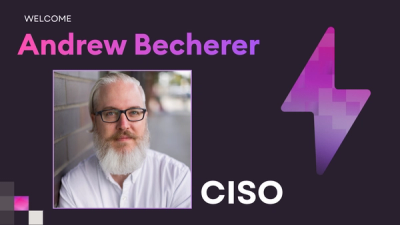
Socket’s first CISO brings deep experience securing high-growth SaaS companies as open source supply chain threats accelerate.