

Security News
Frontier AI Is Now Critical Infrastructure
The Fable shutdown shows how quickly model access can become a business continuity risk for AI-dependent engineering teams.
By Sarah Gooding - Jun 24, 2026
@sendly/node
Advanced tools
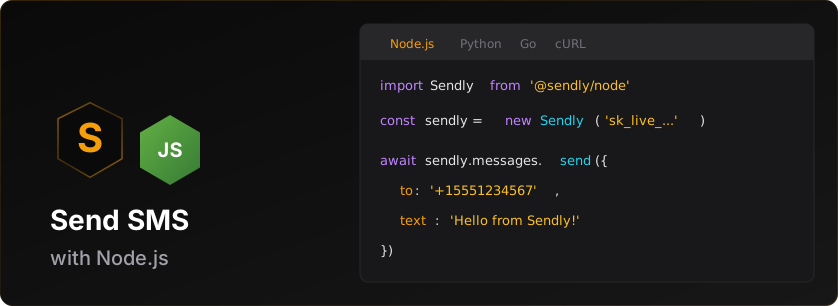


Official Node.js SDK for the Sendly SMS API.
npm install @sendly/node
# or
yarn add @sendly/node
# or
pnpm add @sendly/node
import Sendly from '@sendly/node';

// Initialize with your API key
const sendly = new Sendly('sk_live_v1_your_api_key');

// Send an SMS
const message = await sendly.messages.send({
  to: '+15551234567',
  text: 'Hello from Sendly!'
});

console.log(`Message sent: ${message.id}`);
console.log(`Status: ${message.status}`);
Before sending live SMS messages, you need:
Business Verification - Complete verification in the Sendly dashboard
Credits - Add credits to your account
sk_test_*) work without credits (sandbox mode)sk_live_*) require credits for each messageLive API Key - Generate after verification + credits
| Key Type | Prefix | Credits Required | Verification Required | Use Case |
|---|---|---|---|---|
| Test | sk_test_v1_* | No | No | Development, testing |
| Live | sk_live_v1_* | Yes | Yes | Production messaging |
Note: You can start development immediately with a test key. Messages to sandbox test numbers are free and don't require verification.
Retry-After)import Sendly from '@sendly/node';
const sendly = new Sendly('sk_live_v1_xxx');
// Basic usage (marketing message - default)
const message = await sendly.messages.send({
to: '+15551234567',
text: 'Check out our new features!'
});
// Transactional message (bypasses quiet hours)
const message = await sendly.messages.send({
to: '+15551234567',
text: 'Your verification code is: 123456',
messageType: 'transactional'
});
// With custom sender ID (international)
const message = await sendly.messages.send({
to: '+447700900123',
text: 'Hello from MyApp!',
from: 'MYAPP'
});
// Get recent messages (default limit: 50)
const { data: messages, count } = await sendly.messages.list();

// Get last 10 messages
const { data: messages } = await sendly.messages.list({ limit: 10 });

// Iterate through messages
for (const msg of messages) {
  console.log(`${msg.to}: ${msg.status}`);
}
const message = await sendly.messages.get('msg_xxx');

console.log(`Status: ${message.status}`);
console.log(`Delivered: ${message.deliveredAt}`);
// Schedule a message for future delivery
const scheduled = await sendly.messages.schedule({
  to: '+15551234567',
  text: 'Your appointment is tomorrow!',
  scheduledAt: '2025-01-15T10:00:00Z'
});

console.log(`Scheduled: ${scheduled.id}`);
console.log(`Will send at: ${scheduled.scheduledAt}`);

// List scheduled messages
const { data: scheduledMessages } = await sendly.messages.listScheduled();

// Get a specific scheduled message
const msg = await sendly.messages.getScheduled('sched_xxx');

// Cancel a scheduled message (refunds credits)
const result = await sendly.messages.cancelScheduled('sched_xxx');
console.log(`Refunded: ${result.creditsRefunded} credits`);
// Send multiple messages in one API call (up to 1000)
const batch = await sendly.messages.sendBatch({
  messages: [
    { to: '+15551234567', text: 'Hello User 1!' },
    { to: '+15559876543', text: 'Hello User 2!' },
    { to: '+15551112222', text: 'Hello User 3!' }
  ]
});

console.log(`Batch ID: ${batch.batchId}`);
console.log(`Queued: ${batch.queued}`);
console.log(`Failed: ${batch.failed}`);
console.log(`Credits used: ${batch.creditsUsed}`);

// Get batch status
const status = await sendly.messages.getBatch('batch_xxx');

// List all batches
const { data: batches } = await sendly.messages.listBatches();

// Preview batch (dry run) - validates without sending
const preview = await sendly.messages.previewBatch({
  messages: [
    { to: '+15551234567', text: 'Hello User 1!' },
    { to: '+447700900123', text: 'Hello UK!' }
  ]
});
console.log(`Credits needed: ${preview.creditsNeeded}`);
console.log(`Will send: ${preview.willSend}, Blocked: ${preview.blocked}`);
// After any API call, you can check rate limit status
await sendly.messages.send({ to: '+1555...', text: 'Hello!' });

const rateLimit = sendly.getRateLimitInfo();
if (rateLimit) {
  console.log(`${rateLimit.remaining}/${rateLimit.limit} requests remaining`);
  console.log(`Resets in ${rateLimit.reset} seconds`);
}
import Sendly from '@sendly/node';

const sendly = new Sendly({
  apiKey: 'sk_live_v1_xxx',

  // Optional: Custom base URL (for testing)
  baseUrl: 'https://sendly.live/api/v1',

  // Optional: Request timeout in ms (default: 30000)
  timeout: 60000,

  // Optional: Max retry attempts (default: 3)
  maxRetries: 5
});
Manage webhook endpoints to receive real-time delivery status updates.
// Create a webhook endpoint
const webhook = await sendly.webhooks.create({
  url: 'https://example.com/webhooks/sendly',
  events: ['message.delivered', 'message.failed']
});

console.log(`Webhook ID: ${webhook.id}`);
console.log(`Secret: ${webhook.secret}`); // Only returned at creation - store securely!

// List all webhooks
const webhooks = await sendly.webhooks.list();

// Get a specific webhook
const wh = await sendly.webhooks.get('whk_xxx');

// Update a webhook
await sendly.webhooks.update('whk_xxx', {
  url: 'https://new-endpoint.example.com/webhook',
  events: ['message.delivered', 'message.failed', 'message.sent']
});

// Test a webhook (sends a test event)
const testResult = await sendly.webhooks.test('whk_xxx');
console.log(`Test ${testResult.success ? 'passed' : 'failed'}`);

// Rotate webhook secret
const rotation = await sendly.webhooks.rotateSecret('whk_xxx');
console.log(`New secret: ${rotation.secret}`);

// View delivery history
const deliveries = await sendly.webhooks.getDeliveries('whk_xxx');

// Retry a failed delivery
await sendly.webhooks.retryDelivery('whk_xxx', 'del_yyy');

// Delete a webhook
await sendly.webhooks.delete('whk_xxx');
import { Webhooks } from '@sendly/node';

const webhooks = new Webhooks('your_webhook_secret');

// In your webhook handler
app.post('/webhooks/sendly', (req, res) => {
  const signature = req.headers['x-sendly-signature'];
  const timestamp = req.headers['x-sendly-timestamp'];
  const payload = req.body;

  try {
    const event = webhooks.parse(payload, signature, timestamp);

    switch (event.type) {
      case 'message.delivered':
        console.log(`Message ${event.data.id} delivered`);
        break;
      case 'message.failed':
        console.log(`Message ${event.data.id} failed: ${event.data.errorCode}`);
        break;
    }

    res.status(200).send('OK');
  } catch (error) {
    console.error('Invalid signature');
    res.status(400).send('Invalid signature');
  }
});
// Get account information
const account = await sendly.account.get();
console.log(`Email: ${account.email}`);

// Check credit balance
const credits = await sendly.account.getCredits();
console.log(`Available: ${credits.availableBalance} credits`);
console.log(`Reserved (scheduled): ${credits.reservedBalance} credits`);
console.log(`Total: ${credits.balance} credits`);

// View credit transaction history
const transactions = await sendly.account.getCreditTransactions();
for (const tx of transactions) {
  console.log(`${tx.type}: ${tx.amount} credits - ${tx.description}`);
}

// List API keys
const keys = await sendly.account.listApiKeys();
for (const key of keys) {
  console.log(`${key.name}: ${key.prefix}*** (${key.type})`);
}

// Get API key usage stats
const usage = await sendly.account.getApiKeyUsage('key_xxx');
console.log(`Messages sent: ${usage.messagesSent}`);
console.log(`Credits used: ${usage.creditsUsed}`);

// Create a new API key
const { apiKey, key } = await sendly.account.createApiKey('Production Key');
console.log(`New key: ${key}`); // Only shown once!
console.log(`Key ID: ${apiKey.id}`);

// Revoke an API key
await sendly.account.revokeApiKey('key_xxx');
The SDK provides typed error classes for different error scenarios:
import Sendly, {
  SendlyError,
  AuthenticationError,
  RateLimitError,
  InsufficientCreditsError,
  ValidationError,
  NotFoundError
} from '@sendly/node';

const sendly = new Sendly('sk_live_v1_xxx');

try {
  await sendly.messages.send({
    to: '+15551234567',
    text: 'Hello!'
  });
} catch (error) {
  if (error instanceof AuthenticationError) {
    console.error('Invalid API key:', error.message);
  } else if (error instanceof RateLimitError) {
    console.error(`Rate limited. Retry after ${error.retryAfter} seconds`);
  } else if (error instanceof InsufficientCreditsError) {
    console.error(`Not enough credits. Need ${error.creditsNeeded}, have ${error.currentBalance}`);
  } else if (error instanceof ValidationError) {
    console.error('Invalid request:', error.message);
  } else if (error instanceof NotFoundError) {
    console.error('Resource not found:', error.message);
  } else if (error instanceof SendlyError) {
    console.error(`API error [${error.code}]:`, error.message);
  } else {
    throw error;
  }
}
Use a test API key (sk_test_v1_xxx) to test without sending real messages:
import Sendly, { SANDBOX_TEST_NUMBERS } from '@sendly/node';

const sendly = new Sendly('sk_test_v1_xxx');

// Check if in test mode
console.log(sendly.isTestMode()); // true

// Use sandbox test numbers
await sendly.messages.send({
  to: SANDBOX_TEST_NUMBERS.SUCCESS,  // +15005550000 - Always succeeds
  text: 'Test message'
});

await sendly.messages.send({
  to: SANDBOX_TEST_NUMBERS.INVALID,  // +15005550001 - Returns invalid_number error
  text: 'Test message'
});
| Number | Behavior |
|---|---|
+15005550000 | Success (instant) |
+15005550001 | Fails: invalid_number |
+15005550002 | Fails: unroutable_destination |
+15005550003 | Fails: queue_full |
+15005550004 | Fails: rate_limit_exceeded |
+15005550006 | Fails: carrier_violation |
import { CREDITS_PER_SMS, SUPPORTED_COUNTRIES } from '@sendly/node';

// Credits per SMS by tier
console.log(CREDITS_PER_SMS.domestic); // 2 (US/Canada)
console.log(CREDITS_PER_SMS.tier1);    // 8 (UK, Poland, India, etc.)
console.log(CREDITS_PER_SMS.tier2);    // 12 (France, Japan, Australia, etc.)
console.log(CREDITS_PER_SMS.tier3);    // 16 (Germany, Italy, Mexico, etc.)

// Supported countries by tier
console.log(SUPPORTED_COUNTRIES.domestic); // ['US', 'CA']
console.log(SUPPORTED_COUNTRIES.tier1);    // ['GB', 'PL', 'IN', ...]
The SDK exports validation utilities for advanced use cases:
import {
  validatePhoneNumber,
  getCountryFromPhone,
  isCountrySupported,
  calculateSegments
} from '@sendly/node';

// Validate phone number format
validatePhoneNumber('+15551234567'); // OK
validatePhoneNumber('555-1234'); // Throws ValidationError

// Get country from phone number
getCountryFromPhone('+447700900123'); // 'GB'
getCountryFromPhone('+15551234567');  // 'US'

// Check if country is supported
isCountrySupported('GB'); // true
isCountrySupported('XX'); // false

// Calculate SMS segments
calculateSegments('Hello!'); // 1
calculateSegments('A'.repeat(200)); // 2
The SDK is written in TypeScript and exports all types:
import type {
  SendlyConfig,
  SendMessageRequest,
  Message,
  MessageStatus,
  ListMessagesOptions,
  MessageListResponse,
  RateLimitInfo,
  PricingTier
} from '@sendly/node';
Sendlynew Sendly(apiKey: string)
new Sendly(config: SendlyConfig)
messages - Messages resourcewebhooks - Webhooks resourceaccount - Account resourceisTestMode() - Returns true if using a test API keygetRateLimitInfo() - Returns current rate limit infogetBaseUrl() - Returns configured base URLsendly.messagessend(request: SendMessageRequest): Promise<Message>Send an SMS message.
list(options?: ListMessagesOptions): Promise<MessageListResponse>List sent messages.
get(id: string): Promise<Message>Get a specific message by ID.
schedule(request: ScheduleMessageRequest): Promise<ScheduledMessage>Schedule a message for future delivery.
listScheduled(options?: ListScheduledMessagesOptions): Promise<ScheduledMessageListResponse>List scheduled messages.
getScheduled(id: string): Promise<ScheduledMessage>Get a scheduled message by ID.
cancelScheduled(id: string): Promise<CancelledMessageResponse>Cancel a scheduled message and refund credits.
sendBatch(request: BatchMessageRequest): Promise<BatchMessageResponse>Send multiple messages in one API call.
getBatch(batchId: string): Promise<BatchMessageResponse>Get batch status by ID.
listBatches(options?: ListBatchesOptions): Promise<BatchListResponse>List all batches.
sendly.webhookscreate(options: CreateWebhookOptions): Promise<WebhookCreatedResponse>Create a new webhook endpoint. The returned object includes a one-time secret.
list(): Promise<Webhook[]>List all webhooks.
get(id: string): Promise<Webhook>Get a webhook by ID.
update(id: string, options: UpdateWebhookOptions): Promise<Webhook>Update a webhook.
delete(id: string): Promise<void>Delete a webhook.
test(id: string): Promise<WebhookTestResult>Send a test event to a webhook.
rotateSecret(id: string): Promise<WebhookSecretRotation>Rotate webhook secret.
getDeliveries(id: string): Promise<WebhookDelivery[]>Get delivery history for a webhook.
retryDelivery(webhookId: string, deliveryId: string): Promise<void>Retry a failed delivery.
sendly.accountget(): Promise<Account>Get account information.
getCredits(): Promise<Credits>Get credit balance.
getCreditTransactions(options?: { limit?: number; offset?: number }): Promise<CreditTransaction[]>Get credit transaction history.
listApiKeys(): Promise<ApiKey[]>List API keys.
getApiKey(id: string): Promise<ApiKey>Get an API key by ID.
getApiKeyUsage(id: string): Promise<ApiKeyUsage>Get usage statistics for an API key.
The Enterprise API lets you programmatically manage workspaces, verification, credits, and API keys for multi-tenant platforms. Requires an enterprise master key (sk_live_v1_master_*).
Create a fully configured workspace in a single call:
const client = new Sendly('sk_live_v1_master_YOUR_KEY');

// Inherit verification from an existing workspace (fastest)
const result = await client.enterprise.provision({
  name: 'Acme Insurance - Austin',
  sourceWorkspaceId: 'ws_verified',
  creditAmount: 5000,
  creditSourceWorkspaceId: 'SOURCE_WORKSPACE_ID',
  keyName: 'Production',
  keyType: 'live',
  generateOptInPage: true
});

console.log(result.workspace.id);
console.log(result.key?.key);  // shown once
console.log(result.optInPage?.url);  // hosted opt-in page
Three provisioning modes:
| Mode | Params | Description |
|---|---|---|
| Inherit | sourceWorkspaceId | Shares toll-free number from verified workspace |
| Inherit + New Number | sourceWorkspaceId + inheritWithNewNumber: true | Copies business info, purchases new number |
| Fresh | verification: { ... } | Full business details, new number + carrier approval |
// Create
const ws = await client.enterprise.workspaces.create({ name: 'Acme Insurance' });

// List
const { workspaces } = await client.enterprise.workspaces.list();

// Get details
const detail = await client.enterprise.workspaces.get('ws_xxx');

// Delete
await client.enterprise.workspaces.delete('ws_xxx');
// Submit full verification
await client.enterprise.workspaces.submitVerification('ws_xxx', {
  businessName: 'Acme Insurance LLC',
  website: 'https://acme.com',
  entityType: 'PRIVATE_PROFIT',
  brn: '12-3456789',
  brnType: 'EIN',
  brnCountry: 'US',
  address: { street: '100 Main St', city: 'Austin', state: 'TX', zip: '78701', country: 'US' },
  contact: { firstName: 'Jane', lastName: 'Doe', email: 'jane@acme.com', phone: '+15551234567' },
  useCase: 'Policy renewal reminders',
  sampleMessages: 'Your policy renews on 3/15.'
});

// Inherit from verified workspace (shares toll-free number)
await client.enterprise.workspaces.inheritVerification('ws_new', {
  sourceWorkspaceId: 'ws_verified'
});

// Inherit + new number: use provision() with inheritWithNewNumber instead
await client.enterprise.provision({
  name: 'Acme Insurance - Austin',
  sourceWorkspaceId: 'ws_verified',
  inheritWithNewNumber: true
});
// Transfer credits
await client.enterprise.workspaces.transferCredits('ws_dest', {
  sourceWorkspaceId: 'ws_source',
  amount: 5000
});

// Create workspace API key
const key = await client.enterprise.workspaces.createKey('ws_xxx', {
  name: 'Production',
  type: 'live'
});
console.log(key.key); // shown once

// Revoke a key
await client.enterprise.workspaces.revokeKey('ws_xxx', 'key_abc');
// Set enterprise webhook
await client.enterprise.webhooks.set({ url: 'https://yourapp.com/webhooks' });

// Analytics
const overview = await client.enterprise.analytics.overview();
const messages = await client.enterprise.analytics.messages({ period: '30d' });
const delivery = await client.enterprise.analytics.delivery();
Full enterprise docs: sendly.live/docs/enterprise
MIT
FAQs
Official Sendly Node.js SDK for SMS messaging
We found that @sendly/node demonstrated a healthy version release cadence and project activity because the last version was released less than a year ago. It has 1 open source maintainer collaborating on the project.
Did you know?

Socket for GitHub automatically highlights issues in each pull request and monitors the health of all your open source dependencies. Discover the contents of your packages and block harmful activity before you install or update your dependencies.
Security News
The Fable shutdown shows how quickly model access can become a business continuity risk for AI-dependent engineering teams.

Security News
AI agents are pulling packages into environments no scanner is watching, creating exposure before security teams can see it.

Security News
GitHub Actions checkout now blocks risky pull_request_target checkouts by default to help prevent pwn request supply chain attacks.