

Security News
US Government Forces Anthropic to Pull Claude Fable Days After Launch
Anthropic says the directive cited national security concerns over a narrow jailbreak, but offered no specific technical details.
By Sarah Gooding - Jun 13, 2026
@validpay/node-sdk
Advanced tools
Official ValidPay Node.js SDK — client-side AES-256-GCM encryption + commitment hashing + split-key + selective disclosure + revocation. Zero production dependencies.
Official Node.js SDK for ValidPay — document verification API with client-side AES-256-GCM encryption. Sensitive payloads are encrypted on your server before they ever leave the box; ValidPay stores the ciphertext, and only your verifier (with the key you hand them) can read the contents.
crypto + native fetch only>= 20npm install @validpay/node-sdk
import { ValidPayClient } from "@validpay/node-sdk";

const client = new ValidPayClient({ apiKey: process.env.VALIDPAY_API_KEY! });

// 1. Issuer side — register an intent with sensitive payload.
// Split-key protection (Patent C) is the default since 0.4.0: `key` is
// Share A of the AES key; Share B is stored on the ValidPay server. The
// full decryption key never exists on any single system.
const { retrievalId, key } = await client.createIntent({
  documentType: "ssn_card",
  payload: { ssn: "123-45-6789", name: "Jane Doe" },
});

// retrievalId is public (e.g. "vp_abc123def456") — embed in a QR code.
// key (Share A) is secret — deliver it ONLY to the intended verifier, out-of-band.

// 2. Verifier side — fetch and decrypt (no API key needed)
const result = await client.verifyIntent<{ ssn: string; name: string }>(retrievalId, key);

console.log(result.payload);             // { ssn: "123-45-6789", name: "Jane Doe" }
console.log(result.integrityVerified);   // true — commitment hash matched
console.log(result.issuer);              // "Acme Bank"
console.log(result.issuerVerified);      // true
The retrievalId is public; the key is secret. Stamp them into a URL fragment (the # part — fragments are never sent to the server, even by curl) so a single link both identifies the intent and decrypts it:
function toBase64Url(b64: string): string {
  return b64.replace(/\+/g, "-").replace(/\//g, "_").replace(/=+$/, "");
}

const verifyUrl = `https://validpay.com/verify/${retrievalId}#key=${toBase64Url(key)}`;
// → encode in a QR, paste in an email, scan with a phone camera.
// The /verify page reads the fragment client-side and decrypts locally.
toBase64Url matters because phone QR scanners + browser share-sheets mangle +, /, and = in URL fragments. The /verify page accepts both standard base64 and base64url for backward compatibility, but new links should always emit base64url.
createIntent generates a fresh 256-bit key, encrypts your payload locally with AES-256-GCM, computes a SHA-256 commitment hash of the plaintext, and POSTs only the ciphertext + hash to POST /v1/intent.retrieval_id and stores the ciphertext + commitment hash.retrievalId and the key through your own secure channel.verifyIntent, which fetches GET /v1/intent/:id, decrypts the ciphertext locally, then recomputes the commitment hash and compares — any server-side tampering would change the hash.The key is generated client-side, used client-side, and transmitted client-side. ValidPay can never read the payload.
new ValidPayClient(options)| Option | Type | Default | Notes |
|---|---|---|---|
apiKey | string (required) | — | Your ValidPay issuer API key. |
baseUrl | string | "https://api.validpay.com" | Override for staging or self-hosted setups. |
timeout | number | 30000 | Request timeout (ms). |
fetch | typeof fetch | global fetch | Inject a custom fetch (useful for testing). |
client.createIntent({ documentType, payload, validFrom?, validUntil?, splitKey? }) → { retrievalId, key }Generates a key, encrypts JSON.stringify(payload), posts ciphertext + commitment hash to /v1/intent. Defaults to split-key (Patent C): the returned key is Share A and Share B goes to the server — neither alone decrypts. Pass splitKey: false for the legacy flow where key is the full AES key. The full key is never sent to the API.
client.createIntentBatch(items[]) → { retrievalId, key }[]Same as createIntent for up to 100 intents in a single request. Each item gets a unique AES key; results match the input order.
client.verifyIntent<T>(retrievalId, key) → VerifyIntentResult<T>Fetches the intent and decrypts the payload locally. Verifies the commitment hash. Throws ValidPayError:
decryption_failed — wrong key or tampered ciphertext (GCM auth-tag failure)integrity_failure — commitment hash mismatch (server-side tampering detected)intent_revoked — the intent has been revokedsplit_key_required / selective_disclosure_required — use the specialised verify methodinterface VerifyIntentResult<T> {
intentId: string;
payload: T;
issuer: string;
issuerVerified: boolean;
registeredAt: string; // ISO 8601
status: string;
integrityVerified: boolean;
validFrom?: string | null;
validUntil?: string | null;
timeLockStatus?: "valid" | "not_yet_valid" | "expired" | null;
}
All documents created with SDK v0.4+ use split-key by default — createIntent
returns Share A and stores Share B at the API; verifyIntent detects a
split-key intent, fetches Share B from /v1/intent/:id/fragment,
XOR-combines, and decrypts:
const { retrievalId, key: shareA } = await client.createIntent({
  documentType: "ssn_card",
  payload: { ssn: "123-45-6789" },
});
// shareA goes in the QR; shareB stays at the API.

const result = await client.verifyIntent(retrievalId, shareA);
Backward compatibility: createIntent({ ..., splitKey: false }) gives the
legacy single-key flow; createSplitKeyIntent() is a deprecated alias of
createIntent() (emits a DeprecationWarning); verifySplitKeyIntent()
still works.
const { retrievalId, key } = await client.createSelectiveIntent({
  documentType: "check",
  payload: { amount: 1500, payee: "Alice", memo: "rent" },
  disclosurePolicy: {
    bank: ["amount"],
    auditor: ["amount", "payee"],
  },
});

const bankView = await client.verifySelectiveIntent(retrievalId, key, "bank");
// { amount: 1500, payee: "[REDACTED]", memo: "[REDACTED]" }

const fullView = await client.verifySelectiveIntent(retrievalId, key, "full");
// { amount: 1500, payee: "Alice", memo: "rent" }
When you need to reconcile your own records against ValidPay — "how many intents did I create this month, and which got scanned?" — use the audit endpoints. Metadata only; no ciphertext, no key material.
const { intents, total } = await client.listIntents({
  since: "2026-06-01T00:00:00Z",
  status: "active",
  limit: 100,
});
//   total: 142
//   intents[0]: {
//     retrievalId: "vp_abc123def456",
//     documentType: "check",
//     status: "active",
//     createdAt: "2026-06-04T15:52:25Z",
//     verificationCount: 3,
//     lastVerifiedAt: "2026-06-04T16:01:00Z",
//     ...
//   }

const meta = await client.getIntent("vp_abc123def456");
//   status, verificationCount, revokedAt, etc.
//   Use verifyIntent(retrievalId, key) if you want to decrypt.
Filters: since / until (ISO datetime), status (active | revoked), documentType, limit (≤200), offset, order (asc | desc).
await client.revokeIntent(retrievalId, "stop payment requested");
await client.reinstateIntent(retrievalId, "false alarm");
const history = await client.getRevocationHistory(retrievalId);
const { status, version } = await client.health();
import {
  generateKey,
  encrypt,
  decrypt,
  commitmentHash,
  splitKey,
  combineKeyShares,
  encryptFields,
  buildKeyMap,
  decryptFields,
} from "@validpay/node-sdk";

const key = generateKey();                       // base64 32-byte key
const blob = encrypt("hello world", key);        // base64(iv[12] || authTag[16] || ciphertext)
const plain = decrypt(blob, key);                // "hello world"
const hash = commitmentHash(plain);              // SHA-256 hex

const [a, b] = splitKey(key);
const reconstructed = combineKeyShares(a, b);    // === key
ValidPayErrorAll SDK errors throw ValidPayError with a stable code:
| Code | Meaning |
|---|---|
invalid_config | Missing apiKey (or other constructor options). |
invalid_argument | Required method argument is missing or invalid. |
invalid_key | Key is not valid base64 or not 32 bytes. |
invalid_blob | Blob is not valid base64 or too short. |
decryption_failed | Wrong key, or ciphertext tampered (GCM auth-tag failure). |
integrity_failure | Commitment hash didn't match — server tampering detected. |
intent_revoked | The intent has been revoked. |
split_key_required | Intent uses split-key; use verifySplitKeyIntent instead. |
selective_disclosure_required | Intent uses per-field encryption; use verifySelectiveIntent. |
invalid_role | Role not present in the disclosure policy. |
missing_fragment | API did not return a key fragment for a split-key intent. |
network_error | fetch itself rejected (DNS, TCP, abort, etc.). |
http_error | API returned non-2xx with no machine-readable error. |
not_found | API returned 404 (e.g. unknown retrieval ID). |
unauthorized | API returned 401 (invalid or missing API key). |
invalid_response | API returned 2xx but response shape was unexpected. |
invalid_payload | Decrypted bytes were not valid JSON. |
When the API itself rejects a request, the response body carries a canonical code field alongside the legacy error string. SDKs (this one included) surface both — use code for exhaustive switch checks because the values are stable across versions.
code | HTTP | Meaning |
|---|---|---|
INVALID_BODY | 400 | Request body failed schema validation. details carries the field-level errors. |
INVALID_CREDENTIALS | 401 | Wrong email or password on /v1/auth/login. |
INVALID_API_KEY | 401 | API key is missing, malformed, or revoked. |
MISSING_TOKEN | 401 | Endpoint requires a bearer token and didn't get one. |
INVALID_TOKEN | 401 | Bearer token is expired or doesn't decode. |
ACCOUNT_LOCKED | 423 | Too many failed sign-ins. message carries the retry window. |
INSUFFICIENT_SCOPE | 403 | API key doesn't have the scope this endpoint requires. |
INTENT_NOT_FOUND | 404 | No intent matches this retrieval ID. |
INTENT_REVOKED | 200 | Body is intentionally empty — issuer revoked the intent. |
DOCUMENT_LIMIT_REACHED | 402 | Free or sandbox quota exhausted. message describes the upgrade path. |
PAYLOAD_TOO_LARGE | 413 | Encrypted payload exceeds the per-route limit (25 MB for uploads). |
RATE_LIMIT_EXCEEDED | 429 | Per-API-key bucket exhausted. Honour the Retry-After header. |
VALIDATION_ERROR | 422 | Domain-level rule rejected the request (e.g. valid_from > valid_until). |
NOT_FOUND | 404 | Generic — the route exists but the resource doesn't. |
INTERNAL_ERROR | 500 | Unhandled server error. Retry with backoff; report if it persists. |
The full list lives in ValidPay-API/src/errorCodes.ts.
ValidPay POSTs intent events (intent.created, intent.verified, intent.revoked, intent.reinstated) to URLs you register via POST /v1/webhooks. Every delivery carries an HMAC signature in the X-ValidPay-Signature header — verify it before trusting the body:
import express from "express";
import { verifyWebhookSignature } from "@validpay/node-sdk";

const app = express();

app.post(
  "/webhooks/validpay",
  // CRITICAL: read the body as raw bytes, not parsed JSON. The HMAC is
  // computed over the EXACT bytes ValidPay sent; JSON.parse loses the
  // key order and whitespace and the signature won't match.
  express.raw({ type: "application/json" }),
  (req, res) => {
    const rawBody = (req.body as Buffer).toString("utf8");
    const result = verifyWebhookSignature(
      req.headers["x-validpay-signature"] as string | undefined,
      rawBody,
      process.env.VALIDPAY_WEBHOOK_SECRET!,
    );
    if (!result.valid) return res.status(401).send(result.reason);

    const event = JSON.parse(rawBody);
    switch (event.event) {
      case "intent.revoked":
        // update your local record, remove "Verified" badge, etc.
        break;
      case "intent.verified":
        // someone scanned the QR
        break;
    }
    res.status(200).send("OK");
  },
);
verifyWebhookSignature enforces a 5-minute replay window by default. Configure via the toleranceSeconds option if you need more.
Also worth knowing:
X-ValidPay-Delivery-Id carries a per-delivery UUID — deduplicate on this to handle at-least-once retries.GET /v1/webhooks/:id/deliveries returns the last 50 attempts so you can see what landed and what didn't.All authenticated responses carry three standard headers — read them to pace yourself before you hit a 429:
| Header | Meaning |
|---|---|
X-RateLimit-Limit | Cap per API key per minute. Currently 600. |
X-RateLimit-Remaining | Requests left in the current window. |
X-RateLimit-Reset | UNIX timestamp (seconds) when the window resets. |
On 429 you'll also see Retry-After (seconds) — the SDK doesn't auto-retry; honour it from your caller.
encrypt() returns a base64 string whose decoded bytes are:
[ iv (12 bytes) | authTag (16 bytes) | ciphertext (variable) ]
This matches the Python SDK exactly, so blobs are interoperable in both directions.
npm install
npm test
npm run build
MIT — see LICENSE.
FAQs
Official ValidPay Node.js SDK — client-side AES-256-GCM encryption + commitment hashing + split-key + selective disclosure + revocation. Zero production dependencies.
We found that @validpay/node-sdk demonstrated a healthy version release cadence and project activity because the last version was released less than a year ago. It has 1 open source maintainer collaborating on the project.
Did you know?

Socket for GitHub automatically highlights issues in each pull request and monitors the health of all your open source dependencies. Discover the contents of your packages and block harmful activity before you install or update your dependencies.
Security News
Anthropic says the directive cited national security concerns over a narrow jailbreak, but offered no specific technical details.

Security News
A network of 152 Chrome live wallpaper extensions hid ad tracking and made extension-driven traffic look like Google search clicks.
Company News
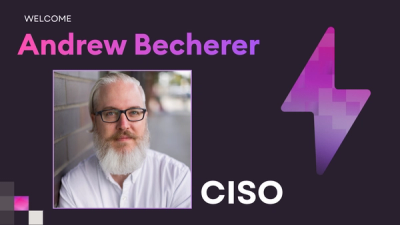
Socket’s first CISO brings deep experience securing high-growth SaaS companies as open source supply chain threats accelerate.