
Research
/Security News
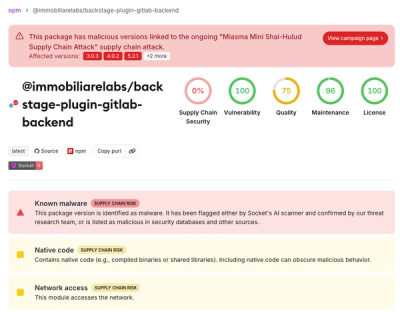
Miasma Mini Shai-Hulud Hits ImmobiliareLabs npm Packages
Miasma Mini Shai-Hulud hits @immobiliarelabs Backstage plugins, targeting GitLab and LDAP auth packages on npm.
By Socket Research Team - Jun 26, 2026
@andrewshell/socklog
Advanced tools
WebSocket-based logging web components built with Lit.
npm install @andrewshell/socklog
esm.sh:
<script type="module">
  import 'https://esm.sh/@andrewshell/socklog'
</script>

<socklog-viewer url="ws://localhost:8080/logs"></socklog-viewer>
unpkg:
<script src="https://unpkg.com/@andrewshell/socklog"></script>

<socklog-viewer url="ws://localhost:8080/logs"></socklog-viewer>
jsdelivr:
<script src="https://cdn.jsdelivr.net/npm/@andrewshell/socklog"></script>

<socklog-viewer url="ws://localhost:8080/logs"></socklog-viewer>
<socklog-viewer url="ws://localhost:8080/logs"></socklog-viewer>
<script type="module">
  import 'https://esm.sh/@andrewshell/socklog'

  const viewer = document.getElementById('viewer')
  const controls = document.getElementById('controls')

  // Connect controls to viewer's log store
  controls.store = viewer.getStore()
</script>

<div style="display: flex; flex-direction: column; height: 400px;">
  <socklog-controls id="controls"></socklog-controls>
  <socklog-viewer id="viewer" url="ws://localhost:8080/logs"></socklog-viewer>
</div>
The <socklog-sender> component shares the viewer's WebSocket connection so messages
can be sent without opening a second socket.
<script type="module">
  import 'https://esm.sh/@andrewshell/socklog'

  const viewer = document.getElementById('viewer')
  const controls = document.getElementById('controls')
  const sender = document.getElementById('sender')

  controls.store = viewer.getStore()
  // Reuse the viewer's WebSocket connection
  sender.client = viewer.getClient()
</script>

<div style="display: flex; flex-direction: column; height: 400px;">
  <socklog-sender id="sender"></socklog-sender>
  <socklog-controls id="controls"></socklog-controls>
  <socklog-viewer id="viewer" url="ws://localhost:8080/logs"></socklog-viewer>
</div>
<socklog-viewer>Main log display component with WebSocket connection and virtualized scrolling.
Attributes:
| Attribute | Type | Default | Description |
|---|---|---|---|
url | string | '' | WebSocket URL to connect to |
max-logs | number | 1000 | Maximum number of logs to retain |
Methods:
| Method | Returns | Description |
|---|---|---|
connect() | void | Connect to the WebSocket |
clear() | void | Clear all logs |
getStore() | LogStore | Get the underlying log store |
getClient() | WebSocketClient | Get the underlying WebSocket client |
<socklog-controls>Filter, search, and pause controls for the log viewer.
Properties:
| Property | Type | Description |
|---|---|---|
store | LogStore | Log store instance to control |
<socklog-sender>Textarea + Send button that publishes messages over the viewer's existing WebSocket
connection. Send via the button or Cmd/Ctrl+Enter. The button is disabled when
the connection is not open or the textarea is empty.
Properties:
| Property | Type | Description |
|---|---|---|
client | WebSocketClient | WebSocket client instance to send messages over |
Components use CSS custom properties for theming:
socklog-viewer {
  /* Typography */
  --socklog-font-family: 'Monaco', 'Menlo', monospace;
  --socklog-font-size: 13px;

  /* Colors */
  --socklog-bg: #1e1e1e;
  --socklog-color: #d4d4d4;
  --socklog-border-color: #333;
  --socklog-timestamp-color: #888;
  --socklog-muted-color: #666;

  /* Layout */
  --socklog-padding: 8px;
  --socklog-border-radius: 4px;
}

socklog-controls {
  /* Controls */
  --socklog-controls-bg: #252526;
  --socklog-input-bg: #3c3c3c;
  --socklog-input-border: #555;
  --socklog-input-color: #d4d4d4;
  --socklog-focus-color: #007acc;
  --socklog-hover-bg: #404040;

  /* Pause state */
  --socklog-pause-bg: #fff3cd;
  --socklog-pause-color: #856404;
}
For advanced usage, you can import the core modules directly:
import { WebSocketClient, LogStore } from '@andrewshell/socklog'

const client = new WebSocketClient({
  url: 'ws://localhost:8080/logs',
  reconnect: true,
  reconnectInterval: 3000,
  maxReconnectAttempts: 10
})

const store = new LogStore(1000)

client.addEventListener('log', (e) => {
  store.add(e.detail)
})

client.connect()

// Send a message over the same connection
client.send('hello server')
interface LogEntry {
  id: string
  timestamp: Date
  data: unknown
  raw: string
}

interface WebSocketConfig {
  url: string
  reconnect?: boolean
  reconnectInterval?: number
  maxReconnectAttempts?: number
}

interface LogFilter {
  search?: string
}

type ConnectionStatus = 'connecting' | 'connected' | 'disconnected' | 'error'
MIT
FAQs
WebSocket-based logging web components using Lit
We found that @andrewshell/socklog demonstrated a healthy version release cadence and project activity because the last version was released less than a year ago. It has 1 open source maintainer collaborating on the project.
Did you know?

Socket for GitHub automatically highlights issues in each pull request and monitors the health of all your open source dependencies. Discover the contents of your packages and block harmful activity before you install or update your dependencies.
Research
/Security News
Miasma Mini Shai-Hulud hits @immobiliarelabs Backstage plugins, targeting GitLab and LDAP auth packages on npm.

Security News
Rolldown paused Rust React Compiler integration after a 5MB binary size increase raised concerns about shipping React-specific code to all Vite users.

Security News
/Research
Mini Shai-Hulud expands into the Go ecosystem after hitting LeoPlatform npm packages and targeting GitHub Actions workflows.