

Security News
US Government Forces Anthropic to Pull Claude Fable Days After Launch
Anthropic says the directive cited national security concerns over a narrow jailbreak, but offered no specific technical details.
By Sarah Gooding - Jun 13, 2026
@copass/langchain
Advanced tools
LangChain tool adapters for Copass — drop-in discover/interpret/search tools for LangChain agents
Copass retrieval as LangChain tools. The LLM picks discover (menu of relevant items), search (synthesized answer), or get_origin (map canonical_ids to source files) — you don't write the tool-calling loop. interpret is exposed for back-compat but legacy; prefer search for drill-in.
Install the Copass CLI and bootstrap your account:
npm install -g @copass/cli
copass login                             # email OTP
copass setup                             # creates a sandbox, writes .olane/refs.json
copass apikey create --name my-app       # prints an olk_... key — shown once, save it
| Output | Use as |
|---|---|
olk_... key printed by copass apikey create | COPASS_API_KEY |
sandbox_id in ./.olane/refs.json | COPASS_SANDBOX_ID |
project_id in ./.olane/refs.json (optional) | COPASS_PROJECT_ID |
Ingest some content so retrieval has something to return:
copass ingest path/to/file.md
# or pipe stdin:  echo "some decision or note" | copass ingest -
npm install @copass/langchain @copass/core @langchain/core @langchain/anthropic @langchain/langgraph zod
import { CopassClient } from '@copass/core';
import { createCopassAgent } from '@copass/langchain';
import { ChatAnthropic } from '@langchain/anthropic';

const copass = new CopassClient({
  auth: { type: 'bearer', token: process.env.COPASS_API_KEY! },
});
const sandbox_id = process.env.COPASS_SANDBOX_ID!;
const window = await copass.contextWindow.create({ sandbox_id });

const agent = createCopassAgent({
  client: copass,
  sandbox_id,
  window,
  llm: new ChatAnthropic({ model: 'claude-opus-4-7' }),
});

const result = await agent.invoke({
  messages: [{ role: 'user', content: 'what do we know about checkout retry behavior?' }],
});

console.log(result.messages.at(-1)?.content);
That's the whole API. createCopassAgent returns a standard LangChain Runnable, so .invoke() / .stream() / .streamEvents() / .batch() / .pipe() all work as normal. Pass the same window to the next turn and retrieval stays window-aware automatically — no callbacks, no trackers, no glue code on your side.
Run twice with the same window — the second call won't re-surface items the agent already used.
The agent has the Copass retrieval tools in its toolbelt; the LLM picks one per turn:
| Tool | When the LLM calls it |
|---|---|
discover | "What's relevant?" — ranked menu of pointers |
search | "Tell me about X" / "Answer this." — synthesized answer (canonical drill-in) |
get_origin | "Where does this live?" — maps canonical_ids from discover to source files. Cheap, no LLM. |
interpret | Legacy — brief pinned to canonical_ids. Prefer search for drill-in. |
Add your own tools via the tools option — they'll be mixed in alongside the Copass four:
const agent = createCopassAgent({
  client: copass,
  sandbox_id,
  window,
  llm,
  tools: [myWeatherTool, myCalendarTool],
});
createCopassAgent pre-wires the tools, the createReactAgent setup, and the window-auto-tracking callback. You don't learn LangChain callbacks to get working window-aware retrieval.Runnable — it composes with chains, routers, and LangGraph nodes just like anything else.discover for a menu of relevant items, search for a synthesized answer. interpret is wired for back-compat (legacy — prefer search).createCopassAgent is a thin composition. If you need custom agent plumbing — different executor, hand-tuned prompt node, multiple models — use the three exported primitives directly:
import { copassTools, CopassWindowCallback } from '@copass/langchain';
import { createReactAgent } from '@langchain/langgraph/prebuilt';

const tools = copassTools({ client: copass, sandbox_id, window });
const agent = createReactAgent({
  llm,
  tools: [tools.discover, tools.interpret, tools.search],
});

await agent.invoke(
  { messages: [...] },
  { callbacks: [new CopassWindowCallback({ window })] },
);
Why the callback exists. LangGraph.js (unlike Python LangGraph) doesn't have an InjectedState annotation that lets tools read the conversation messages directly. CopassWindowCallback hooks handleChatModelStart — which fires before every chat model invocation with the full message history — and mirrors new turns into the ContextWindow. The dedup set is seeded from window.getTurns() so no message is added twice.
ToolMessages are skipped by default since they're usually retrieval noise; set includeToolMessages: true to include them.
The LangChain callback delegates to ContextWindow.addTurn, so any
participants configured on the underlying window flow through
automatically — no LangChain-specific wiring needed:
const window = await client.contextWindow.create({
  sandbox_id,
  participants: ['User', 'agent:support-bot'],   // roster set once
});
Set a per-turn name on the ChatMessage for richer per-turn speaker
provenance. See @copass/core for the full envelope
surface (speaker, participants, occurred_at, free-form
source_type).
@copass/core — client SDK@copass/ai-sdk, @copass/mastra, copass-pydantic-ai — same shape for other frameworks@copass/mcp — standalone MCP server for Claude Code / Desktop / CursorMIT
FAQs
LangChain tool adapters for Copass — drop-in discover/interpret/search tools for LangChain agents
We found that @copass/langchain demonstrated a healthy version release cadence and project activity because the last version was released less than a year ago. It has 1 open source maintainer collaborating on the project.
Did you know?

Socket for GitHub automatically highlights issues in each pull request and monitors the health of all your open source dependencies. Discover the contents of your packages and block harmful activity before you install or update your dependencies.
Security News
Anthropic says the directive cited national security concerns over a narrow jailbreak, but offered no specific technical details.

Security News
A network of 152 Chrome live wallpaper extensions hid ad tracking and made extension-driven traffic look like Google search clicks.
Company News
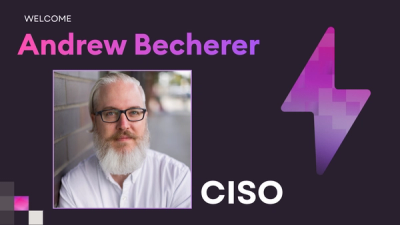
Socket’s first CISO brings deep experience securing high-growth SaaS companies as open source supply chain threats accelerate.