

Security News
The Code You Didn't Write Is Still Yours to Defend
AI agents are pulling packages into environments no scanner is watching, creating exposure before security teams can see it.
By Brad Arkin - Jun 23, 2026
@ixo/did-provider-x
Advanced tools
A Veramo / did-resolver plugin that resolves did:ixo (and the legacy did:x) DID methods against the ixo DID resolver service.
It returns resolver functions you can plug into a did-resolver Resolver or a Veramo DIDResolverPlugin, so DID documents (and their JSON-LD @context, required for verifiable-credential verification) resolve correctly.
npm install @ixo/did-provider-x
# or
yarn add @ixo/did-provider-x
did-resolvergetResolver(options?) returns a method → resolver map for ixo and x:
import { Resolver } from "did-resolver";
import { getResolver } from "@ixo/did-provider-x";

const resolver = new Resolver({
  ...getResolver(), // resolves did:ixo and did:x
});

const result = await resolver.resolve(
  "did:ixo:entity:54bede0aced5282b2401c58a048a731a"
);
console.log(result.didDocument);
Point it at a specific network's resolver with the url option:
const resolver = new Resolver({
  ...getResolver({ url: "https://resolver.devnet.ixo.earth/1.0/identifiers/" }),
});
import { createAgent, IResolver } from "@veramo/core";
import { DIDResolverPlugin } from "@veramo/did-resolver";
import { Resolver } from "did-resolver";
import { getResolver } from "@ixo/did-provider-x";

const agent = createAgent<IResolver>({
  plugins: [
    new DIDResolverPlugin({
      resolver: new Resolver({ ...getResolver() }),
    }),
  ],
});

await agent.resolveDid({
  didUrl: "did:ixo:entity:54bede0aced5282b2401c58a048a731a",
});
For resolving other DID methods through a Universal Resolver instance:
import {
  getUniversalResolver,
  getUniversalResolverFor,
} from "@ixo/did-provider-x";

// a single resolver for any method the universal resolver supports
const uni = getUniversalResolver();

// or map specific methods
const resolver = new Resolver({
  ...getUniversalResolverFor(["web", "key", "elem"]),
});
| Export | Description |
|---|---|
getResolver(options?) | Returns { ixo, x } DIDResolvers for the ixo DID methods. |
IxoDidResolver | Class form of the above (new IxoDidResolver(options).build()). |
getUniversalResolver(url?) | A single DIDResolver backed by a universal resolver instance. |
getUniversalResolverFor(methods, url?) | Maps the given DID methods to a universal resolver. |
options.url (and the url argument) is the base URL of a DID resolver endpoint, ending in /1.0/identifiers/. It defaults to https://resolver.ixo.world/1.0/identifiers/.
The resolvers request the JSON-LD DID representation (Accept: application/did+ld+json), so resolved documents include their @context — required for JSON-LD verifiable-credential verification.
| Network | RPC | DID resolver |
|---|---|---|
| mainnet | https://impacthub.ixo.world/rpc/ | https://resolver.ixo.world/1.0/identifiers/ |
| testnet | https://testnet.ixo.earth/rpc/ | https://resolver.testnet.ixo.earth/1.0/identifiers/ |
| devnet | https://devnet.ixo.earth/rpc/ | https://resolver.devnet.ixo.earth/1.0/identifiers/ |
yarn install
yarn build      # build the main (CommonJS) and module (ESM) outputs
yarn build:ts   # emit type declarations
Apache-2.0
FAQs
Veramo SDK plugin for the did:x/ixo DID method
We found that @ixo/did-provider-x demonstrated a healthy version release cadence and project activity because the last version was released less than a year ago. It has 2 open source maintainers collaborating on the project.
Did you know?

Socket for GitHub automatically highlights issues in each pull request and monitors the health of all your open source dependencies. Discover the contents of your packages and block harmful activity before you install or update your dependencies.
Security News
AI agents are pulling packages into environments no scanner is watching, creating exposure before security teams can see it.

Security News
GitHub Actions checkout now blocks risky pull_request_target checkouts by default to help prevent pwn request supply chain attacks.
Product
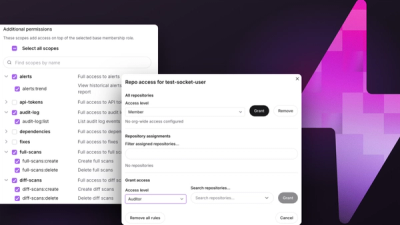
Socket now supports Custom Roles and Repository Access Permissions so organizations can control who can access specific repositories and actions.