

Security News
US Government Forces Anthropic to Pull Claude Fable Days After Launch
Anthropic says the directive cited national security concerns over a narrow jailbreak, but offered no specific technical details.
By Sarah Gooding - Jun 13, 2026
@openparachute/agent
Advanced tools
An AI assistant that runs agents securely in their own containers. Lightweight, built to be easily understood and completely customized for your needs. A [Parachute](https://parachute.computer) module.
parachute.computer • docs • 中文 • 日本語
Most AI-assistant frameworks fall into one of two camps: heavyweight platforms with hundreds of thousands of lines of code, dozens of config files, and security at the application layer (allowlists, pairing codes); or DIY scripts with no isolation at all. Both ask you to either trust software you can't read, or hand the agent direct access to your machine.
parachute-agent runs each agent group in its own Linux container with filesystem isolation, in a codebase small enough to read in an afternoon — one process and a handful of files. Bash access is safe because commands run inside the container, not on your host. The user's Parachute Vault is the agent's substrate: scoped vault tokens grant exactly the read/write surface you choose, and credentials live in a local AES-GCM-encrypted store, never round-tripped through chat context.
parachute-agent is a Parachute module — install it through the hub and configure it from the web UI:
parachute install parachute-agent
The hub builds the agent container, brings the host process up under bun src/index.ts, and serves the configuration UI at http://127.0.0.1:1944/agent/. From there: drop in your Anthropic API key, pick a channel (Telegram, Discord, or the local CLI), and pair your first agent — no shell scripts required. See docs/parachute-integration.md for the full Parachute path.
Small enough to understand. One process, a few source files and no microservices. If you want to understand the full parachute-agent codebase, just ask Claude Code to walk you through it.
Secure by isolation. Agents run in Linux containers and they can only see what's explicitly mounted. Bash access is safe because commands run inside the container, not on your host.
Built for the individual user. parachute-agent isn't a monolithic framework; it's software that fits each user's exact needs. Instead of becoming bloatware, parachute-agent is designed to be bespoke. You make your own fork and have Claude Code modify it to match your needs.
Customization = code changes. No configuration sprawl. Want different behavior? Modify the code. The codebase is small enough that it's safe to make changes.
AI-native, hybrid by design. The install and onboarding flow is an optimized scripted path, fast and deterministic. When a step needs judgment, whether a failed install, a guided decision, or a customization, control hands off to Claude Code seamlessly. Beyond setup there's no monitoring dashboard or debugging UI either: describe the problem in chat and Claude Code handles it.
Skills over features. Trunk ships the registry and infrastructure, not specific channel adapters or alternative agent providers. Channels (Discord, Slack, Telegram, WhatsApp, …) live on a long-lived channels branch; alternative providers (OpenCode, Ollama) live on providers. You run /add-telegram, /add-opencode, etc. and the skill copies exactly the module(s) you need into your fork. No feature you didn't ask for.
Best harness, best model. parachute-agent natively uses Claude Code via Anthropic's official Claude Agent SDK, so you get the latest Claude models and Claude Code's full toolset, including the ability to modify and expand your own parachute-agent fork. Other providers are drop-in options: /add-codex for OpenAI's Codex (ChatGPT subscription or API key), /add-opencode for OpenRouter, Google, DeepSeek and more via OpenCode, and /add-ollama-provider for local open-weight models. Provider is configurable per agent group.
/add-<channel> skills. Run one or many at the same time./manage-channels. See docs/isolation-model.md.CLAUDE.md, its own memory, its own container, and only the mounts you allow. Nothing crosses the boundary unless you wire it to.~/.parachute/agent/master.key + the central DB), injects them into the container's environment at spawn time, and never round-trips them through chat context.Talk to your assistant with the trigger word (default: @Andy):
@Andy send an overview of the sales pipeline every weekday morning at 9am (has access to my Obsidian vault folder)
@Andy review the git history for the past week each Friday and update the README if there's drift
@Andy every Monday at 8am, compile news on AI developments from Hacker News and TechCrunch and message me a briefing
From a channel you own or administer, you can manage groups and tasks:
@Andy list all scheduled tasks across groups
@Andy pause the Monday briefing task
@Andy join the Family Chat group
parachute-agent doesn't use configuration files. To make changes, just tell Claude Code what you want:
Or run /customize for guided changes.
The codebase is small enough that Claude can safely modify it.
Don't add features. Add skills.
If you want to add a new channel or agent provider, don't add it to trunk. New channel adapters land on the channels branch; new agent providers land on providers. Users install them in their own fork with /add-<name> skills, which copy the relevant module(s) into the standard paths, wire the registration, and pin dependencies.
This keeps trunk as pure registry and infra, and every fork stays lean — users get the channels and providers they asked for and nothing else.
Skills we'd like to see:
Communication Channels
/add-signal — Add Signal as a channel/customize, /debug, error recovery during setup, and all /add-<channel> skillsmessaging apps → host process (router) → inbound.db → container (Bun, Claude Agent SDK) → outbound.db → host process (delivery) → messaging apps
A single Node host orchestrates per-session agent containers. When a message arrives, the host routes it via the entity model (user → messaging group → agent group → session), writes it to the session's inbound.db, and wakes the container. The agent-runner inside the container polls inbound.db, runs Claude, and writes responses to outbound.db. The host polls outbound.db and delivers back through the channel adapter.
Two SQLite files per session, each with exactly one writer — no cross-mount contention, no IPC, no stdin piping. Channels and alternative providers self-register at startup; trunk ships the registry and the Chat SDK bridge, while the adapters themselves are skill-installed per fork.
For the full architecture writeup see docs/architecture.md; for the three-level isolation model see docs/isolation-model.md.
Key files:
src/index.ts — entry point: DB init, channel adapters, delivery polls, sweepsrc/router.ts — inbound routing: messaging group → agent group → session → inbound.dbsrc/delivery.ts — polls outbound.db, delivers via adapter, handles system actionssrc/host-sweep.ts — 60s sweep: stale detection, due-message wake, recurrencesrc/session-manager.ts — resolves sessions, opens inbound.db / outbound.dbsrc/container-runner.ts — spawns per-agent-group containers, injects encrypted secrets at spawnsrc/db/ — central DB (users, roles, agent groups, messaging groups, wiring, migrations)src/channels/ — channel adapter infra (adapters installed via /add-<channel> skills)src/providers/ — host-side provider config (claude baked in; others via skills)container/agent-runner/ — Bun agent-runner: poll loop, MCP tools, provider abstractiongroups/<folder>/ — per-agent-group filesystem (CLAUDE.md, skills, container config)Why Docker?
Docker provides cross-platform support (macOS, Linux and Windows via WSL2) and a mature ecosystem. On macOS, you can optionally switch to Apple Container via /convert-to-apple-container for a lighter-weight native runtime. For additional isolation, Docker Sandboxes run each container inside a micro VM.
Can I run this on Linux or Windows?
Yes. Docker is the default runtime and works on macOS, Linux, and Windows (via WSL2). Install via the Parachute hub: parachute install parachute-agent.
Is this secure?
Agents run in containers, not behind application-level permission checks. They can only access explicitly mounted directories. Credentials live in parachute-agent's AES-GCM-encrypted secret store (master key at ~/.parachute/agent/master.key, ciphertext in the central DB), injected into each container at spawn time and scoped per agent group. You should still review what you're running, but the codebase is small enough that you actually can.
Why no configuration files?
We don't want configuration sprawl. Every user should customize parachute-agent so that the code does exactly what they want, rather than configuring a generic system. If you prefer having config files, you can tell Claude to add them.
Can I use third-party or open-source models?
Yes. The supported path is /add-opencode (OpenRouter, OpenAI, Google, DeepSeek, and more via OpenCode config) or /add-ollama-provider (local open-weight models via Ollama). Both are configurable per agent group, so different agents can run on different backends in the same install.
For one-off experiments, any Claude API-compatible endpoint also works via .env:
ANTHROPIC_BASE_URL=https://your-api-endpoint.com
ANTHROPIC_AUTH_TOKEN=your-token-here
How do I debug issues?
Ask Claude Code. "Why isn't the scheduler running?" "What's in the recent logs?" "Why did this message not get a response?" That's the AI-native approach that underlies parachute-agent.
Why isn't the setup working for me?
If a step fails, run claude, then /debug. If Claude identifies an issue likely to affect other users, open a PR against the relevant setup step or skill.
What changes will be accepted into the codebase?
Only security fixes, bug fixes, and clear improvements will be accepted to the base configuration. That's all.
Everything else (new capabilities, OS compatibility, hardware support, enhancements) should be contributed as skills on the channels or providers branch.
This keeps the base system minimal and lets every user customize their installation without inheriting features they don't want.
Questions? Ideas? Join the Discord.
See CHANGELOG.md for breaking changes.
parachute-agent is licensed under the GNU Affero General Public License v3.0 (LICENSE).
It is a derivative of NanoClaw (MIT — see LICENSE-NANOCLAW-MIT for the original copyright notice). Substantial modifications and the combined work are AGPL-3.0; the original NanoClaw code remains MIT-licensed and can be obtained from the upstream project.
FAQs
Parachute Agent — per-session containerized AI agent companion.
We found that @openparachute/agent demonstrated a healthy version release cadence and project activity because the last version was released less than a year ago. It has 1 open source maintainer collaborating on the project.
Did you know?

Socket for GitHub automatically highlights issues in each pull request and monitors the health of all your open source dependencies. Discover the contents of your packages and block harmful activity before you install or update your dependencies.
Security News
Anthropic says the directive cited national security concerns over a narrow jailbreak, but offered no specific technical details.

Security News
A network of 152 Chrome live wallpaper extensions hid ad tracking and made extension-driven traffic look like Google search clicks.
Company News
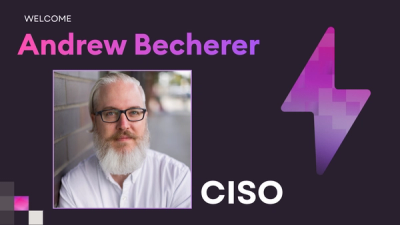
Socket’s first CISO brings deep experience securing high-growth SaaS companies as open source supply chain threats accelerate.