

Security News
US Government Forces Anthropic to Pull Claude Fable Days After Launch
Anthropic says the directive cited national security concerns over a narrow jailbreak, but offered no specific technical details.
By Sarah Gooding - Jun 13, 2026
@openparachute/scribe
Advanced tools
Audio transcription + LLM cleanup. Whisper-compatible API for Parachute.
Audio transcription + LLM cleanup for Parachute. Whisper-compatible API, CLI, and library.
Takes audio in, returns clean text out. The opposite direction of @openparachute/narrate.
Requires Bun (curl -fsSL https://bun.sh/install | bash).
git clone https://github.com/ParachuteComputer/parachute-scribe
cd parachute-scribe
bun install
Transcribe a file:
bun src/cli.ts recording.wav
Start the HTTP server:
bun src/cli.ts serve
Audio (wav/mp3/m4a) --> Transcription engine --> Raw text --> LLM cleanup (optional) --> Clean text
parachute-scribe <file>                   # Transcribe a file
parachute-scribe <file> --cleanup anthropic  # Transcribe + LLM cleanup (Anthropic API)
parachute-scribe <file> --transcribe groq # Use a specific transcription provider
parachute-scribe <file> --no-cleanup      # Skip cleanup even if configured
parachute-scribe <file> --json            # Output JSON: {"text": "..."}
parachute-scribe serve                    # Start HTTP server (port 1943)
parachute-scribe providers                # List available providers
import { transcribe } from "@openparachute/scribe";

const text = await transcribe(audioFile);
const cleaned = await transcribe(audioFile, { cleanup: "anthropic" });
Check available providers:
import { availableProviders } from "@openparachute/scribe";

const { transcription, cleanup } = availableProviders();
Whisper-compatible. Any client that speaks the OpenAI Whisper API works without modification.
POST /v1/audio/transcriptions
Content-Type: multipart/form-data

file: <audio file>
model: <string>        # e.g. "parakeet-mlx", "groq"
cleanup: <bool>        # optional extension — run LLM cleanup
Response: { "text": "..." }
For audio that already lives on the public web (podcast feed items, direct mp3/m4a/wav/ogg/flac/webm URLs):
POST /v1/audio/transcriptions-url
Content-Type: application/json

{
  "url": "https://example.com/episode-42.mp3",
  "cleanup": true,                         // optional
  "context": { "entries": [...] }          // optional proper-nouns block
}
Response: { "text": "...", "source": { "url": "...", "bytes": 1234567, "contentType": "audio/mpeg" } }
SSRF defenses: only http: / https: schemes; rejects localhost,
loopback / private / link-local / CG-NAT / multicast IPs (re-checked on
every redirect); 100 MiB body cap (override via SCRIBE_URL_MAX_BYTES);
5-minute timeout (SCRIBE_URL_TIMEOUT_MS). YouTube and other site
extractors are NOT supported — use yt-dlp to extract audio first, then
POST the resulting URL or file.
Scribe also speaks MCP at /scribe/mcp
(streamable HTTP, stateless mode — restart-safe). Exposes two tools:
transcribe — accepts audio_base64 + optional filename, cleanup, contexttranscribe-url — accepts url + optional cleanup, contextSame scope gate as the REST endpoints — scribe:transcribe required.
Useful for agents inside containers (e.g. parachute-agent) that already
have MCP wiring but no REST plumbing.
Streamable-HTTP MCP requires Accept: application/json, text/event-stream
on every request — the SDK will refuse the negotiation without both types.
Other endpoints:
GET  /v1/models                    # List available transcription providers
GET  /health                       # Health check
GET  /.parachute/info              # Module identity (name, version, icon, kind)
GET  /.parachute/icon.svg          # Inline SVG icon
GET  /.parachute/config/schema     # Draft-07 JSON Schema for scribe's config
GET  /.parachute/config            # Current resolved runtime config values
*    /scribe/mcp                   # MCP (streamable HTTP)
Scribe reserves two scopes for future hub-issued-token enforcement:
scribe:transcribe (request-time, per-call) and scribe:admin (config writes).
Neither is enforced yet — scribe is loopback-trusted through launch — but the
schema declares them under x-scopes for forward compat.
| Provider | Type | Notes |
|---|---|---|
parakeet-mlx | Local | Mac only. NVIDIA Parakeet via MLX. Fastest local option. Default. |
onnx-asr | Local | Cross-platform. Sherpa-ONNX ASR. |
whisper | Local | Any platform. Requires whisper-ctranslate2 (pip install whisper-ctranslate2). |
groq | Cloud | Fast, cheap (~$0.06/hr). Requires GROQ_API_KEY. |
openai | Cloud | Reference Whisper API. Requires OPENAI_API_KEY. |
Optional LLM pass that fixes transcription artifacts — filler words, punctuation, formatting.
| Provider | Type | Notes |
|---|---|---|
anthropic | Cloud | Anthropic API. Requires ANTHROPIC_API_KEY (or set via the admin SPA). Renamed from claude in 0.4.4 — legacy configs auto-migrate. |
claude-code | Local CLI | Subscription-funded Claude via the Claude Code CLI. No API key — run claude setup-token on the host. |
ollama | Local | Free, no API key. Requires Ollama running. |
openai | Cloud | GPT-based. Requires OPENAI_API_KEY. |
gemini | Cloud | Requires GEMINI_API_KEY. |
groq | Cloud | Fast. Requires GROQ_API_KEY. |
custom | Cloud | Any OpenAI-compatible endpoint. See env vars below. |
none | - | Skip cleanup. Default. |
# Transcription
TRANSCRIBE_PROVIDER=parakeet-mlx    # Default transcription engine

# Cleanup
CLEANUP_PROVIDER=none               # Default cleanup engine

# API keys (as needed by your chosen providers)
GROQ_API_KEY=gsk_...
OPENAI_API_KEY=sk-...
ANTHROPIC_API_KEY=sk-ant-...
GEMINI_API_KEY=...

# Ollama
OLLAMA_URL=http://localhost:11434    # Default Ollama endpoint
OLLAMA_MODEL=gemma4:e4b              # Default cleanup model

# Custom OpenAI-compatible provider
CUSTOM_CLEANUP_URL=...
CUSTOM_CLEANUP_API_KEY=...
CUSTOM_CLEANUP_MODEL=...

# Server
SCRIBE_PORT=1943                     # HTTP server port (PORT also honored for back-compat)

# Auth (optional)
SCRIBE_AUTH_TOKEN=                   # If set, require Authorization: Bearer <token> on all routes
                                     # except /health and /.parachute/info. Unset = open (loopback-only).
By default scribe is open — any caller on a network it's bound to can transcribe. For exposed deployments (tailnet, funnel, shared hosts), set SCRIBE_AUTH_TOKEN and pass it as Authorization: Bearer <token> on every request. /health and /.parachute/info stay open so liveness probes and module discovery work without a secret.
SCRIBE_AUTH_TOKEN=$(openssl rand -hex 32) bun src/cli.ts serve
curl -H "Authorization: Bearer $SCRIBE_AUTH_TOKEN" \
  -F "file=@recording.wav" \
  http://localhost:1943/v1/audio/transcriptions
401 response shape: {"error":"unauthorized","message":"SCRIBE_AUTH_TOKEN required"}. CORS headers are included so browser clients can read the error.
Cleanup improves when scribe knows the proper nouns you care about — so mishearings like "learn by build" become "Learn Vibe Build". Callers push context alongside the audio as a context multipart part:
curl -F "file=@memo.wav" \
  -F 'context={"entries":[{"name":"Learn Vibe Build","summary":"6-week cohort","aliases":["LVB","Learn by Build"]}]};type=application/json' \
  http://localhost:1943/v1/audio/transcriptions
Scribe uses whatever you push and never initiates outbound HTTP on its own. This is what Parachute Vault does — it queries its own notes and pushes the result with each transcription.
Older scribe versions (0.2.x and earlier) pulled context from a configured vault via a
vault:block inscribe/config.json. That path was removed in 0.3.0. A stalevault:block in your config is ignored with a one-time warning on load; delete it once you see the warning. Callers that used to rely on it (vault, custom integrations) must now push context in the request.
Default config path is ${PARACHUTE_HOME:-~/.parachute}/scribe/config.json. Set SCRIBE_CONFIG=/path/to/config.json (or pass --config <path> on the CLI) to point somewhere else. An older ~/.parachute/scribe.config.json is auto-migrated to the new path on first run.
Override scribe's built-in cleanup system prompt or change how proper nouns are appended, in ~/.parachute/scribe/config.json:
{
  "cleanup": {
    "provider": "claude-code",
    "default": true,
    "system_prompt": "You clean up voice memos. Be conservative.",
    "context_template": "\n\nKnown names:\n{{proper_nouns}}"
  }
}
system_prompt replaces the built-in prompt verbatim. context_template controls how the proper-nouns block (sent in the request's context part) is appended — the single variable {{proper_nouns}} is substituted with the block, or left empty when no context was provided.
Parachute Vault optionally imports scribe via await import("@openparachute/scribe"). When installed, vault gains:
POST /v1/audio/transcriptions — Whisper-compatible endpointPOST /api/ingest — Upload audio + auto-transcribe into a note#capture with audio attachments get transcribed automaticallyTo enable: install scribe alongside vault via bun link or npm, then configure TRANSCRIBE_PROVIDER in ~/.parachute/.env.
ffmpeg on PATH (some providers need it for audio conversion)FAQs
Audio transcription + LLM cleanup. Whisper-compatible API for Parachute.
We found that @openparachute/scribe demonstrated a healthy version release cadence and project activity because the last version was released less than a year ago. It has 1 open source maintainer collaborating on the project.
Did you know?

Socket for GitHub automatically highlights issues in each pull request and monitors the health of all your open source dependencies. Discover the contents of your packages and block harmful activity before you install or update your dependencies.
Security News
Anthropic says the directive cited national security concerns over a narrow jailbreak, but offered no specific technical details.

Security News
A network of 152 Chrome live wallpaper extensions hid ad tracking and made extension-driven traffic look like Google search clicks.
Company News
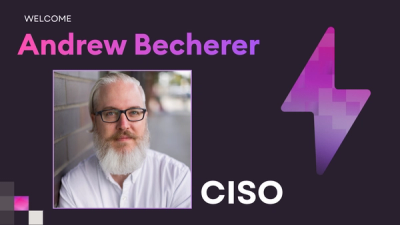
Socket’s first CISO brings deep experience securing high-growth SaaS companies as open source supply chain threats accelerate.