
Product
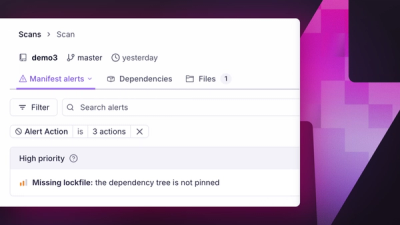
Introducing Manifest Alerts
Socket now detects supply chain risks in project manifests, starting with missing lockfiles that can make dependency installs non-reproducible.
By André Staltz, Trevor Norris - Jun 16, 2026
@postman-cse/onboarding-bootstrap
Advanced tools
Bootstrap Postman workspaces, specs, and collections from OpenAPI.


Provisions a Postman workspace from an OpenAPI spec, generating baseline, smoke, and contract collections in one step.
Part of the Postman API Onboarding suite.
| Need | Use |
|---|---|
| Full API onboarding pipeline | postman-cs/postman-api-onboarding-action |
| Mint a service-account access token for the pipeline | postman-cs/postman-resolve-service-token-action |
| Create or refresh Postman workspaces, specs, and generated collections | This bootstrap action |
| Discover OpenAPI specs from AWS services | postman-cs/postman-aws-spec-discovery-action |
| Apply a curated flow.yaml to the Smoke collection | postman-cs/postman-smoke-flow-action |
| Sync generated Postman artifacts back to the repo | postman-cs/postman-repo-sync-action |
| Link Insights discovered services to the workspace | postman-cs/postman-insights-onboarding-action |
The action defaults to the US production region (postman-region: us). EU data residency teams should set postman-region: eu on this action and on the service-token step that feeds it.
name: Bootstrap Postman workspace
on:
  push:
    branches: [main]

jobs:
  bootstrap:
    runs-on: ubuntu-latest
    steps:
      - uses: actions/checkout@v5
      - id: postman_token
        uses: postman-cs/postman-resolve-service-token-action@v1
        with:
          postman-api-key: ${{ secrets.POSTMAN_API_KEY }}
          postman-region: us
      - uses: postman-cs/postman-bootstrap-action@v1
        with:
          project-name: core-payments
          spec-url: https://raw.githubusercontent.com/postman-cs/postman-bootstrap-action/main/examples/core-payments-openapi.yaml
          postman-region: us
          postman-api-key: ${{ secrets.POSTMAN_API_KEY }}
          postman-access-token: ${{ steps.postman_token.outputs.token }}
          credential-preflight: enforce
Provide either spec-url (public HTTPS) or spec-path (a file in the checked-out repo) for the Spec Hub import path. Use a Postman service account PMAK for postman-api-key; the service-token action is the primary way to mint the postman-access-token used for governance, cloud sync, and canonical workspace validation. See Obtaining Credentials for the credential matrix and legacy fallback.
For Git-first workflows, read the OpenAPI document directly from the checked-out workspace instead of hosting it over HTTPS:
- uses: actions/checkout@v5
- uses: postman-cs/postman-bootstrap-action@v1
  with:
    project-name: core-payments
    spec-path: apis/core-payments/openapi.yaml
    postman-api-key: ${{ secrets.POSTMAN_API_KEY }}
Pass workspace-id, spec-id, and existing collection IDs to rerun without creating duplicate Postman assets. When .postman/resources.yaml is committed on the checked-out ref, the action reuses its workspace, spec, and collection mappings automatically.
- uses: postman-cs/postman-bootstrap-action@v1
  with:
    project-name: core-payments
    workspace-id: ws-123
    spec-id: spec-123
    baseline-collection-id: col-baseline
    smoke-collection-id: col-smoke
    contract-collection-id: col-contract
    spec-url: https://raw.githubusercontent.com/postman-cs/postman-bootstrap-action/main/examples/core-payments-openapi.yaml
    postman-api-key: ${{ secrets.POSTMAN_API_KEY }}
Create a release-scoped spec and collection set instead of refreshing the canonical assets in place:
- uses: postman-cs/postman-bootstrap-action@v1
  with:
    project-name: core-payments
    spec-url: https://raw.githubusercontent.com/postman-cs/postman-bootstrap-action/main/examples/core-payments-openapi.yaml
    collection-sync-mode: version
    spec-sync-mode: version
    release-label: v1.1.1
    postman-api-key: ${{ secrets.POSTMAN_API_KEY }}
When release-label is omitted, the action derives one from the git tag or branch. Details in Lifecycle Modes.
Compare the incoming contract before any Postman mutation. pr-native mode diffs the PR target branch version of spec-path against the working tree:
- uses: actions/checkout@v5
  with:
    fetch-depth: 0
- uses: postman-cs/postman-bootstrap-action@v1
  with:
    project-name: core-payments
    spec-path: apis/core-payments/openapi.yaml
    breaking-change-mode: pr-native
    breaking-target-ref: ${{ github.base_ref }}
    breaking-baseline-spec-path: apis/core-payments/openapi.baseline.yaml
    postman-api-key: ${{ secrets.POSTMAN_API_KEY }}
Modes off, previous-spec, pr-native, and baseline-only are described in OpenAPI Spec Handling.
Set the repository custom property postman-governance-group, then provide tokens so the action can perform workspace enrichment:
- id: postman-token
  uses: postman-cs/postman-resolve-service-token-action@v1
  with:
    postman-api-key: ${{ secrets.POSTMAN_API_KEY }}
    postman-region: us

- uses: postman-cs/postman-bootstrap-action@v1
  with:
    project-name: core-payments
    spec-url: https://raw.githubusercontent.com/postman-cs/postman-bootstrap-action/main/examples/core-payments-openapi.yaml
    postman-region: us
    github-token: ${{ github.token }}
    postman-api-key: ${{ secrets.POSTMAN_API_KEY }}
    postman-access-token: ${{ steps.postman-token.outputs.token }}
For one-off runs, governance-group can be passed directly and overrides the repository custom property. governance-mapping-json remains supported as a domain-map fallback for older workflows. If the governance group configuration is missing, the group is not found, or the access token is expired, bootstrap logs a warning and continues with the created workspace, spec, and collections.
Postman organizations with multiple sub-teams require an explicit workspace-team-id for workspace creation:
- uses: postman-cs/postman-bootstrap-action@v1
  with:
    project-name: core-payments
    spec-url: https://raw.githubusercontent.com/postman-cs/postman-bootstrap-action/main/examples/core-payments-openapi.yaml
    workspace-team-id: ${{ vars.POSTMAN_WORKSPACE_TEAM_ID }}
    postman-api-key: ${{ secrets.POSTMAN_API_KEY }}
See Team Identity for sub-team discovery and team-ID derivation.
| Name | Description | Required | Default |
|---|---|---|---|
workspace-id | Existing Postman workspace ID | no | |
spec-id | Existing Postman spec ID | no | |
baseline-collection-id | Existing baseline collection ID | no | |
smoke-collection-id | Existing smoke collection ID | no | |
contract-collection-id | Existing contract collection ID | no | |
sync-examples | Whether linked spec/collection relations should enable example syncing | no | true |
collection-sync-mode | Collection lifecycle policy (refresh or version) | no | refresh |
spec-sync-mode | Spec lifecycle policy (update or version) | no | update |
release-label | Optional release label used for versioned specs and collections | no | |
project-name | Service project name | yes | |
domain | Business domain for the service | no | |
domain-code | Workspace naming prefix | no | |
governance-group | Postman governance workspace group name. Overrides the postman-governance-group repository custom property and domain mapping. | no | |
requester-email | Requester email for audit context | no | |
workspace-admin-user-ids | Comma-separated workspace admin user ids | no | |
workspace-team-id | Numeric sub-team ID for org-mode workspace creation. Required when the API key belongs to an org with multiple sub-teams. Run the action without this input to see available sub-teams listed in the error output. | no | |
spec-url | HTTPS URL to the OpenAPI document to bootstrap. Provide either spec-url or spec-path. | no | |
spec-path | Local filesystem path to the OpenAPI document (relative to the workspace). Provide either spec-url or spec-path. | no | |
openapi-version | OpenAPI specification version override (3.0 or 3.1). When not set, the version is auto-detected from the spec content. | no | |
breaking-change-mode | OpenAPI breaking-change comparison mode (off, pr-native, baseline-only, or previous-spec) | no | off |
breaking-baseline-spec-path | Workspace-relative baseline OpenAPI spec path used by baseline-only mode and pr-native fallback | no | |
breaking-rules-path | Workspace-relative openapi-changes rules file. Missing files are ignored. | no | changes-rules.yaml |
breaking-target-ref | Optional target branch or git ref override for pr-native breaking-change comparisons | no | |
breaking-summary-path | Optional markdown report output path. Defaults to a runner-temp file. | no | |
breaking-log-path | Optional raw command log output path. Defaults to a runner-temp file. | no | |
governance-mapping-json | Legacy JSON map of business domain to governance group name. Prefer governance-group or the postman-governance-group repository custom property. | no | {} |
github-token | GitHub token used to read the postman-governance-group repository custom property | no | |
gh-fallback-token | Fallback GitHub token used to read repository custom properties when github-token cannot | no | |
postman-api-key | Postman API key used for bootstrap operations | yes | |
postman-access-token | Postman access token used for governance and workspace mutations | no | |
credential-preflight | Credential identity preflight policy. warn (default) logs a note and continues when postman-api-key and postman-access-token resolve to different parent orgs; enforce fails the run on that condition before any workspace is created. | no | warn |
folder-strategy | Folder organization strategy for generated collections (Paths or Tags) | no | Paths |
nested-folder-hierarchy | When folder-strategy is Tags, enables nested folder hierarchy | no | false |
request-name-source | Determines how requests are named in generated collections (Fallback or URL) | no | Fallback |
postman-region | Postman data residency region for public API and Postman CLI calls. | no | us |
| Name | Description | Required | Default |
|---|---|---|---|
workspace-id | Postman workspace ID | n/a | n/a |
workspace-url | Postman workspace URL | n/a | n/a |
workspace-name | Postman workspace name | n/a | n/a |
spec-id | Uploaded Postman spec ID | n/a | n/a |
baseline-collection-id | Baseline collection ID | n/a | n/a |
smoke-collection-id | Smoke collection ID | n/a | n/a |
contract-collection-id | Contract collection ID | n/a | n/a |
collections-json | JSON summary of generated collections | n/a | n/a |
lint-summary-json | JSON summary of lint errors and warnings | n/a | n/a |
breaking-change-status | OpenAPI breaking-change check status | n/a | n/a |
breaking-change-summary-json | JSON summary of the OpenAPI breaking-change check | n/a | n/a |
The same bootstrap is available as a CLI for GitLab CI, Bitbucket Pipelines, Azure DevOps, and other CI systems. GitHub Actions users should continue using the action.yml interface.
npm install -g @postman-cse/onboarding-bootstrap

postman-bootstrap \
  --project-name core-payments \
  --spec-url https://raw.githubusercontent.com/postman-cs/postman-bootstrap-action/main/examples/core-payments-openapi.yaml \
  --postman-api-key "$POSTMAN_API_KEY" \
  --postman-access-token "$POSTMAN_ACCESS_TOKEN" \
  --result-json bootstrap-result.json \
  --dotenv-path bootstrap.env
The CLI package supports Node.js 24+ to match the GitHub Action runtime. It auto-detects the CI provider from environment variables for GitHub, GitLab, Bitbucket, and Azure DevOps, writes JSON to stdout, and sends all logs to stderr. Use --result-json to write the JSON payload to a file and --dotenv-path to emit shell-sourceable KEY=VALUE output with the POSTMAN_BOOTSTRAP_ prefix.
Example GitLab CI job:
bootstrap:
  image: node:24
  script:
    - npm install -g @postman-cse/onboarding-bootstrap
    - postman-bootstrap --project-name core-payments --spec-url "https://raw.githubusercontent.com/postman-cs/postman-bootstrap-action/main/examples/core-payments-openapi.yaml" --postman-api-key "$POSTMAN_API_KEY" --postman-access-token "$POSTMAN_ACCESS_TOKEN" --result-json bootstrap-result.json --dotenv-path bootstrap.env
  artifacts:
    paths:
      - bootstrap-result.json
      - bootstrap.env
Example Bitbucket Pipelines step:
pipelines:
  default:
    - step:
        image: node:24
        script:
          - npm install -g @postman-cse/onboarding-bootstrap
          - postman-bootstrap --project-name core-payments --spec-url "https://raw.githubusercontent.com/postman-cs/postman-bootstrap-action/main/examples/core-payments-openapi.yaml" --postman-api-key "$POSTMAN_API_KEY" --postman-access-token "$POSTMAN_ACCESS_TOKEN" --result-json bootstrap-result.json --dotenv-path bootstrap.env
        artifacts:
          - bootstrap-result.json
          - bootstrap.env
Example Azure DevOps job:
steps:
  - task: NodeTool@0
    inputs:
      versionSpec: '24.x'
  - script: |
      npm install -g @postman-cse/onboarding-bootstrap
      postman-bootstrap --project-name core-payments --spec-url "https://raw.githubusercontent.com/postman-cs/postman-bootstrap-action/main/examples/core-payments-openapi.yaml" --postman-api-key "$(POSTMAN_API_KEY)" --postman-access-token "$(POSTMAN_ACCESS_TOKEN)" --result-json bootstrap-result.json --dotenv-path bootstrap.env
    displayName: Bootstrap Postman assets
  - publish: bootstrap-result.json
  - publish: bootstrap.env
The action handles the bootstrap slice of the Postman onboarding workflow: create or reuse a Postman workspace, assign governance, invite the requester and workspace admins, upload or update the spec in Spec Hub, lint it with the Postman CLI, generate or reuse baseline, smoke, and contract collections, inject generated tests, apply tags, and reuse committed .postman/resources.yaml state when present. Inputs and outputs use kebab-case.
postman-api-key; org-mode tenants pass workspace-team-id for the sub-team that should own the workspace. See Team Identity.spec-url fetches are SSRF-hardened HTTPS with pinned DNS, and breaking-change comparison runs before any Postman mutation when enabled. See OpenAPI Spec Handling.collection-sync-mode (refresh/version, legacy reuse), spec-sync-mode (update/version), release-label derivation, ref-native state, cloud spec-to-collection syncing, and smoke monitoring. See Lifecycle Modes and Operational Reference.postman-api-key handles standard Postman API operations; the optional postman-access-token unlocks governance assignment, cloud link/sync, and canonical workspace validation. See Obtaining Credentials.Before any durable contract collection is overwritten, the action hardens the generated [Contract] collection against the resolved OpenAPI 3.0/3.1 document: it bundles and validates the spec, requires exactly one generated request per eligible operation, instruments each request with OpenAPI-derived runtime checks (status codes, headers, body presence, Content-Type, JSON schemas, security credential presence, request parameter and body values), and enforces script safety and size gates. Spec updates capture the previous content hash so failed runs can roll back, and refresh mode stages generated collections before touching durable ones.
Full pipeline, validation scope, OpenAPI semantics, limits, and rollback behavior are documented in Dynamic Contract Tests.
Dynamic contract failures and warnings use CONTRACT_ error codes. Remediation guidance for each code:
| Error code | Meaning | Remediation |
|---|---|---|
CONTRACT_SPEC_FETCH_BLOCKED | Spec URL, ref URL, DNS result, redirect, or socket destination was not allowed. | Use public HTTPS spec/ref URLs that do not resolve to private or local networks. |
CONTRACT_SPEC_FETCH_FAILED | Allowed HTTPS fetch failed or redirected too many times. | Check availability, status codes, and redirect chains. |
CONTRACT_REF_LIMIT_EXCEEDED | External ref count exceeded the configured limit. | Reduce external ref fan-out or bundle the spec upstream. |
CONTRACT_REF_DEPTH_EXCEEDED | Ref nesting exceeded the configured limit. | Flatten recursive/deep ref chains. |
CONTRACT_REF_SIZE_EXCEEDED | A fetched resource or total fetched bytes exceeded limits. | Reduce spec/ref size or pre-bundle the document. |
CONTRACT_SPEC_PARSE_FAILED | The fetched document was not valid JSON/YAML object content. | Fix the source document syntax. |
CONTRACT_SPEC_READ_FAILED | The spec-path file could not be read from the workspace. | Verify the file exists at the configured path and that the workflow checked out the branch that contains it. |
CONTRACT_SPEC_VALIDATION_FAILED | The bundled document failed OpenAPI validation. | Fix OpenAPI validation errors. |
CONTRACT_UNSUPPORTED_OPENAPI_VERSION | The document was not OpenAPI 3.0 or 3.1. | Provide an OpenAPI 3.0/3.1 document. |
CONTRACT_NO_ELIGIBLE_OPERATIONS | No eligible paths operations with responses were found. | Add path operations with responses. |
CONTRACT_OPERATION_NO_RESPONSES | A paths operation had no response definitions. | Add at least one OpenAPI response to each path operation. |
CONTRACT_UNRESOLVED_REF | A ref remained unresolved after secure bundling. | Fix the ref target or make the external ref HTTPS-accessible. |
CONTRACT_UNSUPPORTED_SCHEMA_DIALECT | A schema declared an unsupported JSON Schema dialect. | Use draft-07 or 2020-12-compatible schemas. |
CONTRACT_SCHEMA_COMPILE_FAILED | schemasafe could not compile a response/header schema. | Simplify or correct the unsupported schema. |
CONTRACT_STATIC_REQUEST_CHECK_FAILED | Generated request missed a required non-security parameter or body. | Adjust generation options or the spec so generated requests include required shape. |
CONTRACT_SECURITY_NOT_VALIDATED | Security requirements were detected but dynamic tests cannot prove auth at runtime. | Run dedicated auth tests and review generated requests for required credentials. |
CONTRACT_WEBHOOKS_NOT_VALIDATED | OpenAPI webhooks were present but are not included in dynamic contract coverage. | Validate webhook behavior separately or model required behavior under paths. |
CONTRACT_CALLBACKS_NOT_VALIDATED | Operation callbacks were present but are not included in dynamic contract coverage. | Validate callback behavior separately or add dedicated tests. |
CONTRACT_COOKIE_PARAM_NOT_VALIDATED | A required cookie parameter cannot be included in generated requests, and the runtime test asserts its presence, so the contract run fails until the cookie is supplied at send time. | Attach the cookie via the cookie jar or a Cookie header in the run setup, or move the parameter to a header/query location. |
CONTRACT_OPERATION_DEPRECATED | A covered operation is marked deprecated: true in the OpenAPI document. | Plan removal of the deprecated operation or drop it from the spec when retired. |
CONTRACT_REQUEST_BODY_INCOMPLETE | A parseable generated request body is missing top-level required properties. | Fix the spec example or regenerate the collection so generated bodies satisfy the request schema. |
CONTRACT_READONLY_PROPERTY_IN_REQUEST | A generated request body includes properties the schema marks readOnly. | Remove readOnly properties from request examples; they belong in responses. |
CONTRACT_UNDOCUMENTED_QUERY_PARAM | A generated request sends a query parameter the operation does not declare. | Declare the parameter in the OpenAPI operation or remove it from the generated request. |
CONTRACT_LINKS_NOT_VALIDATED | Response links were present but link traversal is not part of dynamic contract coverage. | Validate linked operation chains with dedicated workflow tests. |
CONTRACT_PARAM_SERIALIZATION_NOT_VALIDATED | A parameter declares allowReserved, content, or a style/explode combination the runtime cannot decode. Exploded form arrays and non-exploded form/spaceDelimited/pipeDelimited arrays of scalars are decoded and validated, so they no longer warn. | Validate the remaining serialized forms with dedicated tests. |
CONTRACT_NONJSON_SCHEMA_NOT_VALIDATED | A non-JSON response media type declares an object schema that runtime tests cannot validate. | Validate XML or other non-JSON payloads with dedicated tests; Content-Type and body presence are still checked. |
CONTRACT_REQUEST_SCHEMA_NOT_VALIDATED | A JSON request body schema could not be compiled into a runtime request validator. | Simplify the unsupported request schema construct named in the warning. |
CONTRACT_SCHEMA_NOT_COMPILED | One schema could not be compiled by the validator engine, so its runtime check is skipped. | Review the named schema construct; other checks for the operation still run. |
CONTRACT_EXAMPLE_SCHEMA_MISMATCH | A media-type example does not validate against its own schema. | Fix the example or the schema so the spec is self-consistent; generated requests are built from these examples. |
CONTRACT_ENCODING_MISMATCH | A generated form-body field does not match its OpenAPI encoding object: a declared multipart per-part contentType is missing or different, a binary-typed field was not generated as a file part, or a field declaring a JSON contentType carries an unparseable value. | Regenerate the collection or align the encoding object with the intended part layout. |
CONTRACT_ENCODING_HEADERS_NOT_VALIDATED | A multipart encoding object declares per-part headers, which Postman formdata entries cannot carry, so they are not asserted. | Validate per-part headers with dedicated tests if the server depends on them. |
CONTRACT_FORM_FIELD_SCHEMA_MISMATCH | A generated urlencoded or multipart text value does not validate against its scalar property schema. | Fix the spec example feeding the generated body, or correct the property schema. |
CONTRACT_DISCRIMINATOR_NOT_VALIDATED | A discriminator has no sibling oneOf/anyOf of same-spec $ref members (typically allOf-parent inheritance), so its dispatch is not validated. | Restructure to the oneOf-plus-discriminator form, or rely on the still-validated composition keywords. |
CONTRACT_HEADER_SCHEMA_NOT_VALIDATED | A response header declares an object or otherwise undecodable schema, so its serialized value is checked for presence only. Arrays of scalars are split on commas and validated. | Use a scalar or array-of-scalars header schema, or validate the serialized header form with dedicated tests. |
CONTRACT_PATH_PARAM_NOT_VALIDATED | A path parameter declares a non-scalar schema or a serialization the runtime cannot decode, so its value is not validated. Scalar path parameters are validated at runtime against the resolved path segment. | Use a scalar path schema, or validate path value semantics with dedicated tests. |
CONTRACT_DUPLICATE_OPERATION_MATCH | Multiple OpenAPI operations share the same canonical request mapping candidate. | Disambiguate paths, server prefixes, or templated routes. |
CONTRACT_DUPLICATE_OPERATION_REQUEST | More than one generated request mapped to the same contract operation. | Disambiguate paths/operations or generated requests. |
CONTRACT_OPERATION_COVERAGE_FAILED | Generated contract collection did not cover every eligible operation. | Regenerate the collection or fix operation paths. |
CONTRACT_FORBIDDEN_SCRIPT_CONSTRUCT | Generated script included a forbidden dynamic validation construct. | Report the schema that triggered unsafe generation. |
CONTRACT_SCRIPT_SIZE_EXCEEDED | A generated request test script exceeded the per-script size gate. | Reduce schema complexity or split the API. |
CONTRACT_COLLECTION_SIZE_EXCEEDED | Instrumented contract collection exceeded the size gate. | Reduce schema/operation count or split the API. |
CONTRACT_COLLECTION_ID_COLLISION | Baseline, smoke, and contract IDs were not pairwise distinct. | Pass distinct collection IDs or clear stale IDs. |
CONTRACT_PLAN_MISSING | Contract instrumentation ran without a preflight-generated contract plan. | Rerun with dynamic contract preflight enabled and report the failure if it persists. |
CONTRACT_SPEC_ROLLBACK_FAILED | Best-effort previous spec restoration failed after a later error. | Restore the previous spec content manually using the emitted SHA-256. |
| Action | Role |
|---|---|
| Postman API Onboarding | Entry point: chains workspace bootstrap, repo sync, and optional Insights linking |
| Postman Onboarding: Service Token | Mints the service-account access token and team ID |
| Postman Onboarding: AWS Spec Discovery | Discovers and exports API specs from AWS services |
| Postman Onboarding: Workspace Bootstrap | Creates the workspace, uploads the spec, generates collections |
| Postman Onboarding: Smoke Flow | Applies a curated flow.yaml to the Smoke collection |
| Postman Onboarding: Repo Sync | Exports artifacts into the repo and wires CI, mocks, and monitors |
| Postman Onboarding: Insights Linking | Links Insights discovered services to the workspace |
Sibling actions in the Postman onboarding pipeline:
Package and docs:
npm install, npm test, npm run typecheck, npm run build (produces the committed dist/ bundles used by action.yml); regenerate the Inputs and Outputs tables with npm run docs:tablesThis action sends a single non-identifying usage event when a run completes, so the
Postman team can measure adoption across CI systems. The event contains the
action name and version, your Postman team ID, the detected CI provider and
runner kind, the run outcome, the CI run identifier, an event timestamp, and a one-way SHA-256 hash of the repository
identifier. Each event also carries a schema version and a constant event marker (always completion). The Postman team ID is sent in the clear on a legitimate-interest
basis to measure product adoption.
The events.pm-cse.dev endpoint is operated by the Postman Customer Success
Engineering team. Postman, Inc. processes these events only to measure
onboarding adoption in aggregate, retains them only as aggregated counts for
product-adoption trend analysis, and includes no payload field that identifies
an individual person.
It never sends API keys, access tokens, spec content, workspace or repository
names, or any personal data. It is fire-and-forget with a hard
timeout and can never block or fail your pipeline. Corporate HTTP and HTTPS
proxies are honored through the standard HTTPS_PROXY, HTTP_PROXY, and
NO_PROXY environment variables.
Disable it by setting either environment variable in your CI:
POSTMAN_ACTIONS_TELEMETRY=off
# or the cross-tool standard
DO_NOT_TRACK=1
Telemetry is also skipped automatically when no Postman team ID can be resolved.
Events are sent over HTTPS to https://events.pm-cse.dev/v1/events. To
allowlist this destination on a restricted network, or to route events to a
collector you operate, set the POSTMAN_ACTIONS_TELEMETRY_ENDPOINT environment
variable to your own URL.
FAQs
Bootstrap Postman workspaces, specs, and collections from OpenAPI.
We found that @postman-cse/onboarding-bootstrap demonstrated a healthy version release cadence and project activity because the last version was released less than a year ago. It has 1 open source maintainer collaborating on the project.
Did you know?

Socket for GitHub automatically highlights issues in each pull request and monitors the health of all your open source dependencies. Discover the contents of your packages and block harmful activity before you install or update your dependencies.
Product
Socket now detects supply chain risks in project manifests, starting with missing lockfiles that can make dependency installs non-reproducible.

Research
/Security News
The trojanized extensions use TinyGo-compiled WebAssembly and Solana transaction memos to resolve command-and-control infrastructure.

Security News
Anthropic says the directive cited national security concerns over a narrow jailbreak, but offered no specific technical details.