
Product
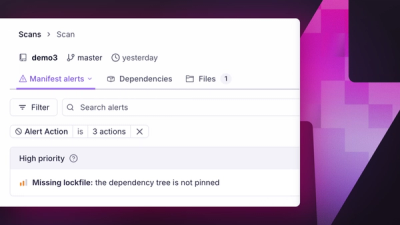
Introducing Manifest Alerts
Socket now detects supply chain risks in project manifests, starting with missing lockfiles that can make dependency installs non-reproducible.
By André Staltz, Trevor Norris - Jun 16, 2026
@progress/telerik-angular-native-report-viewer-dev
Advanced tools
Progress® Telerik® Native Report Viewer for Angular
This package is part of Telerik Reporting.
Report authors now will be able to seamlessly implement report preview functionality using a native Angular report viewer control, so that the end-users get the best possible UX from perfectly blending UI controls when using Kendo UI for Angular and Telerik Reporting into an application. Leveraging the power of Angular, this viewer provides a responsive and dynamic reporting interface, ensuring an optimal user experience across various devices.
The viewer is built with Kendo UI for Angular components library and requires a valid Kendo UI for Angular or DevCraft license.
Telerik Native Angular Report Viewer provides the rich functionality of the rest of the Telerik Reporting Report Viewer implementations, without depending on jQuery library.
Major features:
Preview Telerik Reports in desktop or mobile browsers.
Browse the report pages on screen.
Navigate through the history of visited reports.
Use built-in interactivity features such as navigating to external URLs, other reports or bookmarks, performing drill-down actions, sorting by table columns, etc.
Print or export the report to supported formats including PDF, Word, Excel, and PowerPoint.
Use the viewer's API for customizing and extending its behavior.
npm install -f @progress/telerik-angular-native-report-viewerng add the Angular localize package - Add the localize package.import the ReportingAngularViewerModule in the application root module:import a Kendo theme in the component's styles, e.g. Kendo UI Default - Styling & Themes - Overview - Kendo UI for Angular (telerik.com)reporting-angular-viewer selector:<reporting-angular-viewer
#report
[reportSource]="{
report: 'Report Catalog.trdx',
parameters: {}
}"
serviceUrl="https://demos.telerik.com/reporting/api/reports"
viewMode="interactive"
[keepClientAlive]="true">
</reporting-angular-viewer>
Telerik Reporting installer deploys a runnable project of Telerik Native Angular Report Viewer in folder %programfiles(x86)%\Progress\Telerik Reporting Rr YYYY\Examples\Angular\native-angular-report-viewer-example. Rr YYYY denotes the current release and year, e.g. 'R3 2023'.
IMPORTANT This is commercial software. You must agree to the Telerik End User License Agreement for Telerik Reporting and to the license agreements of its dependencies in order to use it.
If you do not own a commercial license, the use of this product and its Kendo UI for Angular dependency shall be governed by the respective trial licenses' terms.
Telerik Reporting and Kendo UI for Angular require activation using a license key — this applies to both the trial and commercial versions of the products.
You have two purchase options to obtain the necessary commercial licenses:
For more information on licensing, configuration, and troubleshooting, refer to the product documentation's License section.
Copyright © 2026 Progress Software Corporation and/or one of its subsidiaries or affiliates. All rights reserved.
Progress, Telerik, and certain product names used herein are trademarks or registered trademarks of Progress Software Corporation and/or one of its subsidiaries or affiliates in the U.S. and/or other countries.
FAQs
Progress® Telerik® Native Report Viewer for Angular
We found that @progress/telerik-angular-native-report-viewer-dev demonstrated a healthy version release cadence and project activity because the last version was released less than a year ago. It has 1 open source maintainer collaborating on the project.
Did you know?

Socket for GitHub automatically highlights issues in each pull request and monitors the health of all your open source dependencies. Discover the contents of your packages and block harmful activity before you install or update your dependencies.
Product
Socket now detects supply chain risks in project manifests, starting with missing lockfiles that can make dependency installs non-reproducible.

Research
/Security News
The trojanized extensions use TinyGo-compiled WebAssembly and Solana transaction memos to resolve command-and-control infrastructure.

Security News
Anthropic says the directive cited national security concerns over a narrow jailbreak, but offered no specific technical details.