

Security News
US Government Forces Anthropic to Pull Claude Fable Days After Launch
Anthropic says the directive cited national security concerns over a narrow jailbreak, but offered no specific technical details.
By Sarah Gooding - Jun 13, 2026
coding-agent-adapters
Advanced tools
CLI adapters for AI coding agents - Claude Code, Gemini CLI, OpenAI Codex, Aider, and Hermes Agent
CLI adapters for AI coding agents. Works with pty-manager to spawn and manage coding agents like Claude Code, Gemini CLI, OpenAI Codex, Aider, and Hermes Agent.
Each adapter provides source-derived detection patterns for the full session lifecycle: login/auth, blocking prompts, ready state, exit conditions, and auto-response rules — all based on deep analysis of each CLI's open-source codebase.
npm install coding-agent-adapters pty-manager
import { PTYManager, AdapterRegistry } from 'pty-manager';
import { ClaudeAdapter, GeminiAdapter, AiderAdapter, HermesAdapter } from 'coding-agent-adapters';

// Create adapter registry and register the adapters you need
const registry = new AdapterRegistry();
registry.register(new ClaudeAdapter());
registry.register(new GeminiAdapter());
registry.register(new AiderAdapter());
registry.register(new HermesAdapter());

// Create PTY manager with the registry
const manager = new PTYManager({ adapters: registry });

// Spawn a Claude Code session
const session = await manager.spawn({
  name: 'code-assistant',
  type: 'claude',
  workdir: '/path/to/project',
  adapterConfig: {
    anthropicKey: process.env.ANTHROPIC_API_KEY,
  },
});

// Listen for output
session.on('output', (data) => console.log(data));

// Send a task
session.send('Help me refactor this function to use async/await');
| Adapter | CLI | Type | Input Style | Auto-Response Rules | Ready Settle |
|---|---|---|---|---|---|
ClaudeAdapter | Claude Code | claude | TUI menus | 5 rules | 500ms |
GeminiAdapter | Gemini CLI | gemini | TUI menus | 3 rules | 300ms |
CodexAdapter | OpenAI Codex | codex | TUI menus | 6 rules | 300ms |
AiderAdapter | Aider | aider | Text (Y)es/(N)o | 17 rules | 200ms |
HermesAdapter | Hermes Agent | hermes | TUI prompts | 0 rules | 400ms |
Each adapter implements detection for every stage of a CLI session.
All detection methods use stripAnsi() which strips ANSI escape sequences, cursor positioning codes, bare control characters, TUI spinner/box-drawing characters, and collapses whitespace — ensuring regex patterns match through raw terminal output. Prompt indicators (❯, ›, ◇) are preserved.
Adapters detect various auth states and methods:
const adapter = new GeminiAdapter();
const login = adapter.detectLogin(output);
// { required: true, type: 'browser', url: 'https://...', instructions: '...' }
| Adapter | Auth Types | Source Files |
|---|---|---|
| Claude | API key, OAuth browser | CLI runtime |
| Gemini | Google OAuth, API key entry, auth in-progress (ignores "Both keys set" success messages) | AuthDialog.tsx, ApiAuthDialog.tsx, AuthInProgress.tsx |
| Codex | Device code flow, onboarding auth menu | auth.rs, headless_chatgpt_login.rs |
| Aider | API key missing/invalid, OpenRouter OAuth | onboarding.py, models.py |
| Hermes | First-run setup gate (no API keys/providers found, Run setup now?) | hermes_cli/setup.py, hermes_cli/main.py |
Each adapter knows exactly what "ready for input" looks like:
| Adapter | Ready Indicators | Source |
|---|---|---|
| Claude | $ prompt | CLI runtime |
| Gemini | Prompt glyphs (>, !, *, (r:)), composer placeholder | InputPrompt.tsx, Composer.tsx |
| Codex | > glyph, placeholder suggestions | chat_composer.rs |
| Aider | ask>, code>, architect>, help>, multi>, startup banner | io.py, base_coder.py |
| Hermes | Idle ❯ prompt when not working; completion response box | cli.py, agent/display.py |
Each adapter sets readySettleMs to control how long pty-manager waits after detectReady() matches before emitting session_ready. This prevents the orchestrator from sending input while the TUI is still rendering (status bar, shortcuts, update notices). The base default is 300ms; adapters override based on their rendering weight.
| Adapter | readySettleMs | Rationale |
|---|---|---|
| Claude Code | 500ms | Heaviest TUI — status bar, shortcuts, update notices, /ide suggestions |
| Gemini CLI | 300ms | Moderate Ink TUI (inherits base default) |
| Codex | 300ms | Moderate Rust TUI (inherits base default) |
| Aider | 200ms | Minimal TUI, mostly text output |
| Hermes Agent | 400ms | Prompt-toolkit UI with spinner + activity feed that settles after render |
Adapters detect prompts that block the session and require user action:
| Adapter | Detected Prompts |
|---|---|
| Claude | Permission requests, update notices |
| Gemini | Folder trust, tool execution, validation dialogs, privacy consent |
| Codex | Directory trust, tool approval, update available, model migration, CWD selection |
| Aider | File operations, shell commands, git init, pip install, destructive operations |
| Hermes | Clarify prompts, sudo password prompts, dangerous command approval choices |
Each adapter implements detectLoading(output) to detect when the CLI is actively processing — thinking spinners, file reading, model streaming. When loading is detected, pty-manager suppresses stall detection entirely, avoiding unnecessary LLM classifier calls during normal operation.
| Adapter | Loading Indicators | Source Patterns |
|---|---|---|
| Claude | esc to interrupt, Reading N files | claude_active_reading_files |
| Gemini | esc to cancel, Waiting for user confirmation | gemini_active_loading_line |
| Codex | esc to interrupt, Booting MCP server, Searching the web | codex_active_status_row, codex_active_booting_mcp |
| Aider | Waiting for LLM/<model>, Generating commit message with | aider_active_waiting_model, aider_active_waiting_llm_default |
| Hermes | Thinking spinner verb + elapsed time (deliberating... (2.4s)), working prompt (⚕ ❯) | HermesAdapter.detectLoading() |
const claude = new ClaudeAdapter();
claude.detectLoading('• Working (5s • esc to interrupt)');  // true
claude.detectLoading('Reading 42 files…');                   // true
claude.detectLoading('❯ ');                                  // false

const aider = new AiderAdapter();
aider.detectLoading('Waiting for claude-sonnet-4-20250514'); // true
aider.detectLoading('code> ');                                // false
Each adapter implements detectTaskComplete(output) to recognize when the CLI has finished a task and returned to its idle prompt. This is more specific than detectReady() — it matches high-confidence completion indicators (duration summaries, explicit done messages) that short-circuit the LLM stall classifier in pty-manager. Patterns match through raw ANSI-laden TUI output including spinner characters and cursor positioning codes.
| Adapter | Completion Indicators | Source Patterns |
|---|---|---|
| Claude | Turn duration (Cooked for 3m 12s, custom verb) + ❯ prompt (tolerates trailing status bar) | claude_completed_turn_duration |
| Gemini | ◇ Ready window title, Type your message composer | gemini_ready_title |
| Codex | Worked for 1m 05s separator + › prompt | codex_completed_worked_for_separator, codex_ready_prompt |
| Aider | Aider is waiting for your input, mode prompts (including plain >) with edit/cost markers | aider_completed_llm_response_ready |
| Hermes | Final response box (╭─ ⚕ Hermes ... ╰), or tool-feed line + idle prompt | HermesAdapter.detectTaskComplete() |
const claude = new ClaudeAdapter();
claude.detectTaskComplete('Cooked for 3m 12s\n❯ ');  // true
claude.detectTaskComplete('Reading 5 files…');         // false

const aider = new AiderAdapter();
aider.detectTaskComplete('Applied edit to main.ts\nTokens: 1234\ncode> ');  // true
aider.detectTaskComplete('Waiting for claude-sonnet-4-20250514');            // false
Adapters detect when a CLI session has ended:
| Adapter | Exit Conditions |
|---|---|
| Claude | Base exit detection |
| Gemini | Folder trust rejection, logout confirmation |
| Codex | Session end, update completion |
| Aider | Ctrl+C / KeyboardInterrupt, version update requiring restart |
| Hermes | Goodbye! ⚕ |
Adapters include pre-configured rules to automatically handle known prompts. Rules use two response modes depending on the CLI's input style.
These CLIs use arrow-key menus rendered with Ink/Ratatui. Rules send key sequences:
const codex = new CodexAdapter();
codex.autoResponseRules;
// [
//   { pattern: /update.?available/i, responseType: 'keys', keys: ['down', 'enter'], once: true, ... },
//   { pattern: /trust.?this.?directory/i, responseType: 'keys', keys: ['enter'], once: true, ... },
//   { pattern: /model.?migration/i, responseType: 'keys', keys: ['enter'], once: true, ... },
//   ...
// ]
Aider uses plain text (Y)es/(N)o prompts via io.py. Rules send typed text:
const aider = new AiderAdapter();
aider.autoResponseRules;
// [
//   { pattern: /allow collection of anonymous analytics/i, response: 'n', responseType: 'text', once: true, ... },
//   { pattern: /add .+ to the chat\?/i, response: 'y', responseType: 'text', ... },
//   { pattern: /create new file\?/i, response: 'y', responseType: 'text', ... },
//   { pattern: /run shell commands?\?/i, response: 'y', responseType: 'text', ... },
//   ...17 rules total
// ]
usesTuiMenus FlagAdapters declare their input style via usesTuiMenus. This affects how auto-response rules with no explicit responseType are delivered:
usesTuiMenus: true (Gemini, Codex, Claude, Hermes) — defaults to sendKeys('enter')usesTuiMenus: false (Aider) — defaults to writeRaw(response + '\r')Each adapter provides model recommendations based on available credentials:
const aider = new AiderAdapter();

aider.getRecommendedModels({ anthropicKey: 'sk-ant-...' });
// { powerful: 'anthropic/claude-sonnet-4-20250514', fast: 'anthropic/claude-haiku-4-5-20251001' }

aider.getRecommendedModels({ googleKey: 'AIza...' });
// { powerful: 'gemini/gemini-3-pro', fast: 'gemini/gemini-3-flash' }
Each coding agent CLI has its own convention for project-level memory files (instructions the agent reads on startup) and config files. Adapters expose this knowledge so orchestration systems can write context to the correct files before spawning an agent.
import { ClaudeAdapter, AiderAdapter } from 'coding-agent-adapters';

const claude = new ClaudeAdapter();
claude.getWorkspaceFiles();
// [
//   { relativePath: 'CLAUDE.md', type: 'memory', autoLoaded: true, format: 'markdown', ... },
//   { relativePath: '.claude/settings.json', type: 'config', autoLoaded: true, format: 'json', ... },
//   { relativePath: '.claude/commands', type: 'config', autoLoaded: false, format: 'markdown', ... },
// ]

claude.memoryFilePath; // 'CLAUDE.md'

const aider = new AiderAdapter();
aider.memoryFilePath; // '.aider.conventions.md'
| Adapter | Memory File | Config | Other |
|---|---|---|---|
| Claude | CLAUDE.md | .claude/settings.json | .claude/commands |
| Gemini | GEMINI.md | .gemini/settings.json | .gemini/styles |
| Codex | AGENTS.md | .codex/config.json | codex.md |
| Aider | .aider.conventions.md | .aider.conf.yml | .aiderignore |
| Hermes | AGENTS.md | cli-config.yaml | SOUL.md |
Use writeMemoryFile() to write instructions into a workspace before spawning an agent. Parent directories are created automatically.
const adapter = new ClaudeAdapter();

// Write to the adapter's default memory file (CLAUDE.md)
await adapter.writeMemoryFile('/path/to/workspace', `# Project Context
This is a TypeScript monorepo using pnpm workspaces.
Always run tests before committing.
`);

// Append to an existing memory file
await adapter.writeMemoryFile('/path/to/workspace', '\n## Additional Rules\nUse snake_case.\n', {
  append: true,
});

// Write to a custom file (e.g., template-specific context for sub-agents)
await adapter.writeMemoryFile('/path/to/workspace', '# Task-Specific Context\n...', {
  fileName: 'TASK_CONTEXT.md',
});
Each coding agent CLI has its own config format for controlling tool permissions. The approval preset system provides 4 named levels that translate to the correct per-CLI config files and CLI flags.
| Preset | Description | Auto-approve | Require approval | Blocked |
|---|---|---|---|---|
readonly | Read-only. Safe for auditing. | file_read, planning, user_interaction | — | file_write, shell, web, agent |
standard | Standard dev. Reads + web auto, writes/shell prompt. | file_read, planning, user_interaction, web | file_write, shell, agent | — |
permissive | File ops auto-approved, shell still prompts. | file_read, file_write, planning, user_interaction, web, agent | shell | — |
autonomous | Everything auto-approved. Use with sandbox. | all categories | — | — |
import { generateApprovalConfig, listPresets, getPresetDefinition } from 'coding-agent-adapters';

// List all available presets
const presets = listPresets();

// Generate CLI-specific config for a preset
const config = generateApprovalConfig('claude', 'permissive');
// {
//   preset: 'permissive',
//   cliFlags: [],
//   workspaceFiles: [{ relativePath: '.claude/settings.json', content: '...', format: 'json' }],
//   envVars: {},
//   summary: 'Claude Code: File ops auto-approved, shell still prompts.',
// }

// Each CLI gets its own config format
generateApprovalConfig('gemini', 'readonly');   // → .gemini/settings.json + --approval-mode plan
generateApprovalConfig('codex', 'autonomous');  // → .codex/config.json + --full-auto
generateApprovalConfig('aider', 'permissive');  // → .aider.conf.yml + --yes-always
When approvalPreset is set in adapterConfig, the adapter's getArgs() automatically appends the correct CLI flags:
const session = await manager.spawn({
  name: 'sandboxed-agent',
  type: 'claude',
  workdir: '/path/to/project',
  adapterConfig: {
    anthropicKey: process.env.ANTHROPIC_API_KEY,
    approvalPreset: 'autonomous',
  },
});
You can also write the config files to a workspace manually using writeApprovalConfig():
const adapter = new ClaudeAdapter();
const writtenFiles = await adapter.writeApprovalConfig('/path/to/workspace', {
  adapterConfig: { approvalPreset: 'permissive' },
});
// writtenFiles: ['/path/to/workspace/.claude/settings.json']
| CLI | Config File | Key Controls |
|---|---|---|
| Claude Code | .claude/settings.json | permissions.allow, permissions.deny, sandbox.* |
| Gemini CLI | .gemini/settings.json | general.defaultApprovalMode, tools.allowed, tools.exclude |
| Codex | .codex/config.json | approval_policy, sandbox_mode, tools.web_search |
| Aider | .aider.conf.yml | yes-always, no-auto-commits |
| Hermes Agent | none (CLI-managed) | approvals currently handled in-session by Hermes safety prompts |
Before spawning agents, check if the required CLIs are installed:
import { checkAdapters, checkAllAdapters, printMissingAdapters } from 'coding-agent-adapters';

// Check specific adapters
const results = await checkAdapters(['claude', 'aider']);
for (const result of results) {
  if (result.installed) {
    console.log(`${result.adapter} v${result.version}`);
  } else {
    console.log(`${result.adapter} - Install: ${result.installCommand}`);
  }
}

// Check all adapters
const allResults = await checkAllAdapters();

// Print formatted installation instructions for missing tools
await printMissingAdapters(['claude', 'gemini']);
You can pass API keys either via environment variables or through adapterConfig:
// Via environment variables (recommended for production)
process.env.ANTHROPIC_API_KEY = 'sk-ant-...';

const session = await manager.spawn({
  name: 'claude-agent',
  type: 'claude',
  workdir: '/project',
});

// Via adapterConfig (useful for multi-tenant scenarios)
const session = await manager.spawn({
  name: 'claude-agent',
  type: 'claude',
  workdir: '/project',
  adapterConfig: {
    anthropicKey: 'sk-ant-...',
    openaiKey: 'sk-...',
    googleKey: 'AIza...',
  },
});
Claude Code hooks can emit deterministic lifecycle markers so PTY orchestration does not rely only on screen-text heuristics.
ClaudeAdapter supports this as an opt-in mode:
const session = await manager.spawn({
  name: 'claude-agent',
  type: 'claude',
  workdir: '/project',
  adapterConfig: {
    anthropicKey: process.env.ANTHROPIC_API_KEY,
    claudeHookTelemetry: true,
  },
});
When enabled, the adapter sets:
PARALLAX_CLAUDE_HOOK_TELEMETRY=1PARALLAX_CLAUDE_HOOK_MARKER_PREFIX=PARALLAX_CLAUDE_HOOK (or your override)Hook scripts should print single-line markers:
PARALLAX_CLAUDE_HOOK {"event":"Notification","notification_type":"permission_prompt","message":"..."}
Supported high-value events:
Notification (permission_prompt, elicitation_dialog, idle_prompt)PreToolUse (includes tool_name)TaskCompletedSessionEndThe adapter consumes these markers in:
detectBlockingPrompt()detectLoading()detectToolRunning()detectTaskComplete()detectReady()detectExit()const claude = new ClaudeAdapter();
const protocol = claude.getHookTelemetryProtocol();
// protocol.scriptPath
// protocol.scriptContent
// protocol.settingsHooks
settingsHooks is ready to merge into .claude/settings.json under hooks.
Gemini CLI hooks can emit deterministic lifecycle markers so PTY orchestration does not rely only on screen-text heuristics.
GeminiAdapter supports this as an opt-in mode:
const session = await manager.spawn({
  name: 'gemini-agent',
  type: 'gemini',
  workdir: '/project',
  adapterConfig: {
    googleKey: process.env.GEMINI_API_KEY,
    geminiHookTelemetry: true,
  },
});
When enabled, the adapter sets:
PARALLAX_GEMINI_HOOK_TELEMETRY=1PARALLAX_GEMINI_HOOK_MARKER_PREFIX=PARALLAX_GEMINI_HOOK (or your override)Gemini hook command output must be valid JSON. The helper script emits marker lines via systemMessage:
PARALLAX_GEMINI_HOOK {"event":"BeforeTool","tool_name":"run_shell_command"}
Supported high-value events:
Notification (ToolPermission)BeforeTool (includes tool_name)AfterAgentSessionEndThe adapter consumes these markers in:
detectBlockingPrompt()detectLoading()detectToolRunning()detectTaskComplete()detectReady()detectExit()const gemini = new GeminiAdapter();
const protocol = gemini.getHookTelemetryProtocol();
// protocol.scriptPath
// protocol.scriptContent
// protocol.settingsHooks
settingsHooks is ready to merge into .gemini/settings.json under hooks.
Extend BaseCodingAdapter to create adapters for other coding CLIs:
import { BaseCodingAdapter } from 'coding-agent-adapters';
import type { AgentFileDescriptor, InstallationInfo, ModelRecommendations } from 'coding-agent-adapters';
import type { SpawnConfig, ParsedOutput, LoginDetection, AutoResponseRule } from 'pty-manager';

export class CursorAdapter extends BaseCodingAdapter {
  readonly adapterType = 'cursor';
  readonly displayName = 'Cursor';

  readonly installation: InstallationInfo = {
    command: 'npm install -g cursor-cli',
    docsUrl: 'https://cursor.sh/docs',
  };

  // Set to false if the CLI uses text prompts instead of TUI menus
  override readonly usesTuiMenus = false;

  // Tune ready settle delay for this CLI's rendering speed (base default: 300ms)
  override readonly readySettleMs = 250;

  readonly autoResponseRules: AutoResponseRule[] = [
    { pattern: /accept terms/i, type: 'tos', response: 'y', responseType: 'text', description: 'Accept TOS', safe: true, once: true },
  ];

  getWorkspaceFiles(): AgentFileDescriptor[] {
    return [
      { relativePath: '.cursor/rules', description: 'Project rules', autoLoaded: true, type: 'memory', format: 'markdown' },
    ];
  }

  getRecommendedModels(): ModelRecommendations {
    return { powerful: 'claude-sonnet-4', fast: 'gpt-4o-mini' };
  }

  getCommand(): string { return 'cursor'; }
  getArgs(config: SpawnConfig): string[] { return ['--cli']; }
  getEnv(config: SpawnConfig): Record<string, string> { return {}; }

  detectLogin(output: string): LoginDetection {
    if (/login required/i.test(output)) {
      return { required: true, type: 'browser' };
    }
    return { required: false };
  }

  detectReady(output: string): boolean {
    return /cursor>\s*$/m.test(output);
  }

  detectLoading(output: string): boolean {
    // Active loading indicator — suppresses stall detection
    return /processing|thinking/i.test(output);
  }

  detectTaskComplete(output: string): boolean {
    // High-confidence: task summary + idle prompt
    return /completed in \d+s/.test(output) && /cursor>\s*$/m.test(output);
  }

  parseOutput(output: string): ParsedOutput | null {
    return { type: 'response', content: output.trim(), isComplete: true, isQuestion: output.includes('?') };
  }

  getPromptPattern(): RegExp { return /cursor>\s*$/; }
}
import { createAllAdapters, createAdapter, ADAPTER_TYPES } from 'coding-agent-adapters';

// Create all adapters at once
const allAdapters = createAllAdapters();

// Create a specific adapter
const claude = createAdapter('claude');

// Available adapter types
console.log(Object.keys(ADAPTER_TYPES)); // ['claude', 'gemini', 'codex', 'aider', 'hermes']
MIT
FAQs
CLI adapters for AI coding agents - Claude Code, Gemini CLI, OpenAI Codex, Aider, and Hermes Agent
The npm package coding-agent-adapters receives a total of 6,460 weekly downloads. As such, coding-agent-adapters popularity was classified as popular.
We found that coding-agent-adapters demonstrated a healthy version release cadence and project activity because the last version was released less than a year ago. It has 1 open source maintainer collaborating on the project.
Did you know?

Socket for GitHub automatically highlights issues in each pull request and monitors the health of all your open source dependencies. Discover the contents of your packages and block harmful activity before you install or update your dependencies.
Security News
Anthropic says the directive cited national security concerns over a narrow jailbreak, but offered no specific technical details.

Security News
A network of 152 Chrome live wallpaper extensions hid ad tracking and made extension-driven traffic look like Google search clicks.
Company News
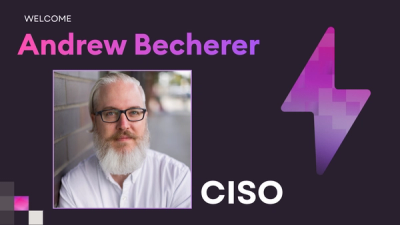
Socket’s first CISO brings deep experience securing high-growth SaaS companies as open source supply chain threats accelerate.