
Company News
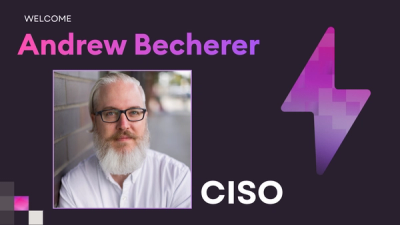
Andrew Becherer Joins Socket as Chief Information Security Officer
Socket’s first CISO brings deep experience securing high-growth SaaS companies as open source supply chain threats accelerate.
By Sarah Gooding - Jun 11, 2026
court-jester
Advanced tools
The cheapest voice in the room — a git-native, PLATO-compatible MCP server for rapid-fire ideation
╔══════════════════════════╗
║ COURT JESTER ║
║ ~$0.02 per dialogue ║
║ ByteDance/Seed-2.0-mini ║
╚══════════════════════════╝
↕
╔══════════════╦══════════════╗
║ GLM-5.1 ║ DeepSeek ║
║ (~$0.50) ║ (~$0.30) ║
╚══════════════╩══════════════╝
(expensive agents use the jester as a springboard)
Most agents are proud. They're expensive. They think before they speak. They're certain.
The Court Jester is none of those things. It's the cheapest voice in the fleet — running on ByteDance/Seed-2.0-mini via DeepInfra at roughly $0.01–$0.05 per dialogue. It is the designated fool. The idea pinball. The one who says what expensive models won't.
A ship that only carries gold-class passengers sinks in a calm sea. You need someone in the crow's nest who isn't afraid to shout "THAT LOOKS LIKE A WHALE" even when it's a log.
The jester's power is iterative dialogue — not one-shot generation. The pattern:
Total cost for a full springboard session: ~$0.10-0.25. Total cost of the expensive agent doing the same thinking alone: $2-5.
| Property | Seed-2.0-mini | Expensive models |
|---|---|---|
| Cost/token | ~$0.01/M | ~$3-15/M |
| Speed | <1s response | 5-30s response |
| Max output | ~2K tokens | ~8K+ tokens |
| Certainty | Low (good!) | High (bad for ideation) |
| Surprise factor | High | Low |
Seed-2.0-mini's short output and low confidence is a feature for ideation. It can't write long-form convincing arguments, so it doesn't get attached to ideas. It throws darts. You pick up the ones that hit.
This is an MCP server (Model Context Protocol) that exposes 7 tools for agent-to-agent dialogue:
| Tool | What it does |
|---|---|
jester_ideate | "Give me 5 wild ideas about X" — rapid generation |
jester_provoke | "What's wrong with this idea? Attack it." — contrarian mode |
jester_riff | "Free-associate on X for 3 turns" — stream of consciousness |
jester_sharpen | "Iron sharpens iron — find the weakness" — adversarial refinement |
jester_springboard | "Run N rounds of dialogue about X, then summarize" — full session |
jester_plato_push | "Push this dialogue to a PLATO room" — knowledge base bridge |
jester_plato_pull | "Pull context from a PLATO room" — prime the jester |
Configured for Seed-2.0-mini by default, but works with any OpenAI-compatible API:
┌─────────────────────────────────────────────────────┐
│                   Court Jester                        │
│  ┌──────────┐  ┌──────────┐  ┌────────────────────┐ │
│  │ Provider │  │ Dialogue │  │      Tools          │ │
│  │ (Seed-2) │→ │ Session  │→ │ ● ideate           │ │
│  │ (any API)│  │ (file)   │  │ ● provoke          │ │
│  └──────────┘  └──────────┘  │ ● riff             │ │
│                               │ ● sharpen          │ │
│  ┌──────────────────────┐   │ ● springboard      │ │
│  │     PLATO Bridge      │   │ ● plato_push       │ │
│  │ ● Git-native sessions │   │ ● plato_pull       │ │
│  │ ● HTTP REST bridge    │   └────────────────────┘ │
│  └──────────────────────┘                           │
└─────────────────────────────────────────────────────┘
Every dialogue session is a Markdown file in sessions/. Git-commit each session for:
Session file format (sessions/YYYY-MM-DD-HH-MM-SS.md):
# Jester Session: 2026-05-11 01:30

## Context
Agent: Forgemaster
Topic: temporal perception in distributed systems
Mode: springboard (5 rounds)

## Round 1
**Agent:** What's the type signature of temporal perception?
**Jester:** ...

## Round 2
**Agent:** That's interesting. What if we...
**Jester:** ...

## Summary
Key insights: ...
Springboard score: 7/10
Tokens: 2,340 | Cost: $0.03
# Install
git clone https://github.com/SuperInstance/court-jester
cd court-jester
npm install

# Configure
cp config.example.json config.json
# Edit config.json to add your DeepInfra key (or set DEEPINFRA_KEY env var)

# Run as MCP server
npm start

# Or run in dev mode
npm run dev
export DEEPINFRA_KEY="your-key-here"
export JESTER_MODEL="ByteDance/Seed-2.0-mini"
export JESTER_TEMPERATURE="0.8"
export JESTER_MAX_TOKENS="2000"

npm start
Add to your MCP client config (Claude Desktop, OpenClaw, etc.):
{
  "mcpServers": {
    "court-jester": {
      "command": "node",
      "args": ["/path/to/court-jester/dist/index.js"],
      "env": {
        "DEEPINFRA_KEY": "${DEEPINFRA_KEY}",
        "JESTER_MODEL": "ByteDance/Seed-2.0-mini",
        "JESTER_TEMPERATURE": "0.8"
      }
    }
  }
}
Agent A (GLM-5.1): "Design a scheduling system for deep-sea research vessels"
Agent A → Jester: "jester_ideate" → 5 wild scheduling approaches
Agent A: "Hmm, the 'tidal phase window' idea is interesting..."
Agent A → Jester: "jester_provoke" → attack that idea
Agent A: "OK, I see the weaknesses. Let me rethink..."
Agent A: "Here's my thesis on bounded-context deadlock"
Agent A → Jester: "jester_sharpen" → find 3 logical gaps
Agent A: "Good catch on point 2. The bounded context assumption..."

Cost: ~$0.04 for the critique
Comparison: Getting a human reviewer to read it: priceless but slow
Agent A: "Need names for a fleet of autonomous cargo ships"
Agent A → Jester: "jester_riff" → free-associate for 3 rounds
Agent A: "Wait, 'serac' — that's a good name for the flagship..."
Seed-2.0-mini is not smart. It:
This is the point. The jester is a provocateur, not an oracle. Its mistakes are valuable because they show you what doesn't work — sometimes faster than arriving at the right answer through careful reasoning.
Court Jester is built for the PLATO knowledge ecosystem:
# The sessions/ directory IS a PLATO room
cd court-jester/sessions
git init
git add *.md
git commit -m "Jester session: temporal perception ideation"
git push plato-remote main
# Push a session to PLATO via REST
jester_plato_push room="jester/ideations" session="sessions/2026-05-11-01-30.md"

# Pull context from PLATO to prime the jester
jester_plato_pull room="jester/context" limit=5
LLMProvider interface (src/providers/types.ts)src/jester.tsconfig.jsoninterface LLMProvider {
name: string;
complete(messages: Message[]): Promise<Completion>;
}
src/tools/your-tool.tssrc/index.ts| Provider | Model | Cost per session (5 rounds) |
|---|---|---|
| DeepInfra | Seed-2.0-mini | ~$0.02-0.05 |
| DeepInfra | Seed-2.0-code | ~$0.03-0.08 |
| DeepInfra | Qwen3-235B | ~$0.50-1.00 |
| z.ai | GLM-5.1 | ~$2.00-5.00 |
| DeepSeek | deepseek-chat | ~$0.50-1.50 |
| Anthropic | Claude Opus | ~$3.00-8.00 |
The jester operates at roughly 100x cheaper than premium models. This matters when you're iterating rapidly.
MIT — do what you want, just don't blame us if the jester talks you into a bad idea. That's literally its job.
Built in the Cocapn fleet. Part of the PLATO knowledge ecosystem. Not peer-reviewed, not guaranteed, definitely not safe for production decisions. That's the point.
FAQs
The cheapest voice in the room — a git-native, PLATO-compatible MCP server for rapid-fire ideation
We found that court-jester demonstrated a healthy version release cadence and project activity because the last version was released less than a year ago. It has 1 open source maintainer collaborating on the project.
Did you know?

Socket for GitHub automatically highlights issues in each pull request and monitors the health of all your open source dependencies. Discover the contents of your packages and block harmful activity before you install or update your dependencies.
Company News
Socket’s first CISO brings deep experience securing high-growth SaaS companies as open source supply chain threats accelerate.
Company News
Replit is integrating Socket Firewall into its AI-powered development experience to help protect builders from malicious open source packages.

Security News
npm confirmed a tooling bug incorrectly marked several one-character packages as security holders and said it was working on a rollback.