

Security News
Deno Goes the Way of the Dinosaur
Cloudflare is acquiring Deno’s team, which will provide another year of bug fixes and security updates before ending support for the runtime.
By Sarah Gooding - Oct 16, 2026
dsh-plugin-remote
Advanced tools
Remote access gateway and zero-install Windows desktop projection for the DeepSeek Harness Web GUI.
Remote access gateway for the DeepSeek Harness (DSH) Web GUI — login auth + HTTP/WebSocket reverse proxy to the loopback DSH server.
中文 · MIT
dsh plugin --profile web add dsh-plugin-remote && dsh web
Note: this is a DSH (DeepSeek Harness) plugin — install it into a profile through
dsh plugin(or the profile's dependencies) so the gateway activates; a plainnpm ialone does not wire it in.
| Login | Main view (对话 / 轨迹 / 远程访问 tabs) |
|---|---|
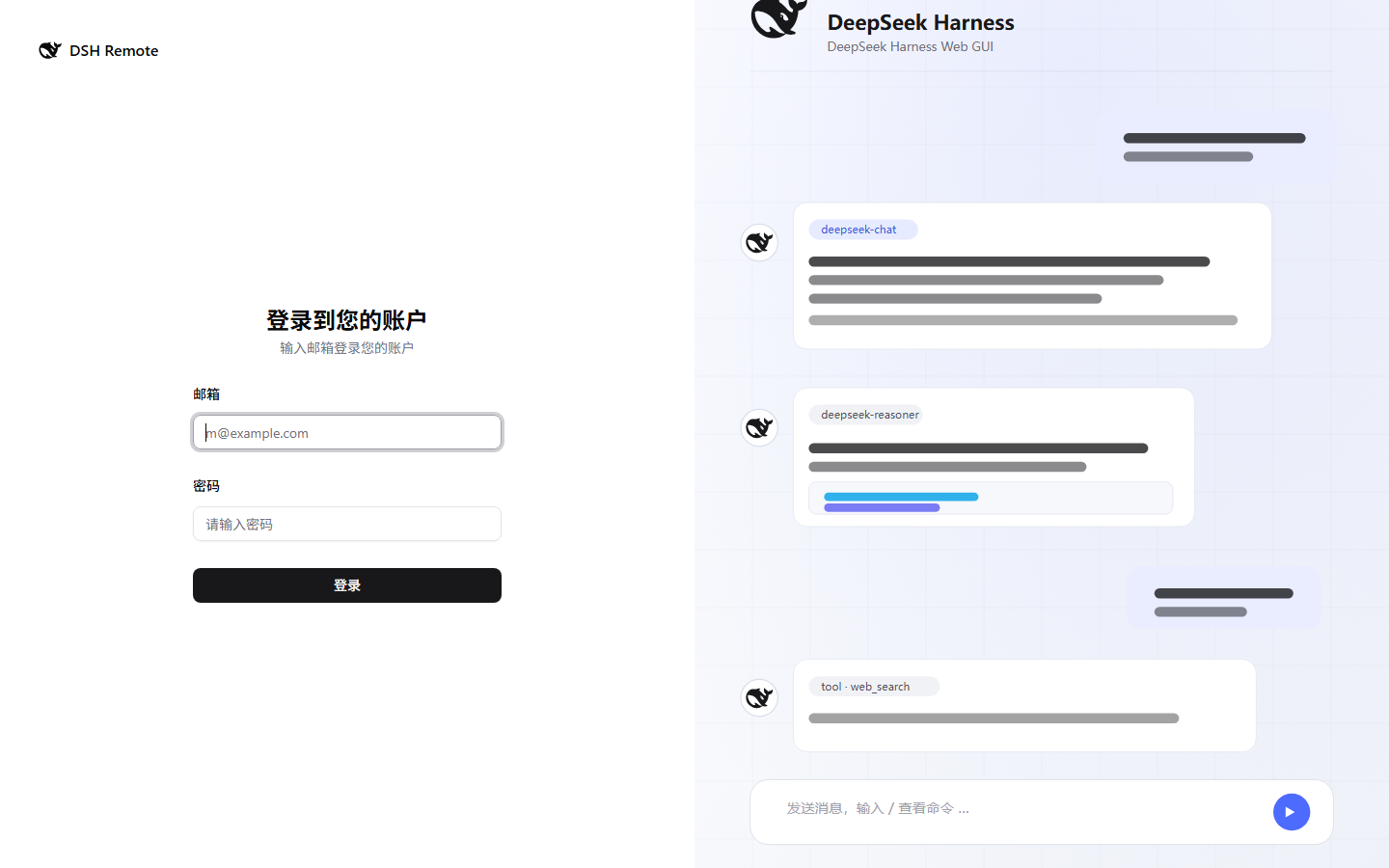 | 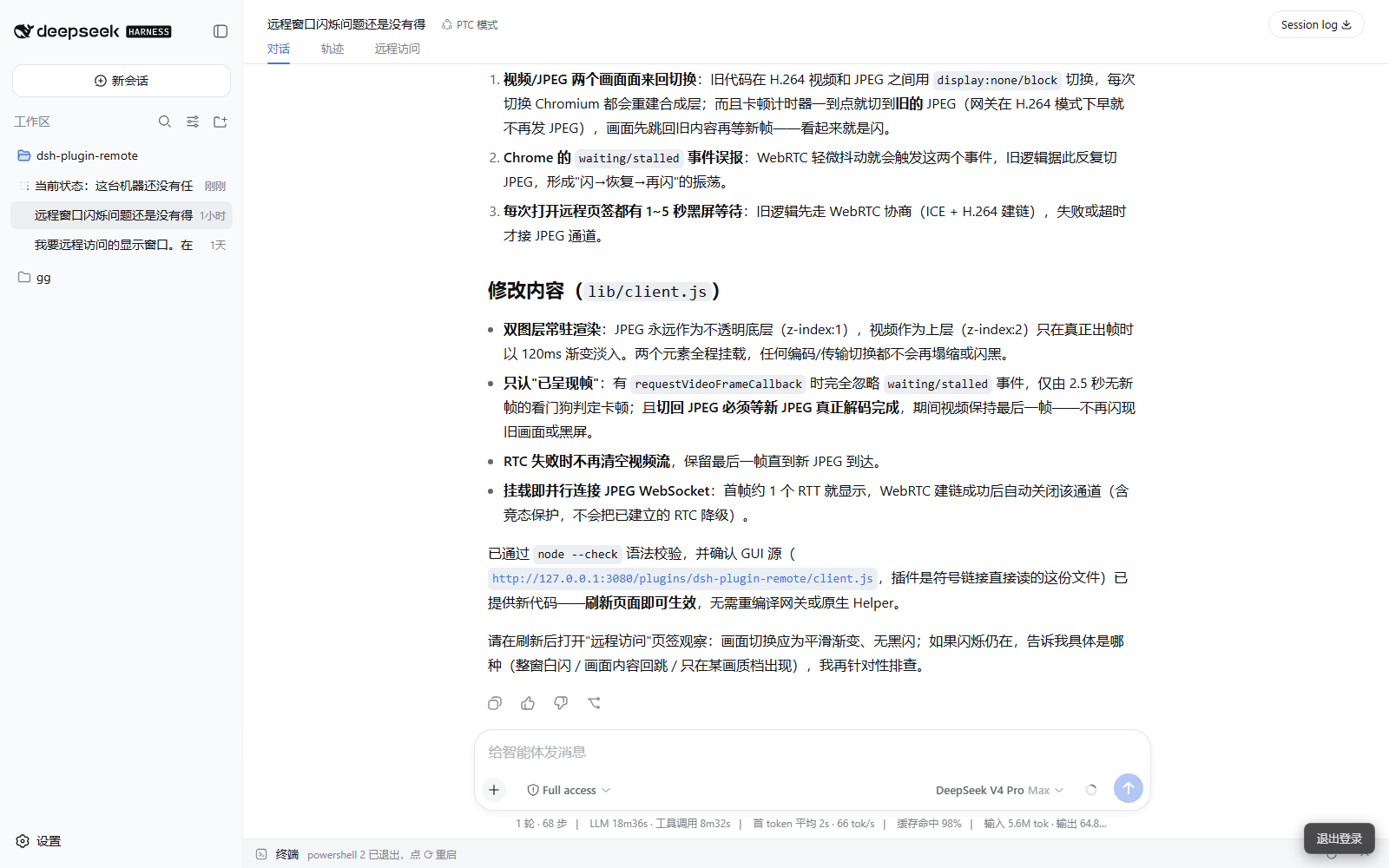 |
| Remote desktop tab | Settings → Remote Access |
|---|---|
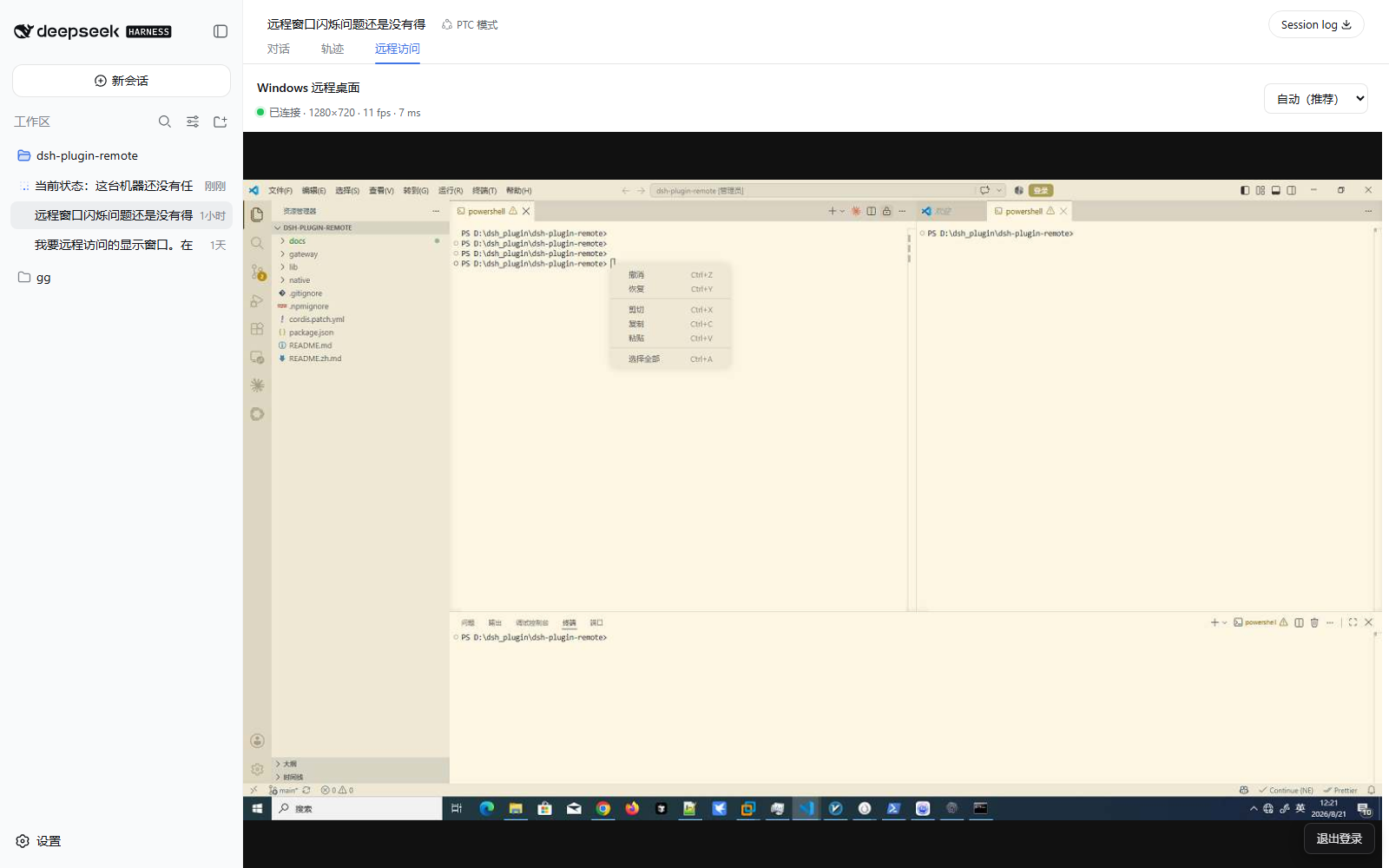 |  |
--trusted-host needed/admin/*, session-required), managed in the
Settings → 远程访问 section:
node-datachannel package provides the WebRTC fast path and
the Next.js login app lives inside gateway/http://<server-ip>:4080 — the first visit creates the only accountnode lib/remote-passwd.mjs add|set-password|list|del <username>$DSH_HOME/plugin-data/dsh-plugin-remote/ (users.json, whitelist.json, logs/)On Windows 10/11 x64, the plugin launches native/windows-x64/dsh-remote-host.exe
after the gateway becomes ready. It connects back with a random process-local
authentication token that is never written to disk. Only logged-in gateway
users can open the viewer/control channel.
The current Windows helper source has two video paths. After native:build,
the primary path captures BGRA frames, encodes H.264 through Media Foundation,
and sends one access unit into a real WebRTC H.264/RTP track. The browser and
libdatachannel then use the media transport's pacing, congestion feedback,
NACKs, and keyframe requests instead of putting every full frame into a TCP
queue. During startup or when H.264 cannot be decoded, the gateway keeps the
JPEG DataChannel path alive and switches to it automatically; the authenticated
WebSocket viewer is the final compatibility fallback. The package prefers the
dsh-remote-host-h264.exe binary when present and keeps the old exe as a legacy
fallback; npm run native:build refreshes both copies.
Pointer motion and wheel events use a disposable low-latency channel, while keyboard, button transitions, ACKs, and input-reset messages remain ordered and reliable. This prevents stale video from blocking new input on a weak link.
For clients behind symmetric NAT or UDP-restricted networks, configure a TURN
server in the plugin row. The values use the browser RTCConfiguration shape:
{
  rtcIceServers: [
    'stun:stun.example.net:3478',
    { urls: 'turns:turn.example.net:5349', username: 'user', credential: 'secret' },
  ],
}
STUN is useful for direct paths; TURN is the reliable relay fallback. Keep the WebSocket fallback enabled when deploying in environments where UDP policy is unknown.
Windows secure desktops (UAC prompts, sign-in, and locked sessions) cannot be
captured or controlled. Set config.desktop: false to disable projection.
npm run native:build
npm run gateway:build
npm run test:desktop
MIT
FAQs
Remote access gateway and zero-install Windows desktop projection for the DeepSeek Harness Web GUI.
The npm package dsh-plugin-remote receives a total of 16 weekly downloads. As such, dsh-plugin-remote popularity was classified as not popular.
We found that dsh-plugin-remote demonstrated a healthy version release cadence and project activity because the last version was released less than a year ago. It has 1 open source maintainer collaborating on the project.
Security News
Cloudflare is acquiring Deno’s team, which will provide another year of bug fixes and security updates before ending support for the runtime.

Security News
Anthropic’s free OSS Scanner uses Mythos and other Claude models to find open source vulnerabilities and send maintainers reports with proposed fixes.

Security News
On Front Lines’ Early Adopters: CISO podcast, Andrew Becherer shares lessons from Datadog, weighs the long-term costs of AI-built tools, and explains how founders can actually gain a CISO’s trust.