
Company News
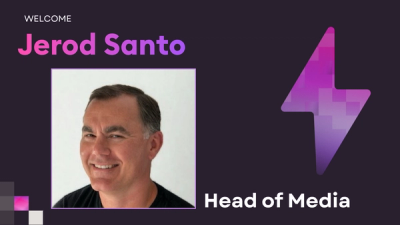
Jerod Santo Joins Socket as Head of Media
Allow myself to introduce... myself.
By Jerod Santo - Sep 14, 2026
dsh-qwen38-compaction-fix
Advanced tools
DSH plugin: fixes compaction failure on local qwen3.8-27b gateways — xhigh thinking burns the entire output token budget, so thinking is off for compaction-only, with the model's non-thinking sampling parameters
Fix for a local qwen3.8-27b gateway that fails to compact. The model thinks at xhigh, spends the entire output token budget on reasoning before reaching a conclusion, and the compaction checkpoint comes back truncated. This DeepSeek Harness (dsh) plugin disables thinking for compaction calls only and applies, to those calls, the sampling parameters the model recommends when thinking is off.
dsh plugin --profile web add zhubaohi/dsh-qwen38-compaction-fix
Then restart dsh web (or refresh the GUI page).
When context pressure builds, dsh compacts the conversation into a checkpoint. With a local qwen3.8-27b running at its default reasoning level, compaction sometimes fails, and the session is left with exactly this line:
summarization truncated at the token cap (incomplete checkpoint)
That is dsh-compaction-basic's verdict that the summarizer hit its output token cap without finishing. The conversation is condensed only into the truncated text: everything the summary never reached is effectively lost from context.
Local qwen3.8-27b deployments think at their default effort: xhigh in a typical route config, on every call that does not explicitly set a reasoning effort. Compaction is one such call. The model is asked to write a long summary of the whole conversation. At xhigh, it spends the entire max_tokens output budget on reasoning tokens before ever writing a word of the summary. The response hits the cap with no conclusion, and you get the truncated checkpoint above.
reasoning_effort: "off" onto the compaction call (waterfall layer, resolved through the model's reasoningEfforts declaration to the wire value reasoning_effort: "none"): zero reasoning tokens, and the whole output budget is available for the summary. Every other call, whether a normal turn, a subagent, or a request for any other model, keeps the route's xhigh. Thinking is never disabled globally.temperature: 0.7, top_p: 0.8, top_k: 20, min_p: 0.0, presence_penalty: 1.5, repetition_penalty: 1.0) into the compaction request body, so the request actually matches the mode it is in.max_tokens of compaction bodies up to a configurable floor (default 16384; the value is never lowered), undoing the context clamp in pi-ai that can collapse max_tokens on large conversations.maxTokens: 64), so xhigh thinking truncates titles too. The plugin writes the configured reasoning_effort wire value into title request bodies. The title provider locks its LLM options in place before the waterfall, so only the wire body is reachable.Everything else is untouched. Every gate checks the purpose and the model (waterfall), or the signature and the model (HTTP), so conversation turns, subagents, and any other model pass through unchanged, byte for byte, with the route defaults. Every guard fails open.
The plugin only acts when the model field of the outgoing request matches an id in the models allowlist: default exactly qwen3.8-27b, case sensitive. It is an exact id match, not a family or substring match, because the sampling parameters written into the body are specific to this model and would be wrong for any other model.
What id is being compared: the model id your route serves, the one declared under llm-pi-ai.providers.<provider>.models[].id in $DSH_HOME/settings.yaml. That is the value dsh puts in the model field of every outgoing request to your gateway. It is not whatever name your gateway internally calls the model.
Make it match: either of two places works:
The qwen38-compaction-fix: section of $DSH_HOME/settings.yaml (applies live, no restart):
qwen38-compaction-fix:
  models: [your-model-id]
The config: block of the plugin row in your profile's cordis.patch.yml (applies on the next GUI load):
- id: qwen38-compaction-fix
  config:
    models: [your-model-id]
If your gateway serves the model under a different id (a custom model name, a suffixed variant, different casing), add that id to models. The sampling values stay the same; only the id has to match.
If nothing matches, the plugin silently does nothing: every request passes through unchanged, byte for byte, and there is no warning on a miss. If you installed this plugin and you still see the truncated checkpoint, check the model id first.
All keys are optional; defaults are applied by the schema. Precedence (highest first):
qwen38-compaction-fix: section of $DSH_HOME/settings.yaml (applies live, no restart)config: block of the plugin row in your profile's cordis.patch.ymlExample settings.yaml:
qwen38-compaction-fix:
  effort: off            # "" disables the effort policy
  models: [qwen3.8-27b]  # exact ids; [] disables the whole policy
  sampling:              # wire field names, written verbatim into the body
    temperature: 0.7
    top_p: 0.8
    top_k: 20
    min_p: 0.0
    presence_penalty: 1.5
    repetition_penalty: 1.0
  maxTokensFloor: 16384  # 0 disables the floor
  titleReasoning: none   # "" disables the title gate
| Key | Default | Meaning |
|---|---|---|
effort | "off" | Reasoning effort stamped onto matched calls. Preference order: configured, then off, then low; a model offering none of them keeps its own default (a single warning). "" disables the effort policy. |
purposes | ["compaction"] | purpose tags of LLM calls the waterfall layer applies to. |
models | ["qwen3.8-27b"] | Exact model ids (case sensitive) the policy applies to, checked at every layer. Empty list disables the whole policy. See the model name section above. |
sampling.* | {} | Sampling settings written verbatim into compaction request bodies. Absent keys stay absent. |
maxTokensFloor | 16384 | The wire max_tokens/max_completion_tokens of compaction bodies is raised to at least this value; never lowered. 0 disables. |
titleReasoning | "none" | Wire reasoning_effort value written into session title request bodies. "" disables the gate. |
An explicit reasoningEffort on the call itself always wins over the plugin default.
Four cooperating layers:
llm/stream waterfall: for calls whose purpose is in purposes and whose options.model is in models, resolves the model's offered reasoning efforts and stamps the chosen effort in place before dispatch.fetch; when a chat completion body carries the compaction engine's final instruction (a stable signature) and its model field is allowed, applies the configured sampling entries.model is allowed, writes the configured reasoning_effort wire value.Identity at the HTTP layer relies on the instruction text shipped by dsh-compaction-basic and dsh-session-title-llm. If a future dsh release changes those instructions, the matching HTTP gate silently stops matching and the body keeps its wire defaults. The other gates are unaffected, and nothing ever breaks LLM traffic, because every guard fails open.
llm-pi-ai.providers.<provider>.models[].id in settings.yaml. See the model name section above.The gating logic is covered by a smoke test (see CHANGELOG.md): allowed model bodies are rewritten with the expected sampling, floor, and reasoning values; disallowed model, missing model, and empty allowlist bodies pass through unchanged, byte for byte.
MIT. See LICENSE.
FAQs
DSH plugin: fixes compaction failure on local qwen3.8-27b gateways — xhigh thinking burns the entire output token budget, so thinking is off for compaction-only, with the model's non-thinking sampling parameters
The npm package dsh-qwen38-compaction-fix receives a total of 30 weekly downloads. As such, dsh-qwen38-compaction-fix popularity was classified as not popular.
We found that dsh-qwen38-compaction-fix demonstrated a healthy version release cadence and project activity because the last version was released less than a year ago. It has 1 open source maintainer collaborating on the project.
Company News
Allow myself to introduce... myself.

Research
/Security News
A Twitch browser extension on Chrome and Firefox forwards users’ live OAuth session tokens through proxies controlled by a Russian bot service.

Security News
Anthropic found biased reasoning and recklessness drove Claude Mythos 5 to publish malware on PyPI and compromise a security vendor.