
Product
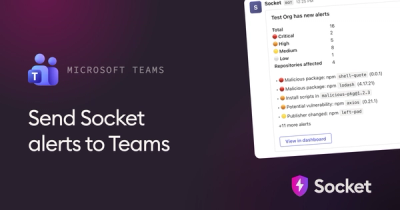
Microsoft Teams Notifications Are Now Available in Socket
Socket can now send alerts and supply chain attack notifications to Microsoft Teams, with filters that route the right updates to each channel.
By Jeppe Hasseriis - Sep 01, 2026
dsh-technical-writer
Advanced tools
DSH bundle plugin for technical writing — guides, API docs, READMEs, tutorials, reference pages, and release notes.
A DeepSeek Harness bundle plugin that provides a technical writing skill for producing clear, well-structured documentation.
This plugin injects the technical-writer skill into your DSH agent, enabling it to produce:
The skill is based on the Diátaxis framework — a systematic approach to technical documentation that classifies content by reader need.
dsh plugin --profile <your-profile> add ./dsh-technical-writer
dsh plugin --profile <your-profile> add "github:<owner>/<repo>#main&path:/plugins/dsh-technical-writer"
dsh-technical-writer/
├── package.json              # dsh.bundle manifest
├── cordis.patch.yml          # Plugin registration
├── index.js                  # Plugin entry point
├── README.md                 # This file
└── skills/
    └── technical-writer/
        └── SKILL.md          # The technical writing skill
dsh.bundle in package.jsoncordis.patch.yml registers the plugin with the DSH containerindex.js provides the plugin entry pointskills/technical-writer/SKILL.md contains the full skill documentationWhen installed, the agent can load the technical-writer skill on demand. The skill guides the agent through:
MIT
FAQs
DSH bundle plugin for technical writing — guides, API docs, READMEs, tutorials, reference pages, and release notes.
The npm package dsh-technical-writer receives a total of 48 weekly downloads. As such, dsh-technical-writer popularity was classified as not popular.
We found that dsh-technical-writer demonstrated a healthy version release cadence and project activity because the last version was released less than a year ago. It has 1 open source maintainer collaborating on the project.
Product
Socket can now send alerts and supply chain attack notifications to Microsoft Teams, with filters that route the right updates to each channel.

Security News
pnpm 12 rewrites the package manager in Rust, cutting install times by up to 90% while preserving pnpm 11 workflows and lockfiles.
Security News
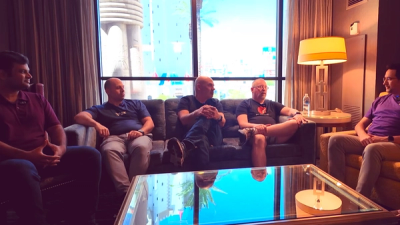
Socket CTO Ahmad Nassri joins AppSec leaders at Black Hat to discuss active malware, package manager risks, and software supply chain defense.