

Security News
US Government Forces Anthropic to Pull Claude Fable Days After Launch
Anthropic says the directive cited national security concerns over a narrow jailbreak, but offered no specific technical details.
By Sarah Gooding - Jun 13, 2026
elemental-tokens
Advanced tools
Human-transcribable, LLM-stable tokens built from chemical element symbols
Human-transcribable, LLM-stable tokens built from chemical element symbols.
Fe-Au-Rn-Cu-Xe
Five symbols off the periodic table. Easy to read aloud, easy to type, easy for
a language model to echo back without mangling — and backed by a cryptographically
secure RNG. Each symbol is worth a clean 6.7 bits of entropy, so the whole
token is just length × 6.7 bits of unpredictability with nothing to memorize.
A good short identifier has to survive being spoken, typed, dictated to a phone,
or round-tripped through an LLM. Random base32 (q7f2k9) and UUIDs fail that test:
l/1/I and 0/O collide, and a model has no prior for an arbitrary string.
Element symbols are different:
Rn means Rn.Xx is simply
not an element.The vocabulary is the 104 two-letter symbols only. All 14 single-letter
symbols (H, B, C, N, O, F, P, S, K, V, W, Y, I, U) are excluded — a lone C
floating next to Fe is exactly the kind of thing that gets dropped or merged.
104 symbols is log2(104) ≈ 6.7 bits apiece.
npm install elemental-tokens
Ships ESM + CommonJS + TypeScript types. Runs on Node.js ≥ 18 and in the browser
(uses the Web Crypto API via globalThis.crypto).
import { generate, validate } from "elemental-tokens";

const token = generate();        // "Fe-Au-Rn-Cu-Xe"
validate(token);                 // true
validate("fe-au-rn-cu-xe");      // false  (case-sensitive)
validate("Xx-Au-Rn-Cu-Xe");      // false  (Xx is not an element)
CommonJS:
const { generate, validate } = require("elemental-tokens");
generate(options?): stringGenerates a token. Each symbol is drawn uniformly from the vocabulary with a CSPRNG and rejection sampling — that's the full 6.7 bits per symbol, no modulo bias shaving anything off.
| Option | Type | Default | Description |
|---|---|---|---|
length | number | 5 | Number of symbols. Positive integer. |
delimiter | string | "-" | String placed between symbols. |
symbols | string[] | the 104 elements | Override the vocabulary entirely. |
generate();                                   // "Mg-Sc-Pb-Re-Nd"
generate({ length: 8 });                      // 8 symbols ≈ 53.6 bits
generate({ delimiter: "" });                  // "MgScPbReNd"
generate({ symbols: ["aa", "bb", "cc"] });    // custom vocabulary
Throws RangeError if length is not a positive integer, or if symbols is
provided but not a non-empty array.
validate(token, options?): booleanReturns true only if every delimiter-separated segment is a known symbol.
Strict and case-sensitive — "Fe-Au" is valid, "fe-au" is not. No trimming,
no checksum. Returns false for an empty token or any empty segment (leading,
trailing, or doubled delimiters). Pass the same delimiter / symbols you
generated with.
validate("Fe-Au-Rn-Cu-Xe");                       // true
validate("Fe.Au", { delimiter: "." });            // true
validate("aa-bb", { symbols: ["aa", "bb"] });     // true
import { ELEMENT_SYMBOLS, SYMBOL_COUNT, BITS_PER_SYMBOL } from "elemental-tokens";

SYMBOL_COUNT;     // 104
BITS_PER_SYMBOL;  // 6.700439718141092
The unit of account is one symbol = log2(104) ≈ **6.7 bits**. A token is just a
stack of these 6.7-bit quanta, so picking a length is picking a strength:
| Length | Entropy | Notes |
|---|---|---|
| 4 | ≈ 26.8 bits | |
| 5 | ≈ 33.5 bits | default — 5 × 6.7 |
| 6 | ≈ 40.2 bits | |
| 8 | ≈ 53.6 bits | |
| 12 | ≈ 80.4 bits | |
| 20 | ≈ 134 bits | ~128-bit-class secret |
To hit a target strength, divide by 6.7: 128 bits ÷ 6.7 ≈ 20 symbols.
elemental-tokens is designed as a security-load-bearing identifier for
short-lived tokens under aggressive rate limiting — think a token that's valid
for five minutes and gets at most a few dozen guesses before lockout.
crypto.getRandomValues (Web Crypto,
present in Node ≥ 18 and browsers). Math.random is never used.104^length.50 / 2^33.5 ≈ 1
in 170 million per window). It is not sized for offline brute force — for
secrets that must resist that, use length ≥ 12 (≈ 80 bits) or ≥ 20 (≈ 128 bits).BIP39 is the closest well-known relative: a fixed vocabulary mapped to entropy.
| BIP39 | elemental-tokens | |
|---|---|---|
| Vocabulary size | 2048 words | 104 symbols |
| Entropy per unit | 11 bits/word | 6.7 bits/symbol |
| Unit length | 3–8 letters | exactly 2 characters |
| Checksum | yes (built into seed phrase) | no (lookup is the check) |
| Designed for | 128–256-bit seed phrases | short, dictation-friendly tokens |
| Units to reach ~128 bits | ~12 words | ~20 symbols |
| Autocorrect risk | high (real English words) | low (not dictionary words) |
BIP39 trades shorter sequences for a much larger, English-word vocabulary and a
checksum. elemental-tokens trades that for shorter, two-character atoms that are
faster to read aloud, internationally recognizable, and stable through an LLM —
at a tidy 6.7 bits each.
Types ship with the package:
import { generate, type GenerateOptions } from "elemental-tokens";

const opts: GenerateOptions = { length: 8, delimiter: "-" };
const token = generate(opts);
MIT © Nibs
FAQs
Human-transcribable, LLM-stable tokens built from chemical element symbols
We found that elemental-tokens demonstrated a healthy version release cadence and project activity because the last version was released less than a year ago. It has 1 open source maintainer collaborating on the project.
Did you know?

Socket for GitHub automatically highlights issues in each pull request and monitors the health of all your open source dependencies. Discover the contents of your packages and block harmful activity before you install or update your dependencies.
Security News
Anthropic says the directive cited national security concerns over a narrow jailbreak, but offered no specific technical details.

Security News
A network of 152 Chrome live wallpaper extensions hid ad tracking and made extension-driven traffic look like Google search clicks.
Company News
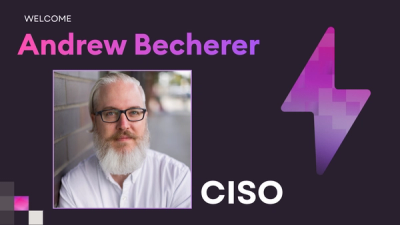
Socket’s first CISO brings deep experience securing high-growth SaaS companies as open source supply chain threats accelerate.