


Product
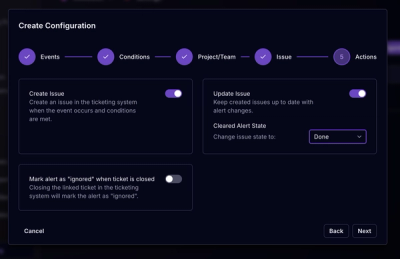
Socket for Jira Is Now Available
Socket for Jira lets teams turn alerts into Jira tickets with manual creation, automated ticketing rules, and two-way sync.
By Jeppe Hasseriis - Apr 20, 2026
enhanced-resolve
Advanced tools



Offers an async require.resolve function. It's highly configurable.
# npm
npm install enhanced-resolve
# or Yarn
yarn add enhanced-resolve
There is a Node.js API which allows to resolve requests according to the Node.js resolving rules.
Sync and async APIs are offered. A create method allows to create a custom resolve function.
const resolve = require("enhanced-resolve");

resolve("/some/path/to/folder", "module/dir", (err, result) => {
	result; // === "/some/path/node_modules/module/dir/index.js"
});

resolve.sync("/some/path/to/folder", "../../dir");
// === "/some/path/dir/index.js"

const myResolve = resolve.create({
	// or resolve.create.sync
	extensions: [".ts", ".js"],
	// see more options below
});

myResolve("/some/path/to/folder", "ts-module", (err, result) => {
	result; // === "/some/node_modules/ts-module/index.ts"
});
The easiest way to create a resolver is to use the createResolver function on ResolveFactory, along with one of the supplied File System implementations.
const fs = require("fs");
const { CachedInputFileSystem, ResolverFactory } = require("enhanced-resolve");

// create a resolver
const myResolver = ResolverFactory.createResolver({
	// Typical usage will consume the `fs` + `CachedInputFileSystem`, which wraps Node.js `fs` to add caching.
	fileSystem: new CachedInputFileSystem(fs, 4000),
	extensions: [".js", ".json"],
	/* any other resolver options here. Options/defaults can be seen below */
});

// resolve a file with the new resolver
const context = {};
const lookupStartPath = "/Users/webpack/some/root/dir";
const request = "./path/to-look-up.js";
const resolveContext = {};
myResolver.resolve(
	context,
	lookupStartPath,
	request,
	resolveContext,
	(err /* Error */, filepath /* string */) => {
		// Do something with the path
	},
);
| Field | Default | Description |
|---|---|---|
| alias | [] | A list of module alias configurations or an object which maps key to value |
| aliasFields | [] | A list of alias fields in description files |
| extensionAlias | {} | An object which maps extension to extension aliases |
| cachePredicate | function() { return true }; | A function which decides whether a request should be cached or not. An object is passed to the function with path and request properties. |
| cacheWithContext | true | If unsafe cache is enabled, includes request.context in the cache key |
| conditionNames | [] | A list of exports field condition names |
| descriptionFiles | ["package.json"] | A list of description files to read from |
| enforceExtension | false | Enforce that a extension from extensions must be used |
| exportsFields | ["exports"] | A list of exports fields in description files |
| extensions | [".js", ".json", ".node"] | A list of extensions which should be tried for files |
| fallback | [] | Same as alias, but only used if default resolving fails |
| fileSystem | The file system which should be used | |
| fullySpecified | false | Request passed to resolve is already fully specified and extensions or main files are not resolved for it (they are still resolved for internal requests) |
| mainFields | ["main"] | A list of main fields in description files |
| mainFiles | ["index"] | A list of main files in directories |
| modules | ["node_modules"] | A list of directories to resolve modules from, can be absolute path or folder name |
| plugins | [] | A list of additional resolve plugins which should be applied |
| resolver | undefined | A prepared Resolver to which the plugins are attached |
| resolveToContext | false | Resolve to a context instead of a file |
| preferRelative | false | Prefer to resolve module requests as relative request and fallback to resolving as module |
| preferAbsolute | false | Prefer to resolve server-relative urls as absolute paths before falling back to resolve in roots |
| restrictions | [] | A list of resolve restrictions |
| roots | [] | A list of root paths |
| symlinks | true | Whether to resolve symlinks to their symlinked location |
| tsconfig | false | TypeScript config for paths mapping. Can be false (disabled), true (use default tsconfig.json), a string path to tsconfig.json, or an object with configFile, references, and baseUrl options. Supports JSONC format (comments and trailing commas) like TypeScript compiler. |
| tsconfig.configFile | tsconfig.json | Path to the tsconfig.json file |
| tsconfig.references | [] | Project references. 'auto' to load from tsconfig, or an array of paths to referenced projects |
| tsconfig.baseUrl | undefined | Override baseUrl from tsconfig.json. If provided, this value will be used instead of the baseUrl in the tsconfig file |
| unsafeCache | false | Use this cache object to unsafely cache the successful requests |
Similar to webpack, the core of enhanced-resolve functionality is implemented as individual plugins that are executed using tapable.
These plugins can extend the functionality of the library, adding other ways for files/contexts to be resolved.
A plugin should be a class (or its ES5 equivalent) with an apply method. The apply method will receive a resolver instance, that can be used to hook in to the event system.
class MyResolverPlugin {
	constructor(source, target) {
		this.source = source;
		this.target = target;
	}

	apply(resolver) {
		const target = resolver.ensureHook(this.target);
		resolver
			.getHook(this.source)
			.tapAsync("MyResolverPlugin", (request, resolveContext, callback) => {
				// Any logic you need to create a new `request` can go here
				resolver.doResolve(target, request, null, resolveContext, callback);
			});
	}
}
Plugins are executed in a pipeline, and register which event they should be executed before/after. In the example above, source is the name of the event that starts the pipeline, and target is what event this plugin should fire, which is what continues the execution of the pipeline. For an example of how these different plugin events create a chain, see lib/ResolverFactory.js, in the //// pipeline //// section.
It's allowed to escape # as \0# to avoid parsing it as fragment.
enhanced-resolve will try to resolve requests containing # as path and as fragment, so it will automatically figure out if ./some#thing means .../some.js#thing or .../some#thing.js. When a # is resolved as path it will be escaped in the result. Here: .../some\0#thing.js.
npm run test
If you are using webpack, and you want to pass custom options to enhanced-resolve, the options are passed from the resolve key of your webpack configuration e.g.:
resolve: {
  extensions: ['.js', '.jsx'],
  modules: [path.resolve(__dirname, 'src'), 'node_modules'],
  plugins: [new DirectoryNamedWebpackPlugin()]
  ...
},
Copyright (c) 2012-2019 JS Foundation and other contributors
A simple module resolution package that can be used to resolve file paths similarly to Node's 'require.resolve'. It is less configurable than enhanced-resolve but is easier to use for simple resolution tasks.
A browser-focused module resolver that aims to replicate Node's 'require.resolve' behavior for browser environments. It is similar to enhanced-resolve but with a focus on resolving modules for bundling in the browser.
This package provides a function to resolve a module path relative to a given path. It is a simpler alternative to enhanced-resolve, focusing on resolving require paths without the extensive configuration options.
FAQs
Offers a async require.resolve function. It's highly configurable.
The npm package enhanced-resolve receives a total of 64,795,063 weekly downloads. As such, enhanced-resolve popularity was classified as popular.
We found that enhanced-resolve demonstrated a healthy version release cadence and project activity because the last version was released less than a year ago. It has 8 open source maintainers collaborating on the project.
Did you know?

Socket for GitHub automatically highlights issues in each pull request and monitors the health of all your open source dependencies. Discover the contents of your packages and block harmful activity before you install or update your dependencies.
Product
Socket for Jira lets teams turn alerts into Jira tickets with manual creation, automated ticketing rules, and two-way sync.
Company News
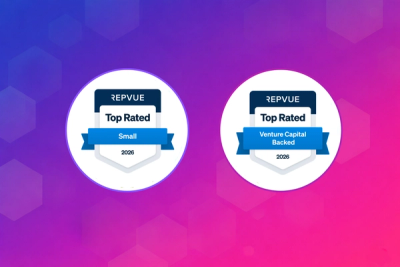
Socket won two 2026 Reppy Awards from RepVue, ranking in the top 5% of all sales orgs. AE Alexandra Lister shares what it's like to grow a sales career here.

Security News
NIST will stop enriching most CVEs under a new risk-based model, narrowing the NVD's scope as vulnerability submissions continue to surge.