

Security News
US Government Forces Anthropic to Pull Claude Fable Days After Launch
Anthropic says the directive cited national security concerns over a narrow jailbreak, but offered no specific technical details.
By Sarah Gooding - Jun 13, 2026
extract-design-system
Advanced tools
Extract design tokens (colors, typography, spacing, border radius, shadows) from any public website. Generates JSON and CSS custom properties for local projects. Available as an AI agent skill (Claude, Cursor, Codex) and standalone CLI.



Reverse-engineer design tokens (colors, typography, spacing, border radius, shadows) from any public website and generate starter JSON and CSS custom properties for your local project. Available as an AI agent skill (Claude, Cursor, Codex) and standalone CLI.
Skills follow Anthropic's Agent Skills overview and are installable through the skills.sh ecosystem.
This repository is skills-first. It publishes an installable extract-design-system skill, and the bundled CLI is the executable workflow the agent runs under the hood.
| Token category | Examples |
|---|---|
| Colors | brand palette, backgrounds, text, borders |
| Typography | font families, sizes, weights, line heights |
| Spacing | padding and margin scale |
| Border radius | button, card, and pill radii |
| Shadows | box-shadow values across elevation levels |
Outputs a W3C-compatible tokens.json and a tokens.css file of CSS custom properties, ready to drop into any project.
Install the skill:
npx skills add arvindrk/extract-design-system
Run it from a supported coding agent with a public website:
Extract the design system from https://stripe.com and generate starter token files for this project.
Expected starter outputs:
.extract-design-system/raw.json.extract-design-system/normalized.jsondesign-system/tokens.jsondesign-system/tokens.cssThis repository contains a focused agent skill for reverse-engineering a starter design system from a public website.
The skill is designed to give coding agents a repeatable workflow for:
Extract a starter design system from a public website and turn it into local token files.
Use when:
What it produces:
.extract-design-system/raw.json.extract-design-system/normalized.jsondesign-system/tokens.jsondesign-system/tokens.cssInstall the skill from GitHub with the skills CLI:
npx skills add arvindrk/extract-design-system
You can also browse the skill on skills.sh.
Once installed, the skill is available to supported coding agents. The agent should use it when a request matches the extraction workflow.
Example prompts:
Extract the design system from https://stripe.com and generate starter token files for this project.
Analyze https://linear.app and summarize the design primitives before generating local tokens.
Extract colors, typography, spacing, and radius tokens from https://vercel.com and save them for this codebase.
Review https://tailwindcss.com, extract the most likely design primitives, and generate starter token files only if the results look usable.
The skill is designed to:
This repository currently exposes:
skills/extract-design-system/SKILL.md - Main skill instructionsskills/extract-design-system/references/ - Supporting workflow and output referencessrc/ - Bundled CLI implementation used by the skilltests/ - CLI and normalization test coverageThe package also ships an MCP server (extract-design-system-mcp) that exposes the same workflow as structured tool calls for Cursor, Claude Desktop, and any MCP-compatible agent.
| Tool | Description |
|---|---|
extract_design_system | Run a full extraction from a URL and write design-system/tokens.json + tokens.css |
init_design_system | Re-emit token files from the cached .extract-design-system/normalized.json without re-fetching |
get_tokens | Read and return the current design-system/tokens.json without re-extracting |
Create .cursor/mcp.json in your project root:
{
  "mcpServers": {
    "extract-design-system": {
      "command": "npx",
      "args": ["-y", "extract-design-system-mcp"]
    }
  }
}
Restart Cursor. The server appears under Settings → Features → MCP with all 3 tools listed.
Add to ~/Library/Application Support/Claude/claude_desktop_config.json:
{
  "mcpServers": {
    "extract-design-system": {
      "command": "npx",
      "args": ["-y", "extract-design-system-mcp"],
      "cwd": "/path/to/your/project"
    }
  }
}
Claude Desktop does not infer a working directory from context, so cwd is required. It controls where design-system/tokens.json and .extract-design-system/ are written.
The skill's executable workflow is backed by the published npm CLI in this repository.
npm install
npx playwright install chromium
npm run typecheck
npm test
npm run build
npm run dev -- --help
npm run cli -- --help
Useful local commands:
npm run dev -- https://example.com
npm run dev -- https://example.com --extract-only
npm run cli -- https://example.com
npm run cli -- init
CONTRIBUTING.mdCODE_OF_CONDUCT.mdSECURITY.mdnpx playwright install chromiumMIT
FAQs
Extract design tokens (colors, typography, spacing, border radius, shadows) from any public website. Generates JSON and CSS custom properties for local projects. Available as an AI agent skill (Claude, Cursor, Codex) and standalone CLI.
We found that extract-design-system demonstrated a healthy version release cadence and project activity because the last version was released less than a year ago. It has 1 open source maintainer collaborating on the project.
Did you know?

Socket for GitHub automatically highlights issues in each pull request and monitors the health of all your open source dependencies. Discover the contents of your packages and block harmful activity before you install or update your dependencies.
Security News
Anthropic says the directive cited national security concerns over a narrow jailbreak, but offered no specific technical details.

Security News
A network of 152 Chrome live wallpaper extensions hid ad tracking and made extension-driven traffic look like Google search clicks.
Company News
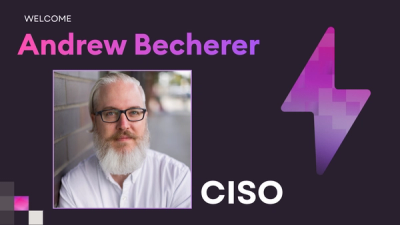
Socket’s first CISO brings deep experience securing high-growth SaaS companies as open source supply chain threats accelerate.